Kevin Coolidge
I find myself on a back road, late at night, with a flat tire. It’s not snowing heavy—well, not yet--but there are flurries dancing in the beam of my headlights. Okay, headlight--I still haven’t fixed the passenger side headlight after I hit that deer. I take the flat off. I hate having to do anything with my car. I am male and so I am obliged to pretend I know something about cars. I mean, if there is steam coming out from under my hood, I will open the hood and stare at the engine just like I am diagnosing the problem. All the time, I am hoping someone will stop by and help, or at least offer me a shotgun so I may put the car out of my misery, but hey, I can handle a flat…
I believe that’s why I find the tractor books by Roger Welsch so appealing. The first rule of writing is to write what you know. If you write all you know, and you don’t learn anything new, then what is there to write about? Welsch is a retired college professor from Nebraska who was about as mechanical as myself. He had never even changed the oil in his car. He still doesn’t, and so what could be more natural than writing a book about how to get rusted piece of iron running again?
Old Tractors and the Men Who Love Them is about rebuilding a 1937 Allis Chalmers WC tractor. Welsch is a folklorist and humorist who has appeared on the CBS News Sunday Morning program with a segment called “Postcards from Nebraska”. There’s lot old Rog doesn’t know, and he’s the first to admit it. “Okay, so I don’t know many of the answers,” explains Roger. “Thing is, most books like this are written by experts who have forgotten the kinds of problems beginners like me run into.” He may not have all the answers, but he knows all the questions.
So, why restore an old tractor? Well, for one reason everything is right there. You don’t even have to lean over to reach the oil filter. It’s at waist level, right where any sensible person would expect it to be. An Allis WC has exactly four wires, one to each spark plug, which sits right out in plain sight. You don’t need a lot of tools to work on them. It was understood by the manufacturer that these tractors were going to be worked on by a farmer without a lot of time and who owned a couple of wrenches, a screwdriver with a broken tip, and a hammer.
Sometimes, it is just as important to know what not to do, and Roger gives many examples of his mistakes. For example, you should never eat peanuts in the shop. Anyone who has ever had red squirrels in their attic can identify with the why. These little pests will stash peanuts in transmissions, valve covers, rag boxes, and everywhere else they can squirm.
There’s some good solid advice for a mechanical novice. Welsch covers the basics like the shop, tools, safety equipment, and resources. He does all this with a quirky sense of humor, observations on life, and how to manage to stay married while dragging home yet another pile of orange rust. He makes tractor-restoring sound therapeutic and fun and heck, I feel like even I could do it. If you enjoy this book, be sure to check out his follow-up, Busted Tractors and Rusty Knuckles. Thing is, learning is a process. Hmm, maybe instead writing what I know, I’ll write about what I want to know…
Lefty loosey or righty tighty? Old tractors or classic cars? Drop me an email at frommyshelf@epix.net. Miss a column? Catch up at www.frommyshelf.blogspot.com Find out why Hobo left the farm in “Hobo Finds A Home.” Does not contain any Allis Chalmers tractors because Farmer Brown rides a John Deere. Be sure to catch Hobo on 60 Minutes interviewed by Andy Rooney.
Thursday, January 24, 2008


Tuesday, January 15, 2008
Of A Predatory Heart
Kevin Coolidge
This morning, I wrestled a bear in my pajamas; now, how he got in my pajamas, I’ll never know. That’s right-- I was born right here in Wellsboro Pennsylvania and I grew up loving the woods and the wild things in ‘em. I remember fishing for bass with my uncle, and gathering ginseng with my Grandpa and berries with my Grandma (I always ended up with more in my belly, than in the basket), and just lying in the backyard under a starry summer sky.
I’m writing this book review Of A Predatory Heart for seasoned woodsman, Joe Parry. Joe is just what he appears to be, a blue-collar, working class guy, but Joe has a talent that not everyone has. Joe is a natural storyteller, and he can put it to paper. The first rule of writing is to write what you know. Joe does one better, he writes what he is, a little guy with a big heart. His stories brought memories of my Grandpa, and my first hunting knife, of that special dog, and some brought tears of laughter. But more importantly, I thought these were stories that would do the same for many people the world over. You know how you read a book so good that you just have to share it? Yep, this is just such a book. Joe is chock full of tales and has many quality stories.
Joe Parry, a Vietnam vet and an outdoor writer, has written for the Pennsylvania Game News, Field and Stream, Fins and Feathers, Turkey Magazine, Sports Afield, Readers Digest, Northwest Outdoors, the Philadelphia Daily News, and the Pittsburgh Tribune Review, and our very own Wellsboro Gazette. These stories on hunting, fishing, and the outdoor lifestyle run from snort-milk-through-your nose funny, to bringing a tear to a seasoned woodsman’s eye. It’s a memoir of a lifelong outdoorsman, starting from his return from the Vietnam War, with tales ranging from archery hunting, flyfishing, introducing children to woodcraft, and the bond that forms between generations through appreciation of the woodlands.
I especially enjoyed reading, The Royal Roachman. My uncle was a dedicated fly fisherman, and I remember the dining room table covered with vices and tiny hooks and filled with turkey feathers and multi-colored deer tails. I would watch him create delicate mimicries and speak of matching the hatch. That’s why I could not stop laughing when I read the short story. Anyone who has every tried to duplicate one of nature’s creations, will surely appreciate “Big Bill’s” gallant but feeble attempt, and the creation of THE FLY.
Perhaps, that’s what is so familiar about Joe’s book. It will remind you of home. Hunting and fishing is an important part of our culture here in Tioga County, and there’s something about the smell of gun oil and the searing heat of a woodstove that has a place in any hunters heart. If you were raised hunting, you know there’s just something about a gun. No man deserves the title of hunter that doesn’t feel a deep, honest gratitude for nature’s bounty.
Joe feels this and it’s evident in his writing. This collection of short stories has a widespread appeal, from non-hunters to avid fishermen, to seasoned vets who cherish the solitude and majesty of the forest. If you enjoyed Of Woods and Wild Things by Wellsboro Gazette columnist Don Knaus, you are going to love Of A Predatory Heart. As my Uncle once said, “Give a man a fish and he eats for a day, but teach a man to fish and he’ll be drinking beer and spinning tales before you know it. So, grab a cold drink, hunker down, and enjoy some great outdoor writing…
Joe Parry will be signing his new book at From My Shelf Books Saturday January 19, 2007 from Noon to 3PM
Fish or cut bait? Drop me an email at frommyshelf@epix.net Miss a pass column? Reload at www.frommyshelf.blogspot.com Catch the cat’s book, “Hobo Finds A Home” about a barn cat who wanted more than to hunt mice. Watch for the in depth documentary of “Hobo in the Wild” on the Nature Channel.
This morning, I wrestled a bear in my pajamas; now, how he got in my pajamas, I’ll never know. That’s right-- I was born right here in Wellsboro Pennsylvania and I grew up loving the woods and the wild things in ‘em. I remember fishing for bass with my uncle, and gathering ginseng with my Grandpa and berries with my Grandma (I always ended up with more in my belly, than in the basket), and just lying in the backyard under a starry summer sky.
I’m writing this book review Of A Predatory Heart for seasoned woodsman, Joe Parry. Joe is just what he appears to be, a blue-collar, working class guy, but Joe has a talent that not everyone has. Joe is a natural storyteller, and he can put it to paper. The first rule of writing is to write what you know. Joe does one better, he writes what he is, a little guy with a big heart. His stories brought memories of my Grandpa, and my first hunting knife, of that special dog, and some brought tears of laughter. But more importantly, I thought these were stories that would do the same for many people the world over. You know how you read a book so good that you just have to share it? Yep, this is just such a book. Joe is chock full of tales and has many quality stories.
Joe Parry, a Vietnam vet and an outdoor writer, has written for the Pennsylvania Game News, Field and Stream, Fins and Feathers, Turkey Magazine, Sports Afield, Readers Digest, Northwest Outdoors, the Philadelphia Daily News, and the Pittsburgh Tribune Review, and our very own Wellsboro Gazette. These stories on hunting, fishing, and the outdoor lifestyle run from snort-milk-through-your nose funny, to bringing a tear to a seasoned woodsman’s eye. It’s a memoir of a lifelong outdoorsman, starting from his return from the Vietnam War, with tales ranging from archery hunting, flyfishing, introducing children to woodcraft, and the bond that forms between generations through appreciation of the woodlands.
I especially enjoyed reading, The Royal Roachman. My uncle was a dedicated fly fisherman, and I remember the dining room table covered with vices and tiny hooks and filled with turkey feathers and multi-colored deer tails. I would watch him create delicate mimicries and speak of matching the hatch. That’s why I could not stop laughing when I read the short story. Anyone who has every tried to duplicate one of nature’s creations, will surely appreciate “Big Bill’s” gallant but feeble attempt, and the creation of THE FLY.
Perhaps, that’s what is so familiar about Joe’s book. It will remind you of home. Hunting and fishing is an important part of our culture here in Tioga County, and there’s something about the smell of gun oil and the searing heat of a woodstove that has a place in any hunters heart. If you were raised hunting, you know there’s just something about a gun. No man deserves the title of hunter that doesn’t feel a deep, honest gratitude for nature’s bounty.
Joe feels this and it’s evident in his writing. This collection of short stories has a widespread appeal, from non-hunters to avid fishermen, to seasoned vets who cherish the solitude and majesty of the forest. If you enjoyed Of Woods and Wild Things by Wellsboro Gazette columnist Don Knaus, you are going to love Of A Predatory Heart. As my Uncle once said, “Give a man a fish and he eats for a day, but teach a man to fish and he’ll be drinking beer and spinning tales before you know it. So, grab a cold drink, hunker down, and enjoy some great outdoor writing…
Joe Parry will be signing his new book at From My Shelf Books Saturday January 19, 2007 from Noon to 3PM
Fish or cut bait? Drop me an email at frommyshelf@epix.net Miss a pass column? Reload at www.frommyshelf.blogspot.com Catch the cat’s book, “Hobo Finds A Home” about a barn cat who wanted more than to hunt mice. Watch for the in depth documentary of “Hobo in the Wild” on the Nature Channel.
Thursday, December 27, 2007
A Dangerous Book
Kevin Coolidge
‘Twas the night before Christmas and Santa’s a wreck. It seems Ho, Ho, Ho is out. It’s just not politically correct. Is it just me, or are we as a society just too damn worried about offending everybody and anyone? Too afraid of being sued or losing our job over a joke? Maybe I’m just being nostalgic, but I remember a time when I didn’t have to apologize for being who I am. I believe that’s why I find The Dangerous Book for Boys, by the brothers Conn and Hal Iggulden, so appealing. It doesn’t ask a boy to be sorry for being a boy. Boys are drawn to the thrill of danger, climbing trees and arm wrestling, taking things apart and learning how they work. It’s part of growing up, or at least it used to be…
The Dangerous Book for Boys is a guidebook aimed at boys “from eight to eighty.” The book covers about eighty topics, including how to build a tree house, make a bow and arrow, or skip a stone. Also included is crucial information on historical battles, legendary explorers, the Golden Age of Piracy, Navajo code breakers of WW2, and even some points on grammar, and poems and books every boy should read.
I found it impossible to open the book and not find a topic of interest. Did you know you could tell direction with a watch with two hands? Just hold the watch horizontally (in the northern hemisphere) Point the hour hand at the sun. Bisect the angle between the hour hand and 12 to give you a north-south line. This is much more convenient than the old moss on the north side of the tree adage. What do you do if the tree has moss all the way around? Walk in circles?
The Dangerous Book for Boys is the ideal gift for a father and son, or mother and daughter, or uncle or aunt…Because I knew more than one girl growing up who ran around with skinned-up knees and played on the monkey bars. There’s something for everyone who wants to enjoy being wild, creative, and adventurous. You can learn about how to hunt and skin a rabbit, cloud formations, and fishing as well as, indoor activities-such as paper airplanes, coin tricks, and playing poker. So, put up the iPod and grab your Swiss Army Knife, a compass, a flashlight, and some Band-Aids. Because adventure awaits!
It was Alexander Pope who said, "A little learning is a dangerous thing.” and some reviewers have criticized the book, saying it encourages young readers to injure themselves, but I believe our “playstation culture” of being sedentary is much more dangerous. Boys will be boys, and boys grow up to be men. “They need to fall off things occasionally," Iggulden says, "or . . . they'll take worse risks on their own. If we do away with challenging playgrounds and cancel school trips for fear of being sued, we don't end up with safer boys--we end up with them walking on train tracks." Me? I’m going outside to climb a tree. Better a broken bone, than a broken spirit…
Dangerous Boy, or Daring Girl? Drop me an email at frommyshelf@epix.net. Read a book about a Courageous Cat. “Hobo Finds A Home”, about a barn cat who wanted more out of life. Soon to be translated into Mandarin Chinese! Miss a column? Check it out at www.frommyshelf.blogspot.com
‘Twas the night before Christmas and Santa’s a wreck. It seems Ho, Ho, Ho is out. It’s just not politically correct. Is it just me, or are we as a society just too damn worried about offending everybody and anyone? Too afraid of being sued or losing our job over a joke? Maybe I’m just being nostalgic, but I remember a time when I didn’t have to apologize for being who I am. I believe that’s why I find The Dangerous Book for Boys, by the brothers Conn and Hal Iggulden, so appealing. It doesn’t ask a boy to be sorry for being a boy. Boys are drawn to the thrill of danger, climbing trees and arm wrestling, taking things apart and learning how they work. It’s part of growing up, or at least it used to be…
The Dangerous Book for Boys is a guidebook aimed at boys “from eight to eighty.” The book covers about eighty topics, including how to build a tree house, make a bow and arrow, or skip a stone. Also included is crucial information on historical battles, legendary explorers, the Golden Age of Piracy, Navajo code breakers of WW2, and even some points on grammar, and poems and books every boy should read.
I found it impossible to open the book and not find a topic of interest. Did you know you could tell direction with a watch with two hands? Just hold the watch horizontally (in the northern hemisphere) Point the hour hand at the sun. Bisect the angle between the hour hand and 12 to give you a north-south line. This is much more convenient than the old moss on the north side of the tree adage. What do you do if the tree has moss all the way around? Walk in circles?
The Dangerous Book for Boys is the ideal gift for a father and son, or mother and daughter, or uncle or aunt…Because I knew more than one girl growing up who ran around with skinned-up knees and played on the monkey bars. There’s something for everyone who wants to enjoy being wild, creative, and adventurous. You can learn about how to hunt and skin a rabbit, cloud formations, and fishing as well as, indoor activities-such as paper airplanes, coin tricks, and playing poker. So, put up the iPod and grab your Swiss Army Knife, a compass, a flashlight, and some Band-Aids. Because adventure awaits!
It was Alexander Pope who said, "A little learning is a dangerous thing.” and some reviewers have criticized the book, saying it encourages young readers to injure themselves, but I believe our “playstation culture” of being sedentary is much more dangerous. Boys will be boys, and boys grow up to be men. “They need to fall off things occasionally," Iggulden says, "or . . . they'll take worse risks on their own. If we do away with challenging playgrounds and cancel school trips for fear of being sued, we don't end up with safer boys--we end up with them walking on train tracks." Me? I’m going outside to climb a tree. Better a broken bone, than a broken spirit…
Dangerous Boy, or Daring Girl? Drop me an email at frommyshelf@epix.net. Read a book about a Courageous Cat. “Hobo Finds A Home”, about a barn cat who wanted more out of life. Soon to be translated into Mandarin Chinese! Miss a column? Check it out at www.frommyshelf.blogspot.com
Thursday, December 13, 2007
'Twas The Night Before Xmas
Kevin Coolidge
‘Twas the night before Christmas, and all through the house, ribbons were scattered, and I don’t know where the cat hid the Scotch tape. I love matching the right gift for the right person, but I hate wrapping presents. It’s so frustrating. I never seem to be able to cover the entire package. No matter how huge a sheet of paper I start with. You know, now that I think about it, there’s no mention in the Bible of the Three Wise Men wrapping the gold, frankincense, or the myrrh. I must therefore conclude that the very first Christmas presents were not wrapped. I knew they were called wise men for a reason, but I’m not going to debate theology. I’m going to stick with what I know best and help you choose the right book for the right person:
Lamb: The Gospel According to Biff, Christ’s Childhood Pal by Christopher Moore: I love lamb with a little mint jelly, and if you have a sense of humor, you will love this saga of the “missing years” of Joshua,as told by his childhood friend Biff. Moore has an irreverent sense of humor that made me laugh so hard, I got kicked out of bed. At the same time, I came away with new sense of Jesus as a human being. The fact that Jesus became human to redeem the world is at the core of the Christian faith. Is this book blasphemy? Surely to some, but I found it a light-hearted satire of the life of Christ. A great book for Christians, Jews, and Buddhists with a sense of humor, and heaven help those who don’t.
Of A Predatory Heart by Joe Parry: Joe Parry, a Vietnam vet and an outdoor writer, has written for the Pennsylvania Game News, Field and Stream, Fins and Feathers, Turkey Magazine, Sports Afield, Readers Digest, Northwest Outdoors, the Philadelphia Daily News, and the Pittsburgh Tribune Review, to name just a few. His stories on hunting, fishing, and the outdoor lifestyle run from snort-milk-through-your nose funny, to bringing a tear to a seasoned woodsman’s eye. It’s a memoir of a lifelong outdoorsman; starting from his return from the Vietnam War, with tales ranging from archery hunting, fly fishing, introducing children to woodcraft, and the bond that forms between generations through appreciation of the woodlands. If your woodsman loved Don Knaus’s book Of Woods and Wild Things, he’ll want this in his stocking.
World War Z by Max Brooks: From the author of The Zombie Survival Guide comes this gem chronicling the fictional “Zombie World War”. This is the best book I’ve read all year. It charts a war against the undead from global pandemic to worldwide panic and the armed struggle to reclaim the planet. World War Z is a collection of accounts, each revealing an aspect of the larger plot and a personal tale. The viewpoint is not strictly the American, but focuses on the global nature of the struggle. Brooks manages to address such issues as environmentalism, the war on terror and international health care, and it’s entertaining. This isn’t just a great zombie book, but a great book. Great for horror, science fiction fans, or the lover of post-apocalyptic scenarios.
The Bucktail series by Bill Robertson and David Rimer: Of all the unusual combat units of the Civil War, none was more colorful than the Pennsylvania Bucktails. The trials and tribulations of the Bucktails have been captured in an easy and fun-to-read series for children and adults. William P. Robertson is himself a Civil War buff and re-enactor, and his enthusiasm and technical expertise shows through his writing and photographs. Robertson does most of his own photography and there are several great photos of fellow re-enactors, which bring the books and time period to life. Great for children 9 to 12 years of age, and Civil War buffs.
Soon I Will Be Invincible by Austin Grossman: The realm of heroes and villains gets an irradiated dose of angst and realism in this quirky debut novel. It’s classic superhero fare with giant robots, mystical relics, and snazzy form-fitting outfits. Every comic book cliché is affectionately embraced, and then smashed to pieces. What makes this different is the intimate look into the psyche of both the heroes and the villains, because even Metahumans are people--people who worry about shopping lists, relationships, and their latest endorsements. Great for diehard superhero fans, or those we used to read comics.
Power to the People: Russian Strength Training Secrets for Every American by Pavel Tsatsouline: If I could recommend just one book on strength training, this would be it. Beautiful in its simplicity, this book gives the basics of strength from just getting stronger for carrying that bag of groceries to becoming a burly, Russian Bear. For the experienced and hard-core gym rat, check the Russian Kettlebell Challenge, also by Pavel. Don’t know what a kettlebell is? Let me show you, comrade, and for the ladies there is From Russia with Tough Love. Great for the longtime player of the iron game, or those ready to begin the journey.
Books make for some of the best gifts. With books, we can travel, learn a foreign language, begin juggling, craft stonewalls, and learn to love and laugh at ourselves. Plus, they are easier to wrap than frankincense. Now, if I can just find the damn tape…
Bags or Bows? Can I get this gift-wrapped? Comments? Questions? Myrrh? Email me at frommyshelf@epix.net Be sure to check out the cat’s new book available NOW! It’s “Hobo Finds A Home” about a cute, barn cat that leaves the farm, has big adventures, and finds a new home. Written by Hobo and illustrated by Susan Gage. It’s available at http://www.booklocker.com/, Amazon, B&N, or your hometown bookstore. Be sure to catch Hobo on the Oprah show!!
‘Twas the night before Christmas, and all through the house, ribbons were scattered, and I don’t know where the cat hid the Scotch tape. I love matching the right gift for the right person, but I hate wrapping presents. It’s so frustrating. I never seem to be able to cover the entire package. No matter how huge a sheet of paper I start with. You know, now that I think about it, there’s no mention in the Bible of the Three Wise Men wrapping the gold, frankincense, or the myrrh. I must therefore conclude that the very first Christmas presents were not wrapped. I knew they were called wise men for a reason, but I’m not going to debate theology. I’m going to stick with what I know best and help you choose the right book for the right person:
Lamb: The Gospel According to Biff, Christ’s Childhood Pal by Christopher Moore: I love lamb with a little mint jelly, and if you have a sense of humor, you will love this saga of the “missing years” of Joshua
Of A Predatory Heart by Joe Parry: Joe Parry, a Vietnam vet and an outdoor writer, has written for the Pennsylvania Game News, Field and Stream, Fins and Feathers, Turkey Magazine, Sports Afield, Readers Digest, Northwest Outdoors, the Philadelphia Daily News, and the Pittsburgh Tribune Review, to name just a few. His stories on hunting, fishing, and the outdoor lifestyle run from snort-milk-through-your nose funny, to bringing a tear to a seasoned woodsman’s eye. It’s a memoir of a lifelong outdoorsman; starting from his return from the Vietnam War, with tales ranging from archery hunting, fly fishing, introducing children to woodcraft, and the bond that forms between generations through appreciation of the woodlands. If your woodsman loved Don Knaus’s book Of Woods and Wild Things, he’ll want this in his stocking.
World War Z by Max Brooks: From the author of The Zombie Survival Guide comes this gem chronicling the fictional “Zombie World War”. This is the best book I’ve read all year. It charts a war against the undead from global pandemic to worldwide panic and the armed struggle to reclaim the planet. World War Z is a collection of accounts, each revealing an aspect of the larger plot and a personal tale. The viewpoint is not strictly the American, but focuses on the global nature of the struggle. Brooks manages to address such issues as environmentalism, the war on terror and international health care, and it’s entertaining. This isn’t just a great zombie book, but a great book. Great for horror, science fiction fans, or the lover of post-apocalyptic scenarios.
The Bucktail series by Bill Robertson and David Rimer: Of all the unusual combat units of the Civil War, none was more colorful than the Pennsylvania Bucktails. The trials and tribulations of the Bucktails have been captured in an easy and fun-to-read series for children and adults. William P. Robertson is himself a Civil War buff and re-enactor, and his enthusiasm and technical expertise shows through his writing and photographs. Robertson does most of his own photography and there are several great photos of fellow re-enactors, which bring the books and time period to life. Great for children 9 to 12 years of age, and Civil War buffs.
Soon I Will Be Invincible by Austin Grossman: The realm of heroes and villains gets an irradiated dose of angst and realism in this quirky debut novel. It’s classic superhero fare with giant robots, mystical relics, and snazzy form-fitting outfits. Every comic book cliché is affectionately embraced, and then smashed to pieces. What makes this different is the intimate look into the psyche of both the heroes and the villains, because even Metahumans are people--people who worry about shopping lists, relationships, and their latest endorsements. Great for diehard superhero fans, or those we used to read comics.
Power to the People: Russian Strength Training Secrets for Every American by Pavel Tsatsouline: If I could recommend just one book on strength training, this would be it. Beautiful in its simplicity, this book gives the basics of strength from just getting stronger for carrying that bag of groceries to becoming a burly, Russian Bear. For the experienced and hard-core gym rat, check the Russian Kettlebell Challenge, also by Pavel. Don’t know what a kettlebell is? Let me show you, comrade
Books make for some of the best gifts. With books, we can travel, learn a foreign language, begin juggling, craft stonewalls, and learn to love and laugh at ourselves. Plus, they are easier to wrap than frankincense. Now, if I can just find the damn tape…
Bags or Bows? Can I get this gift-wrapped? Comments? Questions? Myrrh? Email me at frommyshelf@epix.net Be sure to check out the cat’s new book available NOW! It’s “Hobo Finds A Home” about a cute, barn cat that leaves the farm, has big adventures, and finds a new home. Written by Hobo and illustrated by Susan Gage. It’s available at http://www.booklocker.com/, Amazon, B&N, or your hometown bookstore. Be sure to catch Hobo on the Oprah show!!
Thursday, November 29, 2007
Hobo's Twelve Days Of Christmas
Kevin Coolidge
Ho, Ho, Ho, Hobo! It’s that time of year when humans drag trees into the house, scamper around like giant vermin, and worry about buying the perfect gift. I really don’t see what the fuss is all about. Books are the perfect gift. They don’t contain lead, authors don’t go on strike, and there are few skills as important as being able to read. So, if you can’t count on the big guy in red to do your shopping. Here are some suggestions. Me? I’m going to climb into that tree and knock around a few ornaments, after my catnap.
Ahoy There, Little Polar Bear! by Hans de Beer: Ich liebe kleiner eisbar. Now where is that umlaut when you need one? I love the little polar bear series by Hans de Beer. Originally only available in German, but now available in English from North-South Books--in this adventure, Lars gets swept up by fishing nets and leaves the Artic. He’s helped back by a friendly ship’s cat, which is probably why this one is my favorite, but they’re all fun.
Moose Eggs by Susan Williams Beckhorn: I first was introduced to Susan’s writing through Wind Rider. A great story for children in the 9 to 12 year range, it’s about the domestication of the horse, and the girl who first accomplishes the feat. In her latest book, Susan creates a new fable, how the moose came to have flat antlers. The book is beautifully illustrated for the younger child, and terrific for the inquisitive mind that asks “Why?”
Hello, Calico! by Karma Wilson: I love her books about big, lovable Bear, especially Bear Snores On, and Bear Wants More! In her latest book, she introduces us to a cute, little calico kitten. This is a great, entertaining board book with nice rhyming prose, and I love the butterflies.
The Alphabet from A to Y With Bonus Letter Z! by Steve Martin: He’s one crazy and wild guy and he can write too. Steve has written several novels, but this is his first children’s book. Alphabet books are pretty standard and can be a little boring, but add the witty mind of Martin, along with clever New Yorker cartoonist Roz Chast, and you get more than just apples and zebras.
Freckleface Strawberry by Julianne Moore, illustrated by LeUyen Pham: This is the literary debut of actress Julianne Moore. It’s about a little redheaded girl who learns she’s different, just like everybody. Lively illustrations with energetic pose makes this a promising beginning. The title comes from a childhood nickname of Julianne, who is herself a redhead.
One Winter’s Day by M. Christiana Butler and illustrated by Tina Macnaughton: Poor hedgehog’s nest blows away in a snowstorm. He bundles up and goes to his friend badger’s house for shelter, but he encounters woodland creatures that are colder than him. He then gives away all his warm clothes. This book has a heartwarming ending as well as illustrations containing felt-like fabric that gives the book a nice tactile feel. Sure to make you feel warm and fuzzy.
Morris’s Disappearing Bag by Rosemary Wells: Rosemary is a beloved illustrator and author and is better known for the classic Noisy Nora. In this Christmas tale, Morris receives a disappointing Christmas gift. His older siblings go off to play, but not with Morris. He then discovers a forgotten gift, a gift of magic. Perhaps the best gift is really imagination.
How the Grinch Stole Christmas by Dr. Seuss:“The Grinch hated Christmas! The whole Christmas season! Now, please don't ask why. No one quite knows the reason." Dr. Seuss's delightfully skewed rhymes and names are as enjoyable as ever, this is a true Christmas classic, and I love the animated version voiced by Boris Karloff. I can’t wait to slice off a piece of that roast beast.
Like any good children’s book, these books aren’t just for children, but for the children in all of us. Yep, my shopping is done for the year. All that’s left is to leave Santa his tuna and a bowl of warm milk. I can’t wait to see what Santa leaves in my stocking on Christmas morning....
Questions, Comments? Hey, I’m a cat. Forward the email to Kevin at frommyshelf@epix.net Be sure to check out my new book available NOW! It’s “Hobo Finds A Home” about a cute, barn cat that leaves the farm, has big adventures, and finds a new home. Written by me, Hobo and illustrated by Susan Gage. It’s available at http://www.booklocker.com/, Amazon, B&N, or your hometown bookstore
Ho, Ho, Ho, Hobo! It’s that time of year when humans drag trees into the house, scamper around like giant vermin, and worry about buying the perfect gift. I really don’t see what the fuss is all about. Books are the perfect gift. They don’t contain lead, authors don’t go on strike, and there are few skills as important as being able to read. So, if you can’t count on the big guy in red to do your shopping. Here are some suggestions. Me? I’m going to climb into that tree and knock around a few ornaments, after my catnap.
Ahoy There, Little Polar Bear! by Hans de Beer: Ich liebe kleiner eisbar. Now where is that umlaut when you need one? I love the little polar bear series by Hans de Beer. Originally only available in German, but now available in English from North-South Books--in this adventure, Lars gets swept up by fishing nets and leaves the Artic. He’s helped back by a friendly ship’s cat, which is probably why this one is my favorite, but they’re all fun.
Moose Eggs by Susan Williams Beckhorn: I first was introduced to Susan’s writing through Wind Rider. A great story for children in the 9 to 12 year range, it’s about the domestication of the horse, and the girl who first accomplishes the feat. In her latest book, Susan creates a new fable, how the moose came to have flat antlers. The book is beautifully illustrated for the younger child, and terrific for the inquisitive mind that asks “Why?”
Hello, Calico! by Karma Wilson: I love her books about big, lovable Bear, especially Bear Snores On, and Bear Wants More! In her latest book, she introduces us to a cute, little calico kitten. This is a great, entertaining board book with nice rhyming prose, and I love the butterflies.
The Alphabet from A to Y With Bonus Letter Z! by Steve Martin: He’s one crazy and wild guy and he can write too. Steve has written several novels, but this is his first children’s book. Alphabet books are pretty standard and can be a little boring, but add the witty mind of Martin, along with clever New Yorker cartoonist Roz Chast, and you get more than just apples and zebras.
Freckleface Strawberry by Julianne Moore, illustrated by LeUyen Pham: This is the literary debut of actress Julianne Moore. It’s about a little redheaded girl who learns she’s different, just like everybody. Lively illustrations with energetic pose makes this a promising beginning. The title comes from a childhood nickname of Julianne, who is herself a redhead.
One Winter’s Day by M. Christiana Butler and illustrated by Tina Macnaughton: Poor hedgehog’s nest blows away in a snowstorm. He bundles up and goes to his friend badger’s house for shelter, but he encounters woodland creatures that are colder than him. He then gives away all his warm clothes. This book has a heartwarming ending as well as illustrations containing felt-like fabric that gives the book a nice tactile feel. Sure to make you feel warm and fuzzy.
Morris’s Disappearing Bag by Rosemary Wells: Rosemary is a beloved illustrator and author and is better known for the classic Noisy Nora. In this Christmas tale, Morris receives a disappointing Christmas gift. His older siblings go off to play, but not with Morris. He then discovers a forgotten gift, a gift of magic. Perhaps the best gift is really imagination.
How the Grinch Stole Christmas by Dr. Seuss:“The Grinch hated Christmas! The whole Christmas season! Now, please don't ask why. No one quite knows the reason." Dr. Seuss's delightfully skewed rhymes and names are as enjoyable as ever, this is a true Christmas classic, and I love the animated version voiced by Boris Karloff. I can’t wait to slice off a piece of that roast beast.
Like any good children’s book, these books aren’t just for children, but for the children in all of us. Yep, my shopping is done for the year. All that’s left is to leave Santa his tuna and a bowl of warm milk. I can’t wait to see what Santa leaves in my stocking on Christmas morning....
Questions, Comments? Hey, I’m a cat. Forward the email to Kevin at frommyshelf@epix.net Be sure to check out my new book available NOW! It’s “Hobo Finds A Home” about a cute, barn cat that leaves the farm, has big adventures, and finds a new home. Written by me, Hobo and illustrated by Susan Gage. It’s available at http://www.booklocker.com/, Amazon, B&N, or your hometown bookstore
Friday, November 23, 2007
Peace, Comfort & Joy
Kasey Cox
No, I haven’t been spending too much time looking at holiday greeting cards. Although I did start putting up Christmas lights in the windows last night, I’m not in a hurry to begin the busy-ness of the holidays. In times (thankfully) past, I have not been well during November and December. The stress, the travel, the added hustle & bustle, and the encroaching darkness have often made this time of year more difficult than joyful.
So, what have I been doing these past couple of weeks to ease my way into the holidays? After my work is done for the day, I climb into bed, snuggle down with Hobo, turn out the lights, and listen to Elizabeth Gilbert tell me her story. I have indulged and soothed myself with the audio version of the best-selling memoir “Eat, Pray, Love.”
It’s unusual nowadays to find an audio book that is read by the actual author of the book. The trend now is to have award-winning actors give us their voiced versions, of everything from Thomas Hardy’s “The Return of the Native” (delectably delivered by Alan Rickman) to Dr. Seuss favorites like “Horton Hears a Who” (served with a smile by Dustin Hoffman). And there’s no denying, these audios are treats. However, no one knows the “voice” of a story better than the one who wrote it in the first place – especially when it is a collection of stories from her own life.
So we come to Liz Gilbert’s travellogue/collection of essays/memoir. Liz found herself, as she approached her 35th birthday, with a seemingly perfect life. Her books had twice been finalists for such prestigious awards as the PEN/Faulkner Award and the National Book Award. Gilbert and her husband had just purchased a beautiful house. Her family and friends kept waiting for her to announce a pregnancy. Nevertheless, after a kind of mid-life crisis on her part, combined with problems in their marriage, Gilbert found herself dealing with a nasty divorce, life-threatening depression, and huge financial woes.
In the introduction to the rest of her tale, Gilbert recounts this time in her life with sensitivity, rueful insight, and aplomb. She refuses to drag her husband over the coals, gracefully declining to give the kind of lurid personal details we find all-too-often in contemporary memoirs. Elizabeth Gilbert tastefully explains how, in writing this book, she chose to keep the story of the disintegration of her marriage discrete, since it involves another human being, one whom she had deeply loved. Gilbert’s writing about herself – her thoughts, her idiosyncracies, her faults, her bodily functions – is open and humorous, but I really respect how her story is not told at others’ expense.
At the end of her bottoming out, Liz Gilbert did what so many of us fantasize about, but in reality, are too frightened to do. She, too, was terrified. But she left anyway. To heal, to learn, to explore, to find herself – Elizabeth Gilbert sold her stuff, quit her job, and moved away for a year. She decided to live for 3 or 4 months in each of these countries – Italy, India, and Indonesia. In each place, she hoped to dedicate herself to an aspect of health, in a place in the world that was well-known for that particular piece. In Italy, she nurtured herself with pleasure, eating and walking and looking at beautiful things. Next, she went to India, to practice devotion, discipline, and spirituality in the ashram of the yoga master who mentored her. Lastly, she went to Bali, in Indonesia, to find balance. Along with balance, she found love again.
Listening to Liz Gilbert tell me pieces of her story every night as I relax toward sleep, I shared in the comfort of feeding oneself well -and feeding oneself in many ways; of partaking in silence and calming one’s spirit; and of striving for balance and purpose in life. What better way to usher in this season?
No, I haven’t been spending too much time looking at holiday greeting cards. Although I did start putting up Christmas lights in the windows last night, I’m not in a hurry to begin the busy-ness of the holidays. In times (thankfully) past, I have not been well during November and December. The stress, the travel, the added hustle & bustle, and the encroaching darkness have often made this time of year more difficult than joyful.
So, what have I been doing these past couple of weeks to ease my way into the holidays? After my work is done for the day, I climb into bed, snuggle down with Hobo, turn out the lights, and listen to Elizabeth Gilbert tell me her story. I have indulged and soothed myself with the audio version of the best-selling memoir “Eat, Pray, Love.”
It’s unusual nowadays to find an audio book that is read by the actual author of the book. The trend now is to have award-winning actors give us their voiced versions, of everything from Thomas Hardy’s “The Return of the Native” (delectably delivered by Alan Rickman) to Dr. Seuss favorites like “Horton Hears a Who” (served with a smile by Dustin Hoffman). And there’s no denying, these audios are treats. However, no one knows the “voice” of a story better than the one who wrote it in the first place – especially when it is a collection of stories from her own life.
So we come to Liz Gilbert’s travellogue/collection of essays/memoir. Liz found herself, as she approached her 35th birthday, with a seemingly perfect life. Her books had twice been finalists for such prestigious awards as the PEN/Faulkner Award and the National Book Award. Gilbert and her husband had just purchased a beautiful house. Her family and friends kept waiting for her to announce a pregnancy. Nevertheless, after a kind of mid-life crisis on her part, combined with problems in their marriage, Gilbert found herself dealing with a nasty divorce, life-threatening depression, and huge financial woes.
In the introduction to the rest of her tale, Gilbert recounts this time in her life with sensitivity, rueful insight, and aplomb. She refuses to drag her husband over the coals, gracefully declining to give the kind of lurid personal details we find all-too-often in contemporary memoirs. Elizabeth Gilbert tastefully explains how, in writing this book, she chose to keep the story of the disintegration of her marriage discrete, since it involves another human being, one whom she had deeply loved. Gilbert’s writing about herself – her thoughts, her idiosyncracies, her faults, her bodily functions – is open and humorous, but I really respect how her story is not told at others’ expense.
At the end of her bottoming out, Liz Gilbert did what so many of us fantasize about, but in reality, are too frightened to do. She, too, was terrified. But she left anyway. To heal, to learn, to explore, to find herself – Elizabeth Gilbert sold her stuff, quit her job, and moved away for a year. She decided to live for 3 or 4 months in each of these countries – Italy, India, and Indonesia. In each place, she hoped to dedicate herself to an aspect of health, in a place in the world that was well-known for that particular piece. In Italy, she nurtured herself with pleasure, eating and walking and looking at beautiful things. Next, she went to India, to practice devotion, discipline, and spirituality in the ashram of the yoga master who mentored her. Lastly, she went to Bali, in Indonesia, to find balance. Along with balance, she found love again.
Listening to Liz Gilbert tell me pieces of her story every night as I relax toward sleep, I shared in the comfort of feeding oneself well -and feeding oneself in many ways; of partaking in silence and calming one’s spirit; and of striving for balance and purpose in life. What better way to usher in this season?
Sunday, November 18, 2007
Little Women's Dreaming Glasses
Kasey Cox
I have always had extremely vivid dreams. While asleep, I have been known to shout out loud to people in my life who are hard-of-hearing; speak French; throw punches; laugh; and carry on lengthy one-sided conversations. Throughout these dramas, I am treated to Technicolor images playing on the back of my eyelids.
At one point in my life, a friend suggested I talk with a psychologist who was well-known for her expertise in deciphering dreams. To be honest, I was pretty skeptical. It sounded like either fortune-telling, or a waste of my time, or perhaps both. Talking with this woman, however, turned out to be incredibly helpful. She did not tell me about myself, my life, or my dreams: instead, as the best guides do, she gave me the tools to find my own insights.
Surely, this is what our best writers and most influential teachers have done for us, as well. When people write a good story, or help us to interpret those stories, they are offering us a new set of glasses to try on – a set of glasses through which we may catch a different way of looking at ourselves and our world. These glasses, whether they are labeled “Marxist”, “Christian”, “Feminist”, “Jungian”, or what-have-you, may give us deeper insight into parts of our own personality, or they may give us a view of a part of the world we’ve never even considered.
In the case of the above-mentioned psychologist, she suggested I look at each object or person in my dream and see it as a representation of …ME. So, the ugly couch is me; the thunderstorm in the background is me; the broken teapot is me, as is the table it is sitting on …. This may not help me understand every aspect of my dreams, nor every dream I have, but it is a great starting point. I have also found this to be true in my personal reading. Even if the purpose of reading a certain book is to learn about something completely foreign to you, it helps to get a foothold by finding a familiar aspect, something to which you can relate.
Recently, I started reading Louisa May Alcott’s “Little Women”. This lovely little book is, unfortunately, one of many of the “classics” that I have never read. Despite the fact that I love to read, I do find “The Canon” (capitals completely intentional) rather daunting. I was surprised, then, to find myself wholly sucked in to what could be criticized as a overly simple, moralizing story, written too long ago to be relevant, in words which may now seem stilted. What could Jo, Amy, Beth, and Meg have to say to a modern woman, more than 130 years later? Why, as I devour the pages of their story, do I feel such love and sympathy for them?
And then, I realize, in the clarity of thought that often comes as I put down a book for the night and just before sleep takes me, that these characters are … ME. Scholars and historians who have studied the life and writings of Louisa May Alcott attest to the autobiographical aspects of “Little Women”, and how Louisa created the character of “Jo” to represent herself. As I am reading, I sympathize with Jo – her stubbornness, her tomboyish ways, her fierce loyalty to her sisters and her family, her writing, her bossiness. So, at first, I say, “I am Jo.” But then I realize I relate to Beth, too, especially as members of her family protect her, with her perhaps overly sensitive heart, and her health problems. And – admit it, ladies, even the toughest among us – who doesn’t want, in some corner of her soul, to be “petted” and admired at times, like the little princess Amy wants to be; or to be the nurturer, older sister, eventual wife and mother, Meg. And, hey, guys, who knew that “Little Women” might be a better guide to understanding the females in your life than anything contemporary pop psychologists are writing?
And so, with the help of this classic, I have touched base with parts of myself I haven’t acknowledged in a while. The way symbols and themes and people may show up in your dreams, though you haven’t consciously thought of them for a long time. This is why the great stories truly last.
I have always had extremely vivid dreams. While asleep, I have been known to shout out loud to people in my life who are hard-of-hearing; speak French; throw punches; laugh; and carry on lengthy one-sided conversations. Throughout these dramas, I am treated to Technicolor images playing on the back of my eyelids.
At one point in my life, a friend suggested I talk with a psychologist who was well-known for her expertise in deciphering dreams. To be honest, I was pretty skeptical. It sounded like either fortune-telling, or a waste of my time, or perhaps both. Talking with this woman, however, turned out to be incredibly helpful. She did not tell me about myself, my life, or my dreams: instead, as the best guides do, she gave me the tools to find my own insights.
Surely, this is what our best writers and most influential teachers have done for us, as well. When people write a good story, or help us to interpret those stories, they are offering us a new set of glasses to try on – a set of glasses through which we may catch a different way of looking at ourselves and our world. These glasses, whether they are labeled “Marxist”, “Christian”, “Feminist”, “Jungian”, or what-have-you, may give us deeper insight into parts of our own personality, or they may give us a view of a part of the world we’ve never even considered.
In the case of the above-mentioned psychologist, she suggested I look at each object or person in my dream and see it as a representation of …ME. So, the ugly couch is me; the thunderstorm in the background is me; the broken teapot is me, as is the table it is sitting on …. This may not help me understand every aspect of my dreams, nor every dream I have, but it is a great starting point. I have also found this to be true in my personal reading. Even if the purpose of reading a certain book is to learn about something completely foreign to you, it helps to get a foothold by finding a familiar aspect, something to which you can relate.
Recently, I started reading Louisa May Alcott’s “Little Women”. This lovely little book is, unfortunately, one of many of the “classics” that I have never read. Despite the fact that I love to read, I do find “The Canon” (capitals completely intentional) rather daunting. I was surprised, then, to find myself wholly sucked in to what could be criticized as a overly simple, moralizing story, written too long ago to be relevant, in words which may now seem stilted. What could Jo, Amy, Beth, and Meg have to say to a modern woman, more than 130 years later? Why, as I devour the pages of their story, do I feel such love and sympathy for them?
And then, I realize, in the clarity of thought that often comes as I put down a book for the night and just before sleep takes me, that these characters are … ME. Scholars and historians who have studied the life and writings of Louisa May Alcott attest to the autobiographical aspects of “Little Women”, and how Louisa created the character of “Jo” to represent herself. As I am reading, I sympathize with Jo – her stubbornness, her tomboyish ways, her fierce loyalty to her sisters and her family, her writing, her bossiness. So, at first, I say, “I am Jo.” But then I realize I relate to Beth, too, especially as members of her family protect her, with her perhaps overly sensitive heart, and her health problems. And – admit it, ladies, even the toughest among us – who doesn’t want, in some corner of her soul, to be “petted” and admired at times, like the little princess Amy wants to be; or to be the nurturer, older sister, eventual wife and mother, Meg. And, hey, guys, who knew that “Little Women” might be a better guide to understanding the females in your life than anything contemporary pop psychologists are writing?
And so, with the help of this classic, I have touched base with parts of myself I haven’t acknowledged in a while. The way symbols and themes and people may show up in your dreams, though you haven’t consciously thought of them for a long time. This is why the great stories truly last.
Saturday, November 17, 2007
"Hobo Finds A Home"
Dear Friends, Family, Colleagues and fellow readers ---
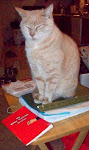
Once upon a time, Hobo was a barn cat. He didn't want to be a barn cat. He wanted to see the world and have his own adventures. So he ran away. It was a lot of fun at first. But after a while, he got lonely. He followed Kevin home, and eventually, Hobo adopted Kevin. Now he runs a house, writes a book review column for the Wellsboro Gazette, and works part-time for "from my shelf books" in Wellsboro.
Hobo's story has just been published by Booklocker!!! You can see photos of the book, Hobo's bio and some of the illustrations at www.booklocker.com Amazon.com and at Barnes and Nobles online. The title of the book is "Hobo Finds A Home". It is a little expensive online, so we are offering a great deal on preorders.
If you would like to preorder with us, "Hobo Finds A Home" will be $11.99 + tax. If you'd like it shipped to you, add $2.99 for shipping for 1 to 4 copies, $4.00 for 5 or more copies. You can send checks to from my shelf books, 7 East Ave., Suite 101, Wellsboro PA 16901
I hope you'll excuse my bragging, but I am so proud of Kevin and of our friend Susan Gage, who illustrated. I have had the privelege of watching "Hobo" evolve over the last year, and it has been fantastic. I'm sure you'll agree that the end result is a beautiful, funny, and charming book, and a great gift.
Thanks!!
Kasey


Once upon a time, Hobo was a barn cat. He didn't want to be a barn cat. He wanted to see the world and have his own adventures. So he ran away. It was a lot of fun at first. But after a while, he got lonely. He followed Kevin home, and eventually, Hobo adopted Kevin. Now he runs a house, writes a book review column for the Wellsboro Gazette, and works part-time for "from my shelf books" in Wellsboro.
Hobo's story has just been published by Booklocker!!! You can see photos of the book, Hobo's bio and some of the illustrations at www.booklocker.com Amazon.com and at Barnes and Nobles online. The title of the book is "Hobo Finds A Home". It is a little expensive online, so we are offering a great deal on preorders.
If you would like to preorder with us, "Hobo Finds A Home" will be $11.99 + tax. If you'd like it shipped to you, add $2.99 for shipping for 1 to 4 copies, $4.00 for 5 or more copies. You can send checks to from my shelf books, 7 East Ave., Suite 101, Wellsboro PA 16901
I hope you'll excuse my bragging, but I am so proud of Kevin and of our friend Susan Gage, who illustrated. I have had the privelege of watching "Hobo" evolve over the last year, and it has been fantastic. I'm sure you'll agree that the end result is a beautiful, funny, and charming book, and a great gift.
Thanks!!
Kasey

Thursday, November 15, 2007
Weapons of Modest Destruction
Kevin Coolidge
Stop me if you’ve heard this one. Two lawyers, a bear, and a duck walk into a bar… Wait, the legal department has just handed me a memo. It seems that jokes about lawyers are out. Lawyers don’t think they’re funny, and no one else thinks they’re jokes. I’m also required to write the following before getting to the meat of the column:
Misuse of the weapons featured in this column could result in serious injury or death. The author, publisher, and distributor of this column disclaims any liability from damage or injuries of any nature that a reader or user of the information may incur. Moreover, it is the reader’s responsibility to comply with all local, state, and federal laws and regulations pertaining to possession, carrying, and/or use of said weapons. This column is for academic study only.
Highland Knife Fighting by Christopher Scott Thompson: This book traces the historical roots of the dirk and provides step-by-step instructions and photos to show how the Highlanders used the knife. Also included are exercises and drills, including the advanced quick draw drill. Remember, there can be only one…
Tomahawks, Traditional to Tactical by David Grant: Soldiers and woodsmen have armed themselves with the tomahawk. Its design is simple and extremely effective at both close range and throwing ranges. It doubles as a field tool, is durable, easily repaired, and available without a permit or license. The book includes an instructive chapter on choosing the best tomahawk for your needs. You say you have an axe to grind???
The Sling, for Sport and Survival by Cliff Savage: The sling is the ultimate lightweight weapon. It is silent, compact, inexpensive, and ammunition is free. This handy book shows how to make and use slings, and is great for survivalists and weapon enthusiasts. Now, I wonder what Goliath is doing today???
Blowguns, the Breath of Death by Michael D. Janich: The blowgun may be the perfect weapon, capable of delivering a variety of projectiles accurately and silently in an inexpensive package. This book includes how to make your own, where to acquire modern blowguns and projectiles; how to shoot a blowgun; how to maintain and store your blowgun. And everyone said I was just full of hot air???
Bowie And Big-Knife Fighting System by Dwight C. McLemore: This well-known fighting arts instructor, bladesman, and Bowie aficionado provides insight into Jim Bowie, the Bowie knife, and the fighting systems associated historically with both. Contains great illustrations and practical training drills. I say walk softly and carry a large knife…
The New Bullwhip Book by Andrew Conway: Ever want to run away and join the circus? This book introduces you to whip basics, parts of the whip, the different types available, as well as the three basic cracks, and step-by-step instructions on how to master them. I say whip it. Whip it good...
Flashlight Fighting by Phil Elmore: A simple flashlight can be a potent weapon if wielded properly, and it’s still legal to own one. You might think you are in trouble if the only weapon in a self-defense scenario is a flashlight, but a short length of rigid material can target soft body parts, joints, and other vital areas. Martial artist Phil Elmore shows how to choose a suitable flashlight, deploy it quickly, and use it to disable an attacker who thought you were unarmed. Better be sure those batteries are ever ready…
From the dawn of humanity, weapons and tools have been a crucial part of human development. A weapon is a tool used to injure, incapacitate or even kill, but it is just that, a tool. Tools shape both our physical and mental worlds. The knife is the most ancient weapon in our arsenal, and a versatile tool. Extend it, and it’s a sword, extend and curve the blade, and it’s a sickle. Tools help feed us, shelter us, defend us and assure our survival. Mankind has always relied upon his wits, the opposable thumb, and the mastery of tools. Mmmm, perhaps our greatest tool is really knowledge…
Comments, questions, what’s your favorite melee weapon? Drop me an email at frommyshelf@epix.net. Miss a column? All past columns available at www.frommyshelf.blogspot.com Be sure to check out the cat’s book “Hobo Finds A Home” Available soon!! Hobo not included, does include autograph. His book is now available at www.booklocker.com and will soon be available on Amazon, B&N and From My Shelf Books in Wellsboro!!
Stop me if you’ve heard this one. Two lawyers, a bear, and a duck walk into a bar… Wait, the legal department has just handed me a memo. It seems that jokes about lawyers are out. Lawyers don’t think they’re funny, and no one else thinks they’re jokes. I’m also required to write the following before getting to the meat of the column:
Misuse of the weapons featured in this column could result in serious injury or death. The author, publisher, and distributor of this column disclaims any liability from damage or injuries of any nature that a reader or user of the information may incur. Moreover, it is the reader’s responsibility to comply with all local, state, and federal laws and regulations pertaining to possession, carrying, and/or use of said weapons. This column is for academic study only.
Highland Knife Fighting by Christopher Scott Thompson: This book traces the historical roots of the dirk and provides step-by-step instructions and photos to show how the Highlanders used the knife. Also included are exercises and drills, including the advanced quick draw drill. Remember, there can be only one…
Tomahawks, Traditional to Tactical by David Grant: Soldiers and woodsmen have armed themselves with the tomahawk. Its design is simple and extremely effective at both close range and throwing ranges. It doubles as a field tool, is durable, easily repaired, and available without a permit or license. The book includes an instructive chapter on choosing the best tomahawk for your needs. You say you have an axe to grind???
The Sling, for Sport and Survival by Cliff Savage: The sling is the ultimate lightweight weapon. It is silent, compact, inexpensive, and ammunition is free. This handy book shows how to make and use slings, and is great for survivalists and weapon enthusiasts. Now, I wonder what Goliath is doing today???
Blowguns, the Breath of Death by Michael D. Janich: The blowgun may be the perfect weapon, capable of delivering a variety of projectiles accurately and silently in an inexpensive package. This book includes how to make your own, where to acquire modern blowguns and projectiles; how to shoot a blowgun; how to maintain and store your blowgun. And everyone said I was just full of hot air???
Bowie And Big-Knife Fighting System by Dwight C. McLemore: This well-known fighting arts instructor, bladesman, and Bowie aficionado provides insight into Jim Bowie, the Bowie knife, and the fighting systems associated historically with both. Contains great illustrations and practical training drills. I say walk softly and carry a large knife…
The New Bullwhip Book by Andrew Conway: Ever want to run away and join the circus? This book introduces you to whip basics, parts of the whip, the different types available, as well as the three basic cracks, and step-by-step instructions on how to master them. I say whip it. Whip it good...
Flashlight Fighting by Phil Elmore: A simple flashlight can be a potent weapon if wielded properly, and it’s still legal to own one. You might think you are in trouble if the only weapon in a self-defense scenario is a flashlight, but a short length of rigid material can target soft body parts, joints, and other vital areas. Martial artist Phil Elmore shows how to choose a suitable flashlight, deploy it quickly, and use it to disable an attacker who thought you were unarmed. Better be sure those batteries are ever ready…
From the dawn of humanity, weapons and tools have been a crucial part of human development. A weapon is a tool used to injure, incapacitate or even kill, but it is just that, a tool. Tools shape both our physical and mental worlds. The knife is the most ancient weapon in our arsenal, and a versatile tool. Extend it, and it’s a sword, extend and curve the blade, and it’s a sickle. Tools help feed us, shelter us, defend us and assure our survival. Mankind has always relied upon his wits, the opposable thumb, and the mastery of tools. Mmmm, perhaps our greatest tool is really knowledge…
Comments, questions, what’s your favorite melee weapon? Drop me an email at frommyshelf@epix.net. Miss a column? All past columns available at www.frommyshelf.blogspot.com Be sure to check out the cat’s book “Hobo Finds A Home” Available soon!! Hobo not included, does include autograph. His book is now available at www.booklocker.com and will soon be available on Amazon, B&N and From My Shelf Books in Wellsboro!!
Thursday, November 1, 2007
Heed the Call
Kevin Coolidge
“The oldest and strongest emotion of mankind is fear…”
H.P. Lovecraft
A quiet, little hamlet that might be set down anywhere in New England, and call itself at home, but located in the rolling hills of north-central Pennsylvania. The man who rented me this house was accommodating enough, but there was something--reptilian about him, for lack of a better word. In fact, he brings to mind the word batrachian [you know, frog-like; no, not Bactrian, that’s a two-humped camel] In fact, the whole town seems kind of cold-blooded. I don’t mean unfriendly, just something just not quite human. I mean, it’s a quaint town, and if they did a little creative marketing and were a little more hospitable, I’m sure they’d have a nice tourism industry. But the odd, shambling gait and furtive nature of the residents doesn’t do much for sales, and it makes my skin crawl…
No author makes me more likely to nail shut the cellar door than H.P. Lovecraft. Never heard of him? Howard Phillips Lovecraft was born in Providence, Rhode Island in 1890. He spent his life in genteel poverty, living on small, dwindling inheritances and earning a pittance for his writing. He mostly wrote short stories, set in his native New England, for the pulp magazines of the ‘20s and ‘30s, especially Weird Tales.
One of the best known and studied American horror writers of the early 20th century, his influence is still felt seventy years after his death, though his readership was limited in his lifetime. His reputation has grown over the decades, and he is now commonly regarded as one of the most influential horror writers of the 20th Century, exerting widespread and indirect influence, and frequently compared to Edgar Allan Poe in his writing style.
Lovecraft’s works are generally classified as horror, though there are science fiction and fantastical elements, a sort of weird, cosmic fiction. His better known stories came to form what is now know as the “Cthulhu Mythos”, a series of loosely interconnected tales featuring a pantheon of hideous entities, as well as the famed Necronomicon, a grimoire of magical rites and forbidden lore. The stories with creepy atomsphere and dark, lurking fears, created a mythology that challenged the tradtional values of Judeochristian society and made humanity’s role in the universe meaningless.
Lovecraft was an atheist and his purpose of the creation of the Mythos was to act as a background element to his stories, as well as taking advantage of mankind’s greatest fear, fear of the unknown. Much of Lovecraft's work was directly inspired by his nightmares.
The Mythos usually takes place in fictional New England towns and is centered on the Great Old Ones, a fearsome assortment of ancient, powerful deities who plunged to Earth vast eons ago and once ruled the Earth. They are presently in a death-like slumber, waiting silently beneath sea, sand, and snow, waiting to be released into the world again. The most well-known of these beings is Cthulhu, who currently lies "dead, but dreaming" in the submerged city of R’lyeh somewhere in the Southeast Pacific Ocean. One day, "when the stars are right", R'lyeh will rise from beneath the sea, and Cthulhu will awaken and wreak havoc on the earth.
The essence of the Mythos is that humanity and our role in the universe is utterly insignificant. Our seeming dominance is illusory. We are powerless and doomed. Mankind’s only blessing is that we do not realize what lies dormant, unknown and lurking between the stars. As Lovecraft famously begins his short story, The Call of Cthulhu, "The most merciful thing in the world, I think, is the inability of the human mind to correlate all its contents."
Now and then, individuals can, by accident or carelessness, catch a glimpse of, or even confront, the ancient extraterrestrial entities which the mythology centers around, usually with fatal consequences. Lovecraft’s protagonists are scholars, investigators, and every day people who desperately cling to shreds of sanity as their creeping dread transforms into shivering madness. Because of the limits of the human mind, these deities appear so overwhelming that they can often drive a person insane. They are portrayed as neither good or evil. These are concepts invented by our species as a way to explain inexplicable intentions and actions.
Lovecraft’s name is now synonymous with horror fiction. He has influenced fiction authors worldwide, and Lovecraftian elements may be found in novels, movies, music, comic books, graphic novels and cartoons. Many modern horror writers — such as Stephen King, Clive Barker, and Neil Gaiman — have cited Lovecraft as one of their primary influences. Several authors have continued to expand and write in the Mythos, including Robert E. Howard, creator of Conan, and Robert Bloch, author of Psycho.
Ahh, it’s a cold autumnal night. A good night to dive into the black sea of infinity that is the Cthulhu Mythos. I’m just going to sink under the covers and enjoy a tale of cosmic horror. What is all that noise downstairs? Hobo must be reading the paper. No, it sounds like he’s coming up the stairs. He sure makes a lot of noise for cat. Now he’s rattling the door. Must be wanting treats. Oh, that can’t be Hobo. This isn’t good. This isn’t good at all……
Comments, questions, what’s your favorite mythos? email me at frommyshelf@epix.net Miss a week? All past columns available at www.frommyshelf.blogspot.com Check out “Hobo Finds A Home”, not a myth, but the true story of Hobo, as written by Hobo, illustrated by Susan m. Gage.
“The oldest and strongest emotion of mankind is fear…”
H.P. Lovecraft
A quiet, little hamlet that might be set down anywhere in New England, and call itself at home, but located in the rolling hills of north-central Pennsylvania. The man who rented me this house was accommodating enough, but there was something--reptilian about him, for lack of a better word. In fact, he brings to mind the word batrachian [you know, frog-like; no, not Bactrian, that’s a two-humped camel] In fact, the whole town seems kind of cold-blooded. I don’t mean unfriendly, just something just not quite human. I mean, it’s a quaint town, and if they did a little creative marketing and were a little more hospitable, I’m sure they’d have a nice tourism industry. But the odd, shambling gait and furtive nature of the residents doesn’t do much for sales, and it makes my skin crawl…
No author makes me more likely to nail shut the cellar door than H.P. Lovecraft. Never heard of him? Howard Phillips Lovecraft was born in Providence, Rhode Island in 1890. He spent his life in genteel poverty, living on small, dwindling inheritances and earning a pittance for his writing. He mostly wrote short stories, set in his native New England, for the pulp magazines of the ‘20s and ‘30s, especially Weird Tales.
One of the best known and studied American horror writers of the early 20th century, his influence is still felt seventy years after his death, though his readership was limited in his lifetime. His reputation has grown over the decades, and he is now commonly regarded as one of the most influential horror writers of the 20th Century, exerting widespread and indirect influence, and frequently compared to Edgar Allan Poe in his writing style.
Lovecraft’s works are generally classified as horror, though there are science fiction and fantastical elements, a sort of weird, cosmic fiction. His better known stories came to form what is now know as the “Cthulhu Mythos”, a series of loosely interconnected tales featuring a pantheon of hideous entities, as well as the famed Necronomicon, a grimoire of magical rites and forbidden lore. The stories with creepy atomsphere and dark, lurking fears, created a mythology that challenged the tradtional values of Judeochristian society and made humanity’s role in the universe meaningless.
Lovecraft was an atheist and his purpose of the creation of the Mythos was to act as a background element to his stories, as well as taking advantage of mankind’s greatest fear, fear of the unknown. Much of Lovecraft's work was directly inspired by his nightmares.
The Mythos usually takes place in fictional New England towns and is centered on the Great Old Ones, a fearsome assortment of ancient, powerful deities who plunged to Earth vast eons ago and once ruled the Earth. They are presently in a death-like slumber, waiting silently beneath sea, sand, and snow, waiting to be released into the world again. The most well-known of these beings is Cthulhu, who currently lies "dead, but dreaming" in the submerged city of R’lyeh somewhere in the Southeast Pacific Ocean. One day, "when the stars are right", R'lyeh will rise from beneath the sea, and Cthulhu will awaken and wreak havoc on the earth.
The essence of the Mythos is that humanity and our role in the universe is utterly insignificant. Our seeming dominance is illusory. We are powerless and doomed. Mankind’s only blessing is that we do not realize what lies dormant, unknown and lurking between the stars. As Lovecraft famously begins his short story, The Call of Cthulhu, "The most merciful thing in the world, I think, is the inability of the human mind to correlate all its contents."
Now and then, individuals can, by accident or carelessness, catch a glimpse of, or even confront, the ancient extraterrestrial entities which the mythology centers around, usually with fatal consequences. Lovecraft’s protagonists are scholars, investigators, and every day people who desperately cling to shreds of sanity as their creeping dread transforms into shivering madness. Because of the limits of the human mind, these deities appear so overwhelming that they can often drive a person insane. They are portrayed as neither good or evil. These are concepts invented by our species as a way to explain inexplicable intentions and actions.
Lovecraft’s name is now synonymous with horror fiction. He has influenced fiction authors worldwide, and Lovecraftian elements may be found in novels, movies, music, comic books, graphic novels and cartoons. Many modern horror writers — such as Stephen King, Clive Barker, and Neil Gaiman — have cited Lovecraft as one of their primary influences. Several authors have continued to expand and write in the Mythos, including Robert E. Howard, creator of Conan, and Robert Bloch, author of Psycho.
Ahh, it’s a cold autumnal night. A good night to dive into the black sea of infinity that is the Cthulhu Mythos. I’m just going to sink under the covers and enjoy a tale of cosmic horror. What is all that noise downstairs? Hobo must be reading the paper. No, it sounds like he’s coming up the stairs. He sure makes a lot of noise for cat. Now he’s rattling the door. Must be wanting treats. Oh, that can’t be Hobo. This isn’t good. This isn’t good at all……
Comments, questions, what’s your favorite mythos? email me at frommyshelf@epix.net Miss a week? All past columns available at www.frommyshelf.blogspot.com Check out “Hobo Finds A Home”, not a myth, but the true story of Hobo, as written by Hobo, illustrated by Susan m. Gage.
Subscribe to:
Posts (Atom)
