Kevin Coolidge
Arrggh, I’m tired of dragging my butt out of bed at 5:30AM, rushing to a thankless job, and punching a time clock. I want to sleep in, have exotic fruit for breakfast and wash it all down with rum. After lounging in my hammock, I’ll head out with my crew, capture a ship, and finish in time to enjoy one of those cool, tropical drinks with the little umbrella. What other job can you hang around a boat all day with guns and booze, and make tons of money? I mean, other than war profiteering, or politics. I want to be a modern day pirate.
There are those who scour the globe today in search of treasure, using only a compass as their guide, in a hunt where X no longer marks the spot, but it seems they prefer the term Geocacher. Geocaching is a modern day treasure hunt in which participants search for hidden caches using coordinates and a GPS device. The caches can range from small to large, and the treasure found inside isn't in the form of doubloons or pieces of eight, but small trinkets like baseball cards, Matchbox cars, or prizes like gift certificates, event tickets, or even cash.
Geocaching combines “geo” for geography and “cache,” a term used for both hidden provisions and in a more modern sense, data stored on a computer. Combine them and you have one of the newest and hottest outdoor activities around. Hey, how do you legally tap into an outdoor game that has a government budget of more than half a billion dollars? No, what your uncle is doing with that cable box and a coat hanger to get WrestleMania™ isn’t legal.
The goal of geocaching is to locate hidden treasure from latitude/longitude coordinates found on websites such as Geocaching.com or handed out in passbooks at geocaching events like the one upcoming in Wellsboro on May 16th, 17th, and18th. While most caches are a hidden watertight box, this event sponsored by the Wellsboro Chamber of Commerce* is set up with “Virtual Caches.” It’s the destination, not the booty, that’s of interest, bringing you to historic sites, beautiful vistas, and a wonderful view of nature. Nothing is traded except photos and the experience. Each of the caches can be driven to, with some requiring only a brief walk.
I talked to Charlie Messina, the driving force behind Wellsboro’s new event. Charlie began geocaching in 2003 as part of a Boy Scout camp program. He developed and ran orienteering events** and felt that geocaching would allow a new program to be added with minimal expense. “The program was a huge success, and added a new level of enjoyment as we searched for hidden caches and found great outdoor locations we would never have found. In basic terms geocaching is a high-tech hide & seek. Anyone with a GPS unit and a basic understanding of how to use it can enjoy an outdoors adventure. It is great fun for the entire family”
If you’ve recently received a GPS unit, and you’ve been wondering what to do with it, check out The Complete Idiot’s Guide to Geocaching by Jack W. Peters. The book is comprehensive. It covers what geocaching is (sport, hobby, excuse to go outdoors and play with electronics), what you need to have, what you need to bring, and techniques for geocaching. It covers a good bit more than the basics with tips on how to get more accurate measurements from your GPS unit, search techniques like the cloverleaf and triangulation, and how to speak the lingo.
If you are looking for adventure, a fun family activity, or just another way to appreciate and explore Tioga County, grab your GPS, a compass, some trail mix, and remember not to spend too much time staring into the receiver’s screen. You’ll miss the beauty of the natural surroundings, and you might crash and spill your tropical drink…
*Information on the Geocaching event is available on the chamber’s website www.wellsboropa.com . Registration is only $3 and takes place on the Green.
**Orienteering is a competitive form of land navigation. The object of orienteering is to locate control points by using a map and compass to navigate through the woods.
Kevin Coolidge works at From My Shelf Books on Main St. in Wellsboro. Check it out at www.wellsborobookstore.com
Wednesday, April 30, 2008


Friday, April 25, 2008
Food for Thought
Kasey Cox
From bumper stickers and news headlines, from the aisles of the supermarket to the presidential candidates’ promises of the last decade, several buzzwords keep jumping out at us – organic, local, sustainability, outsourcing, biotechnology, global warming, recession, environmentalism, terrorism. From Baptists to Wiccans, from staunch Republican to loud liberal, there are books being written from every religious and political perspective, strangely overlapping in their focus on the same concerns: how to stretch the dwindling supply of natural resources to feed, house, clothe, and care for the people of this planet; as well as how to care for the planet itself, if for no other reason than that it will continue to sustain us.
Indeed, the shelves of libraries and bookstores are near-bursting with new titles addressing these issues: their explanations and possible resolutions are more linked than we ever thought possible. Some of the books are reprints, as many of the ideas we’re discussing now come to us from the soil of our history, like the homesteading stories from Helen and Scott Nearing, beginning in the Great Depression, whose writings greatly influenced the “back-to-the-land” movement of the 1970’s. Wendell Berry began publishing his books during the ‘70’s, and continues to write and speak today about rural areas, being rooted in a place, community support and identity, sustainability, and agriculture. America has tried communes and co-ops over many decades, with varying degrees of success, met with varying degrees of suspicion. “Deep ecology” became a spiritual as well as political movement of the 1990’s. And the 1990’s gave birth to the celebration of “Earth Day” – at first just one day in a calendar too full of “Month of Orthodontic Health Awareness”-type designations, now a celebration whose size and influence has grown exponentially.
Before you dismiss these ideas as the stuff of aging hippies, young idealists, treehugger granola eaters, or doomsday criers, have a look at a few of the hundreds of books available to you at present. If you don’t know a CAFO from the NCER, here’s a suggested reading list and hopefully helpful reading order.
First and foremost, I suggest Bill McKibben’s 2007 book, Deep Economy: The Wealth of Communities and the Durable Future, just recently released in paperback. If no other book in this article intrigues you or informs you, this book should. Critics from both sides of the fence – any fence – as well as scholars and business people and commentators from every discipline are insisting on the same sentiment as one book critic, from The Oregonian newspaper: Deep Economy should be required reading. When I mentioned this book to a friend of mine recently – college radical and environmentalist turned Yuppie dad and commuter – he asked me if I was confusing this book with the title work of the deep ecology movement of twenty years ago, Deep Ecology: Living as if Nature Mattered by Bill Devall and George Sessions. No, I answered, although McKibben credits them as the source for the key phrase of his book.
So what’s different about what McKibben has to say? Mostly, it’s the way the issues are fleshed out, but not dumbed down, for someone – such as myself – who avoided economics and political science classes like the plague. McKibben is able to give a history of economic thought and business practices, especially in the United States, showing how our driving belief and subsequent behavior has always been based around the fact that MORE is BETTER. We practiced efficiency with religious fervor. McKibben allows that this is a normal and necessary attitude, not just for humans, but for all living things who cannot be certain they will have enough food or shelter to survive.
At some point, however, we as a people – especially in the “First World” or most developed countries – have passed the tipping point: we are using our resources faster than we can replenish them. As we continue in our frenetic pace, the difference between the haves and the have-nots, not just between the poor of India and the poor of the U.S., but between the U.S. and the entire world, is becoming a chasm. More interestingly, today’s Americans, who have more – more stuff, more comfort, more food, more space – than at any other time in human history, report themselves as less happy and less satisfied than their grandparents or great-great-grandparents. They report their happiness levels in tests that stand up to scientific validity, a subject about which many other books have been written of late.
Weaving in references to hundreds of studies that made my hair stand on end, Deep Economy shows how we got to the impending crisis and what all the different camps have to say about that. Instead of finding this information disheartening or overwhelming, I found myself strangely hopeful. My head didn’t swim and my heart didn’t drown in the myriad of information McKibben presents. I felt informed and empowered. Ultimately, McKibben’s point is that, no matter who we are, or what we believe, or what job we do, we all have to eat. And we should be concerned about where our food is coming from and how it will continue to get to us.
Thus, McKibben’s book serves as a crystal clear, user-friendly guide to the wealth of other books and news out there now on food, agriculture, the new seed vault in the Arctic, health, the environment, and local communities’ sustainability. From Deep Economy, I would suggest moving next to The Sustainability Revolution: Portrait of a Paradigm Shift by Andres Edwards and David Orr. (Don’t worry about the complex title; this is “sustainability for dummies” without insulting your intelligence.) Next, try Michael Pollan’s newest book, In Defense of Food. It’s still only in hardcover, but worth the price. Michael Pollan has become the new guru of the crossroads of science and food, with his string of recent bestsellers, including The Botany of Desire and The Omnivore’s Dilemma.
If these books have whetted your appetite (har har har) and you feel ready to move on to more specific programs amongst these topics, or more complex philosophies, try any or all of the following: Uncertain Peril: Genetic Engineering and the Future of Seeds by Claire Hope Cummings; McWorld vs. Jihad: How Globalism and Tribalism are Reshaping the World by Benjamin Barber (from 1996, with a few dated references, but still amazingly relevant); the catchingly-titled Everything I Want to Do is Illegal: War Stories from the Local Food Front by Joel Salatin; or my new favorite, just in time for gardening season, Food, Not Lawns by Heather Coburn Flores.
The key is to let yourself be educated, not intimidated. Certainly, I encourage you to inquire about these books at your local library or favorite independent bookstore. When you feel overwhelmed by the news or the price of gas, think Rosa Parks. Look at all the examples Bill McKibben gives of how small steps ARE making a difference. Check out your local farmers’ markets, plant a small square foot garden in your yard, co-op a garden with a neighbor, ask your candidates what they’re supporting in the world of agriculture. The bumper stickers are true: “local” IS the new “organic”. See what you can do.
Fresh ideas, or full of fertilizer? Let Hobo know: how does your garden grow? He promises not to be too contrary. And he wants to let Farmer Brown and the cows know that leaving them was nothing personal. See Hobo dancing with cows, in Hobo: The Musical! Soon opening on Broadway.
From bumper stickers and news headlines, from the aisles of the supermarket to the presidential candidates’ promises of the last decade, several buzzwords keep jumping out at us – organic, local, sustainability, outsourcing, biotechnology, global warming, recession, environmentalism, terrorism. From Baptists to Wiccans, from staunch Republican to loud liberal, there are books being written from every religious and political perspective, strangely overlapping in their focus on the same concerns: how to stretch the dwindling supply of natural resources to feed, house, clothe, and care for the people of this planet; as well as how to care for the planet itself, if for no other reason than that it will continue to sustain us.
Indeed, the shelves of libraries and bookstores are near-bursting with new titles addressing these issues: their explanations and possible resolutions are more linked than we ever thought possible. Some of the books are reprints, as many of the ideas we’re discussing now come to us from the soil of our history, like the homesteading stories from Helen and Scott Nearing, beginning in the Great Depression, whose writings greatly influenced the “back-to-the-land” movement of the 1970’s. Wendell Berry began publishing his books during the ‘70’s, and continues to write and speak today about rural areas, being rooted in a place, community support and identity, sustainability, and agriculture. America has tried communes and co-ops over many decades, with varying degrees of success, met with varying degrees of suspicion. “Deep ecology” became a spiritual as well as political movement of the 1990’s. And the 1990’s gave birth to the celebration of “Earth Day” – at first just one day in a calendar too full of “Month of Orthodontic Health Awareness”-type designations, now a celebration whose size and influence has grown exponentially.
Before you dismiss these ideas as the stuff of aging hippies, young idealists, treehugger granola eaters, or doomsday criers, have a look at a few of the hundreds of books available to you at present. If you don’t know a CAFO from the NCER, here’s a suggested reading list and hopefully helpful reading order.
First and foremost, I suggest Bill McKibben’s 2007 book, Deep Economy: The Wealth of Communities and the Durable Future, just recently released in paperback. If no other book in this article intrigues you or informs you, this book should. Critics from both sides of the fence – any fence – as well as scholars and business people and commentators from every discipline are insisting on the same sentiment as one book critic, from The Oregonian newspaper: Deep Economy should be required reading. When I mentioned this book to a friend of mine recently – college radical and environmentalist turned Yuppie dad and commuter – he asked me if I was confusing this book with the title work of the deep ecology movement of twenty years ago, Deep Ecology: Living as if Nature Mattered by Bill Devall and George Sessions. No, I answered, although McKibben credits them as the source for the key phrase of his book.
So what’s different about what McKibben has to say? Mostly, it’s the way the issues are fleshed out, but not dumbed down, for someone – such as myself – who avoided economics and political science classes like the plague. McKibben is able to give a history of economic thought and business practices, especially in the United States, showing how our driving belief and subsequent behavior has always been based around the fact that MORE is BETTER. We practiced efficiency with religious fervor. McKibben allows that this is a normal and necessary attitude, not just for humans, but for all living things who cannot be certain they will have enough food or shelter to survive.
At some point, however, we as a people – especially in the “First World” or most developed countries – have passed the tipping point: we are using our resources faster than we can replenish them. As we continue in our frenetic pace, the difference between the haves and the have-nots, not just between the poor of India and the poor of the U.S., but between the U.S. and the entire world, is becoming a chasm. More interestingly, today’s Americans, who have more – more stuff, more comfort, more food, more space – than at any other time in human history, report themselves as less happy and less satisfied than their grandparents or great-great-grandparents. They report their happiness levels in tests that stand up to scientific validity, a subject about which many other books have been written of late.
Weaving in references to hundreds of studies that made my hair stand on end, Deep Economy shows how we got to the impending crisis and what all the different camps have to say about that. Instead of finding this information disheartening or overwhelming, I found myself strangely hopeful. My head didn’t swim and my heart didn’t drown in the myriad of information McKibben presents. I felt informed and empowered. Ultimately, McKibben’s point is that, no matter who we are, or what we believe, or what job we do, we all have to eat. And we should be concerned about where our food is coming from and how it will continue to get to us.
Thus, McKibben’s book serves as a crystal clear, user-friendly guide to the wealth of other books and news out there now on food, agriculture, the new seed vault in the Arctic, health, the environment, and local communities’ sustainability. From Deep Economy, I would suggest moving next to The Sustainability Revolution: Portrait of a Paradigm Shift by Andres Edwards and David Orr. (Don’t worry about the complex title; this is “sustainability for dummies” without insulting your intelligence.) Next, try Michael Pollan’s newest book, In Defense of Food. It’s still only in hardcover, but worth the price. Michael Pollan has become the new guru of the crossroads of science and food, with his string of recent bestsellers, including The Botany of Desire and The Omnivore’s Dilemma.
If these books have whetted your appetite (har har har) and you feel ready to move on to more specific programs amongst these topics, or more complex philosophies, try any or all of the following: Uncertain Peril: Genetic Engineering and the Future of Seeds by Claire Hope Cummings; McWorld vs. Jihad: How Globalism and Tribalism are Reshaping the World by Benjamin Barber (from 1996, with a few dated references, but still amazingly relevant); the catchingly-titled Everything I Want to Do is Illegal: War Stories from the Local Food Front by Joel Salatin; or my new favorite, just in time for gardening season, Food, Not Lawns by Heather Coburn Flores.
The key is to let yourself be educated, not intimidated. Certainly, I encourage you to inquire about these books at your local library or favorite independent bookstore. When you feel overwhelmed by the news or the price of gas, think Rosa Parks. Look at all the examples Bill McKibben gives of how small steps ARE making a difference. Check out your local farmers’ markets, plant a small square foot garden in your yard, co-op a garden with a neighbor, ask your candidates what they’re supporting in the world of agriculture. The bumper stickers are true: “local” IS the new “organic”. See what you can do.
Fresh ideas, or full of fertilizer? Let Hobo know: how does your garden grow? He promises not to be too contrary. And he wants to let Farmer Brown and the cows know that leaving them was nothing personal. See Hobo dancing with cows, in Hobo: The Musical! Soon opening on Broadway.
Thursday, April 17, 2008
An Underground Education
Kevin Coolidge
Those who cannot remember the past are condemned to repeat it. Those who cannot remember the past are condemned to repeat it. Sigh, just another 98 times and then I have to go home and start my history homework. I guess my teacher didn’t like some of my more creative answers to the exam. What does she know? She is totally oblivious to Area 51, Tesla’s death ray, or that Hitler’s Brain is hooked up to a supercomputer and is the president of Brazil. I love reading, but she makes history soooo boring. She just teaches us what we are supposed to know. Nothing I’m not supposed to know, nothing quirky or surprising, or interesting. I mean, why did Napoleon really lose the battle of Waterloo? * Textbooks can be so plodding, far too logical and way too orderly. History is messy and it can be amusing and not so serious, and even a little bizarre…
I want to know the good stuff and that’s why I turned to An Underground Education: The Unauthorized And Outrageous Supplement To Everything You Thought You Knew About Art, Sex, Business, Crime, Science, Medicine, And Other Fields Of Human Knowledge by Richard Zacks. Forget what you learned in school, and the teacher’s angry red marker. Zacks debunks many popular cultural myths and gives new life to old history. Zacks has divided the book into ten different sections: Arts & Literature, Business, Crime & Punishment, Everyday Life, Medicine, Religion, Science, Sex, World History, and American History.
Zacks covers a wide variety of topics, but he keeps the writing simple and attention grabbing. His emphasis, however, is definitely on the strange and often perverse. So, if you are easily offended, and a bit conservative you should probably skip this book. I mean the title does have business and sex in the title, so that should tell you it’s not for the thin-skinned. For example, you might read today’s headlines and get the impression that Iraqi War profiteering is something new, but the unfortunate soldiers of the Civil War often wore shoes with no soles, slept in disintegrating tents, and fired weapons that blew up in their hands, all due to the greed of America’s great capitalists.
Surely you would have paid more attention in English class if you knew the Bard was so bawdy or that Chaucer made sly jokes about sex. Sure, you knew Edison was credited for inventing the incandescent light bulb, but did you know he secretly helped develop the electric chair in a devious scheme to have the death-dealing device named after his archrival, George Westinghouse? There are lots of interesting facts and tidbits, though it’s far from complete. For example, he joyfully explores the evolution of the codpiece, but skips over the symbolism of the long-toed shoes, or poulaines. European folk beliefs equated foot-size with penis-size (think also of noses...) and the tips of the poulaines were thus phallic symbols. The tops of poulaines were also often painted with images of male genitals. You just can’t make this stuff up!
Yes, history is way more interesting, and vastly more complicated, than the dried-out sentences in high school history books that leave me feeling deeply unsatisfied. Perhaps great men and women should be pushed off their pedestals. They do not stand on the shoulders of giants (not an admission of humility by Sir Isaac Newton, but rather a bitter insult to a hunchbacked dwarf he was feuding with); they are human, like you and me. Made of flesh and blood and sometimes just a little strange-the famous Mari Hari was no master spy, Cleopatra was ugly as sin, and Pope Innocent III authorized a holy quest for Jesus’ foreskin. I guess history can be entertaining, warped and worth remembering. Those who cannot remember the past are condemned to repeat it…
*Theories abound, but the brilliant strategist had a raging case of hemorrhoids, which prevented him from riding out and surveying the troops. Ahh, but for a nail…
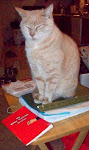
History, condemned repeating it, or seeing if we can escape it? Email me at frommyshelf@epix.net. Miss a column? Our archives are available at www.frommyshelf.blogspot.com read the history of Hobo in “Hobo Finds A Home” A charming story about a barn cat who wants more out of life. Don’t miss the in depth documentary about Hobo the cat, soon to be aired on the History Channel!
Those who cannot remember the past are condemned to repeat it. Those who cannot remember the past are condemned to repeat it. Sigh, just another 98 times and then I have to go home and start my history homework. I guess my teacher didn’t like some of my more creative answers to the exam. What does she know? She is totally oblivious to Area 51, Tesla’s death ray, or that Hitler’s Brain is hooked up to a supercomputer and is the president of Brazil. I love reading, but she makes history soooo boring. She just teaches us what we are supposed to know. Nothing I’m not supposed to know, nothing quirky or surprising, or interesting. I mean, why did Napoleon really lose the battle of Waterloo? * Textbooks can be so plodding, far too logical and way too orderly. History is messy and it can be amusing and not so serious, and even a little bizarre…
I want to know the good stuff and that’s why I turned to An Underground Education: The Unauthorized And Outrageous Supplement To Everything You Thought You Knew About Art, Sex, Business, Crime, Science, Medicine, And Other Fields Of Human Knowledge by Richard Zacks. Forget what you learned in school, and the teacher’s angry red marker. Zacks debunks many popular cultural myths and gives new life to old history. Zacks has divided the book into ten different sections: Arts & Literature, Business, Crime & Punishment, Everyday Life, Medicine, Religion, Science, Sex, World History, and American History.
Zacks covers a wide variety of topics, but he keeps the writing simple and attention grabbing. His emphasis, however, is definitely on the strange and often perverse. So, if you are easily offended, and a bit conservative you should probably skip this book. I mean the title does have business and sex in the title, so that should tell you it’s not for the thin-skinned. For example, you might read today’s headlines and get the impression that Iraqi War profiteering is something new, but the unfortunate soldiers of the Civil War often wore shoes with no soles, slept in disintegrating tents, and fired weapons that blew up in their hands, all due to the greed of America’s great capitalists.
Surely you would have paid more attention in English class if you knew the Bard was so bawdy or that Chaucer made sly jokes about sex. Sure, you knew Edison was credited for inventing the incandescent light bulb, but did you know he secretly helped develop the electric chair in a devious scheme to have the death-dealing device named after his archrival, George Westinghouse? There are lots of interesting facts and tidbits, though it’s far from complete. For example, he joyfully explores the evolution of the codpiece, but skips over the symbolism of the long-toed shoes, or poulaines. European folk beliefs equated foot-size with penis-size (think also of noses...) and the tips of the poulaines were thus phallic symbols. The tops of poulaines were also often painted with images of male genitals. You just can’t make this stuff up!
Yes, history is way more interesting, and vastly more complicated, than the dried-out sentences in high school history books that leave me feeling deeply unsatisfied. Perhaps great men and women should be pushed off their pedestals. They do not stand on the shoulders of giants (not an admission of humility by Sir Isaac Newton, but rather a bitter insult to a hunchbacked dwarf he was feuding with); they are human, like you and me. Made of flesh and blood and sometimes just a little strange-the famous Mari Hari was no master spy, Cleopatra was ugly as sin, and Pope Innocent III authorized a holy quest for Jesus’ foreskin. I guess history can be entertaining, warped and worth remembering. Those who cannot remember the past are condemned to repeat it…
*Theories abound, but the brilliant strategist had a raging case of hemorrhoids, which prevented him from riding out and surveying the troops. Ahh, but for a nail…
History, condemned repeating it, or seeing if we can escape it? Email me at frommyshelf@epix.net. Miss a column? Our archives are available at www.frommyshelf.blogspot.com read the history of Hobo in “Hobo Finds A Home” A charming story about a barn cat who wants more out of life. Don’t miss the in depth documentary about Hobo the cat, soon to be aired on the History Channel!
Wednesday, April 9, 2008
Death, Taxes and Leaky Waders
Kevin Coolidge
Time, little pieces of forever crumbling into tomorrow, so fleeting so fast, so damn close to April 15th and tax day. I received a letter from the IRS, and after a big breath, and popping a fresh load of buckshot into the old 12 gauge, I decided to read it. Appears the government is giving me $600 of my own money back in order to stimulate the economy. They could have saved a stamp and given me $600.41 cents back, or better yet, left it in my pocket. I would have tickled the economy by buying food, books, and of course, fishing gear. Yep, the first true sign of spring isn’t robins or dandelions or even April showers, but that first tug at the end of a fishing line. The first day of trout season is always about more than the fish, and no one knows that better than outdoor writer John Gierach.
John Gierach is a free-lance writer and author of several fly-fishing themed books with titles such as Still Life With Brook Trout; Sex, Death and Fly-Fishing; and the cult classic, Trout Bum. His work has appeared in Gray’s Sporting Journal, Field & Stream and Fly, Rod and Reel. His writing is not purely instructional, though there’s plenty of useful information, nor merely adventurous, though he travels from the Arctic to Scotland to the Rockies, and it’s not the purist philosophy of an elite fly fisherman, though there’s a witty thinker with a wry sense of humor wearing that patched-up pair of waders. What he does manage to do is explain the peculiarities of the fishing life in a way that will amuse novices and seasoned fly fishers alike.
Death, Taxes and Leaky Waders collects forty of John Gierach’s finest essays on fishing from six of his earlier books. Gierach is perhaps one of the most entertaining outdoor writers working today. Like all his writing, these essays are about more than fishing, but about nature, friendship, and observations of life. Gierach often begins with a keen observation that soon leads to something below the surface, which he coaxes out, and successfully lands. As Gierach says, “Writing is a lot like fishing.”
Writing is a lot like fishing. Both take patience, persistence, lots of time, an appreciation of the process, and both are harder than they appear. This anthology of Gierach’s work is sure to comfort the angler who stands in a cold river for hours and brings home nothing to show for it. As any fisherman knows, there’s more to fishing than the fish, and like any good writing, this collection of essays is about more the preparation of camp coffee or catching arctic graylings, but ultimately about life, death and of course, fly fishing…
Fish or cut bait? Trout or Bass? Drop me an email at frommyshelf@epix.net Trolling for past columns? Cast your line at www.frommyshelf.blogspot.com Be sure to catch “Hobo Finds A Home” a children’s book about a cat who wanted more out of life than to be a barn cat. This column approved by the committee to elect Hobo for President
Time, little pieces of forever crumbling into tomorrow, so fleeting so fast, so damn close to April 15th and tax day. I received a letter from the IRS, and after a big breath, and popping a fresh load of buckshot into the old 12 gauge, I decided to read it. Appears the government is giving me $600 of my own money back in order to stimulate the economy. They could have saved a stamp and given me $600.41 cents back, or better yet, left it in my pocket. I would have tickled the economy by buying food, books, and of course, fishing gear. Yep, the first true sign of spring isn’t robins or dandelions or even April showers, but that first tug at the end of a fishing line. The first day of trout season is always about more than the fish, and no one knows that better than outdoor writer John Gierach.
John Gierach is a free-lance writer and author of several fly-fishing themed books with titles such as Still Life With Brook Trout; Sex, Death and Fly-Fishing; and the cult classic, Trout Bum. His work has appeared in Gray’s Sporting Journal, Field & Stream and Fly, Rod and Reel. His writing is not purely instructional, though there’s plenty of useful information, nor merely adventurous, though he travels from the Arctic to Scotland to the Rockies, and it’s not the purist philosophy of an elite fly fisherman, though there’s a witty thinker with a wry sense of humor wearing that patched-up pair of waders. What he does manage to do is explain the peculiarities of the fishing life in a way that will amuse novices and seasoned fly fishers alike.
Death, Taxes and Leaky Waders collects forty of John Gierach’s finest essays on fishing from six of his earlier books. Gierach is perhaps one of the most entertaining outdoor writers working today. Like all his writing, these essays are about more than fishing, but about nature, friendship, and observations of life. Gierach often begins with a keen observation that soon leads to something below the surface, which he coaxes out, and successfully lands. As Gierach says, “Writing is a lot like fishing.”
Writing is a lot like fishing. Both take patience, persistence, lots of time, an appreciation of the process, and both are harder than they appear. This anthology of Gierach’s work is sure to comfort the angler who stands in a cold river for hours and brings home nothing to show for it. As any fisherman knows, there’s more to fishing than the fish, and like any good writing, this collection of essays is about more the preparation of camp coffee or catching arctic graylings, but ultimately about life, death and of course, fly fishing…
Fish or cut bait? Trout or Bass? Drop me an email at frommyshelf@epix.net Trolling for past columns? Cast your line at www.frommyshelf.blogspot.com Be sure to catch “Hobo Finds A Home” a children’s book about a cat who wanted more out of life than to be a barn cat. This column approved by the committee to elect Hobo for President
Saturday, April 5, 2008
The Civil War Comes Home
Kasey Cox
When I was eight or nine, my family took a Civil War summer vacation: we visited Gettysburg, Antietam, Harper’s Ferry, Manassas. We toured battlefields. We went to museums that showed artifacts – minie balls and cannon balls, examples of uniforms and swords, flags of various regiments, photos and paintings showing scenes from the critical days. We saw films, wax museums, displays. It was fascinating, and brought history to life for me. I’ve always been thankful to have traveled to these places when I was so young.
What I didn’t realize is how much Civil War history there was to learn about right here in the Twin Tiers.
Because of my father’s ongoing interest in history, and my own interest in books, I knew of MacKinlay Kantor’s Pulitzer Prize winning book, “Andersonville”, an intricate novel detailing life in and around the infamous prison camp in the South. I learned that the Andersonville Prison was a place of horror, where Union soldiers were taken to die by neglect and appalling conditions. Many of us learn of this, at least in passing, because the North won, and winners get to focus on their perspective of the events, people, and places that make up the stories that become history. And then there are books written – several excellent books have been researched and published on Andersonville – and movies made. Eventually, though, enough time passes and people become interested in their local history without feeling indicted by the shame in it. And so, as Michael Horigan explains in the introduction to his book, “Elmira: Death Camp of the North”, in 1974 he was asked to teach a graduate workshop on the history of the Civil War prison camp in our backyard.
Over the years of teaching this class for Elmira College, Michael Horigan’s file on the prison camp and the history of Elmira leading up to the Civil War grew, as did his interest. After a year-long sabbatical for research, as well as weekends and summers for many years after, Stackpole Books finally published the definitive, authoritative work on the camp where over 12,000 Confederate soldiers were brought to “Helmira”. Horigan’s book is a wonderful testament to the years of work that went in to researching and writing it. Each page, each paragraph, is loaded with details, footnotes, and facts, but the sentences flow smoothly, and the reading never feels weighed down. This is a history which explains and evokes the era, fascinates, elucidates, saddens, cautions, differentiates. Though the Elmira Prison Camp had a death rate almost as high as that of Andersonville, Horigan is careful to explain the differences in the reasons behind those statistics. Ultimately, “Elmira: Death Camp of the North” is a compelling read, because it’s much more than a collection of facts: it’s the story of America cementing its identity as the United States, shown through the microcosm of a town we know.
At the same time that Michael Horigan was preparing his book on the logistics of building a prison camp during the Civil War, another area man was researching how a neighboring town could handle a similar but much happier enterprise – building and maintaining a Soldiers’ Home, where homeless, sick, and/or indigent Civil War veterans of New York State could be cared for with respect and dignity. Robert Yott, himself a Civil War re-enactor, labored to create a book detailing the 125-year history of the Bath Soldiers’ Home. Yott’s book is all the more interesting for its focus on the genesis of the project, how the citizens of Bath organized to bid to be the location of the prestigious Home, how they won the bid over several other locations including Elmira, how they coordinated fundraising efforts with the famous orator Henry Ward Beecher, how the design was cutting edge technology for the time. Thus, this history of the Bath Hospital becomes, like Horigan’s book, a window into life in the Twin Tiers of the time. I encourage you to take a look.
Searching for where the flowers have gone, or just whistlin’ Dixie? Write Hobo with any local Civil War history you know, at from_my_shelf@yahoo.com. Follow the drinking gourd to Hobo’s archived articles at http://frommyshelf.blogspot.com.
When I was eight or nine, my family took a Civil War summer vacation: we visited Gettysburg, Antietam, Harper’s Ferry, Manassas. We toured battlefields. We went to museums that showed artifacts – minie balls and cannon balls, examples of uniforms and swords, flags of various regiments, photos and paintings showing scenes from the critical days. We saw films, wax museums, displays. It was fascinating, and brought history to life for me. I’ve always been thankful to have traveled to these places when I was so young.
What I didn’t realize is how much Civil War history there was to learn about right here in the Twin Tiers.
Because of my father’s ongoing interest in history, and my own interest in books, I knew of MacKinlay Kantor’s Pulitzer Prize winning book, “Andersonville”, an intricate novel detailing life in and around the infamous prison camp in the South. I learned that the Andersonville Prison was a place of horror, where Union soldiers were taken to die by neglect and appalling conditions. Many of us learn of this, at least in passing, because the North won, and winners get to focus on their perspective of the events, people, and places that make up the stories that become history. And then there are books written – several excellent books have been researched and published on Andersonville – and movies made. Eventually, though, enough time passes and people become interested in their local history without feeling indicted by the shame in it. And so, as Michael Horigan explains in the introduction to his book, “Elmira: Death Camp of the North”, in 1974 he was asked to teach a graduate workshop on the history of the Civil War prison camp in our backyard.
Over the years of teaching this class for Elmira College, Michael Horigan’s file on the prison camp and the history of Elmira leading up to the Civil War grew, as did his interest. After a year-long sabbatical for research, as well as weekends and summers for many years after, Stackpole Books finally published the definitive, authoritative work on the camp where over 12,000 Confederate soldiers were brought to “Helmira”. Horigan’s book is a wonderful testament to the years of work that went in to researching and writing it. Each page, each paragraph, is loaded with details, footnotes, and facts, but the sentences flow smoothly, and the reading never feels weighed down. This is a history which explains and evokes the era, fascinates, elucidates, saddens, cautions, differentiates. Though the Elmira Prison Camp had a death rate almost as high as that of Andersonville, Horigan is careful to explain the differences in the reasons behind those statistics. Ultimately, “Elmira: Death Camp of the North” is a compelling read, because it’s much more than a collection of facts: it’s the story of America cementing its identity as the United States, shown through the microcosm of a town we know.
At the same time that Michael Horigan was preparing his book on the logistics of building a prison camp during the Civil War, another area man was researching how a neighboring town could handle a similar but much happier enterprise – building and maintaining a Soldiers’ Home, where homeless, sick, and/or indigent Civil War veterans of New York State could be cared for with respect and dignity. Robert Yott, himself a Civil War re-enactor, labored to create a book detailing the 125-year history of the Bath Soldiers’ Home. Yott’s book is all the more interesting for its focus on the genesis of the project, how the citizens of Bath organized to bid to be the location of the prestigious Home, how they won the bid over several other locations including Elmira, how they coordinated fundraising efforts with the famous orator Henry Ward Beecher, how the design was cutting edge technology for the time. Thus, this history of the Bath Hospital becomes, like Horigan’s book, a window into life in the Twin Tiers of the time. I encourage you to take a look.
Searching for where the flowers have gone, or just whistlin’ Dixie? Write Hobo with any local Civil War history you know, at from_my_shelf@yahoo.com. Follow the drinking gourd to Hobo’s archived articles at http://frommyshelf.blogspot.com.
Friday, April 4, 2008
Fishing Season Opens Soon!!
Kevin Coolidge
My uncle was a dedicated fly fisherman, and I remember the dining room table covered with vices and tiny hooks and filled with turkey feathers and multi-colored deer tails. I would watch him create delicate mimicries and speak of matching the hatch. Hunting and fishing are both an important part of our culture here in Tioga County, and there’s something about the smell of gun oil, the searing heat of a woodstove, and a well-stocked fly box that has a place in any fisherman’s heart. No man deserves the title of sportsman that doesn’t feel a deep, honest gratitude for nature’s bounty. I grew up loving the woods, creeks, and the wild things in them. I thought every ten year old knew the difference between a stocked trout and a native brookie and I couldn’t wait until the first day of trout season. If you are having trouble waiting too, here’s some reading material to keep you busy.
The ABCs of Fly Tying by Maurice Beliveau: A straightforward manual that any beginner can use to get started fly tying. The book covers basic skills you need to learn, practice, and perfect: tying on, the whip finish, pinch tying, abrading, dubbing, working with wings and hackle, and the high tie method. After the basic techniques, the book moves on to the step-by-step instructions for tying 18 popular flies. Beliveau simplifies the intimidating world of fly tying and gives just the right amount of detail to get you started.
First Cast: Teaching Kids to Fly-Fish by Phil Genova: The author is an instructor of fly fishing at Cornell University and this book is based on a program that has taught thousands of youngsters to fly-fish. Kids can have fun learning to fish and learn respect and appreciation of nature at the same time. This book will take them from their first half hitch and Wooly Bugger to long casts over rising trout.
100 Weird Ways To Catch Fish by John Waldman: There’s more than one to catch a fish, and not everyone fly fishes. The spear, the line and the hook are perennial favorites, but there’s fishing with the bow, night knife-fishing in Nepal, noodling for catfish, and the less-than-subtle approach of using dynamite, which reminds me of a tale involving a game warden and a poacher.
Fishing with the Presidents by Bill Mares: "All men," Herbert Hoover noted, "are equal before fish." Perhaps nothing is more democratic than fishing. Just about all our presidents have fished, at least occasionally. George Washington was briefly a commercial fisherman. FDR had a special chair built into his boats to allow him to fish. Richard Nixon attempted to learn to fly fish with disastrous results, and even “Silent Cal” was known to swear at the wiles of trout. This is American history that you can wade into.
Death, Taxes, and Leaky Waders by John Gierach: Writing is a lot like fishing. Both take patience, persistence, lots of time, an appreciation of the process, and both are harder than they appear. This anthology of John’s work is sure to comfort the angler who stands in a cold river for hours and brings home nothing to show for it. Any fisherman knows there’s more to fishing than the fish, and like any good writing this collection of essays is about more the preparation of camp coffee or catching arctic graylings, but about life, death and of course fly fishing.
Of A Predatory Heart by Joe Parry: Joe Parry, a Vietnam vet and an outdoor writer, has written for the Pennsylvania Game News, Field and Stream, Fins and Feathers, Turkey Magazine, and Sports Afield. His stories on hunting and fishing run from snort-milk-through-your nose funny, to bringing a tear to a seasoned woodsman's eye. I could not stop laughing when I read the short story, The Royal Roachman. Anyone who has every tried to duplicate one of nature’s creations, will surely appreciate “Big Bill’s” gallant but feeble attempt, and the creation of THE FLY.
As my Uncle once said, “Give a man a fish and he eats for a day, but teach a man to fish and he’ll be drinking beer and spinning tales before you know it. So, grab a hot cup of coffee, hunker down, and enjoy some great books.
Kevin is the author of Hobo Finds A Home and spins tales in Wellsboro at From My Shelf Books. Check it out at www.wellsborobookstore.com
My uncle was a dedicated fly fisherman, and I remember the dining room table covered with vices and tiny hooks and filled with turkey feathers and multi-colored deer tails. I would watch him create delicate mimicries and speak of matching the hatch. Hunting and fishing are both an important part of our culture here in Tioga County, and there’s something about the smell of gun oil, the searing heat of a woodstove, and a well-stocked fly box that has a place in any fisherman’s heart. No man deserves the title of sportsman that doesn’t feel a deep, honest gratitude for nature’s bounty. I grew up loving the woods, creeks, and the wild things in them. I thought every ten year old knew the difference between a stocked trout and a native brookie and I couldn’t wait until the first day of trout season. If you are having trouble waiting too, here’s some reading material to keep you busy.
The ABCs of Fly Tying by Maurice Beliveau: A straightforward manual that any beginner can use to get started fly tying. The book covers basic skills you need to learn, practice, and perfect: tying on, the whip finish, pinch tying, abrading, dubbing, working with wings and hackle, and the high tie method. After the basic techniques, the book moves on to the step-by-step instructions for tying 18 popular flies. Beliveau simplifies the intimidating world of fly tying and gives just the right amount of detail to get you started.
First Cast: Teaching Kids to Fly-Fish by Phil Genova: The author is an instructor of fly fishing at Cornell University and this book is based on a program that has taught thousands of youngsters to fly-fish. Kids can have fun learning to fish and learn respect and appreciation of nature at the same time. This book will take them from their first half hitch and Wooly Bugger to long casts over rising trout.
100 Weird Ways To Catch Fish by John Waldman: There’s more than one to catch a fish, and not everyone fly fishes. The spear, the line and the hook are perennial favorites, but there’s fishing with the bow, night knife-fishing in Nepal, noodling for catfish, and the less-than-subtle approach of using dynamite, which reminds me of a tale involving a game warden and a poacher.
Fishing with the Presidents by Bill Mares: "All men," Herbert Hoover noted, "are equal before fish." Perhaps nothing is more democratic than fishing. Just about all our presidents have fished, at least occasionally. George Washington was briefly a commercial fisherman. FDR had a special chair built into his boats to allow him to fish. Richard Nixon attempted to learn to fly fish with disastrous results, and even “Silent Cal” was known to swear at the wiles of trout. This is American history that you can wade into.
Death, Taxes, and Leaky Waders by John Gierach: Writing is a lot like fishing. Both take patience, persistence, lots of time, an appreciation of the process, and both are harder than they appear. This anthology of John’s work is sure to comfort the angler who stands in a cold river for hours and brings home nothing to show for it. Any fisherman knows there’s more to fishing than the fish, and like any good writing this collection of essays is about more the preparation of camp coffee or catching arctic graylings, but about life, death and of course fly fishing.
Of A Predatory Heart by Joe Parry: Joe Parry, a Vietnam vet and an outdoor writer, has written for the Pennsylvania Game News, Field and Stream, Fins and Feathers, Turkey Magazine, and Sports Afield. His stories on hunting and fishing run from snort-milk-through-your nose funny, to bringing a tear to a seasoned woodsman's eye. I could not stop laughing when I read the short story, The Royal Roachman. Anyone who has every tried to duplicate one of nature’s creations, will surely appreciate “Big Bill’s” gallant but feeble attempt, and the creation of THE FLY.
As my Uncle once said, “Give a man a fish and he eats for a day, but teach a man to fish and he’ll be drinking beer and spinning tales before you know it. So, grab a hot cup of coffee, hunker down, and enjoy some great books.
Kevin is the author of Hobo Finds A Home and spins tales in Wellsboro at From My Shelf Books. Check it out at www.wellsborobookstore.com
Wednesday, March 26, 2008
Huck Finn Goes to Pennsylvania
Kasey Cox
Imagine this recipe: you take the tone of a classic story like "Little House on the Prairie"; the voice of a woman like Marty, of Janette Oke's "Love Comes Softly" series; set her down in north central Pennsylvania just as the 1800's become the 1900's. Then, add in a character who just may be the Huckleberry Finn, after several decades of wandering and mellowing, and for a finishing touch, give it just a hint of "Jane Eyre". You just might end up with something that tasted like Larry Kimport's "A Small Harvest of Pretty Days."
The book hooks the reader at the beginning with a plot device unusual for this type of story - Clara, the first-person narrator, describes how the first time she saw the man she came to know as Mr. Finley, she was running for her life. In the opening scene, Clara hints at how she knows, from personal experience, that the man she was running from meant her harm. As she hides inside a fallen tree - and this is a nice touch, since the trees of that era were big enough for a grown person to fit inside - she witnesses a murder. From my perspective, the questions surrounding this murder continue to pull the reader through the story, and change it from just another novel for the historical fiction shelves.
Indeed, Kimport blends the techniques and topics of contemporary fiction with the milieu and voice of a bygone era. The setting of the Twin Tiers (that's northcentral PA and southcentral NY, to those of you outside the area) in the 1890's is effectively woven into Clara's story, using details of the chores of daily life, the discussions on the lumber business heard around the dinner table with important male guests, the descriptions of clothing and tools, the leisure activities of the well-to-do, and the hardships of most travel. Occasionally, this historical setting and the voices of the characters are out-of-sync with the frank discussion of rape and murder that drives the plot. Nevertheless, Kimport is usually able to smooth this over by prefacing these revelations with how utterly Clara's life is devastated by her experience and the community's opinion of her as a result, or by having male characters say, "we shouldn't be talking about this gruesome murder in the presence of women and children."
"A Small Harvest of Pretty Days" is marketed as a fictional love story, and as a "what-if" sequel to Mark Twain's "The Adventures of Huckleberry Finn." While those ingredients are in there, that's not the strongest flavor. I felt the author did a better job evoking rural America at the turn of the last century, and of leaving the "why" of the murder open. I was more intrigued with the information on the railroads coming through the Williamsport area, and the lumber being moved down the Susquehanna River, and the day-to-day activities necessary for running a farm. The development of the love story and the mystery as to whether or not Mr. Finley was Huck Finn were a little obvious to me, although the love story is nice in and of itself. Any fan of Janette Oke or Lori Wick or Judith Pella's Christian historical romances will enjoy this aspect of Kimport's novel. And I did like reading a love story that wasn't all convoluted with war stories, or full of vampires, for once. What kept me reading, however, was wanting answers to the same questions that bothered Clara - why would this seemingly nice man, this Mr. Finley who was so kind and helpful to her, kill a man? And why didn't it seem to bother him? Was he responsible for the other brutal murders that were shocking the entire area?
The answer is a creative one, and doesn't resolve until near the end of the book, in just the plot structure your junior high English teacher explained to you. I found the resolution, as well as the epilogue of Clara's life, ultimately quite satisfying. At 181 pages, and reasonably priced at $12.97, I'd recommend Kimport's book to any reader looking for a good recipe with more to it than expected.
Imagine this recipe: you take the tone of a classic story like "Little House on the Prairie"; the voice of a woman like Marty, of Janette Oke's "Love Comes Softly" series; set her down in north central Pennsylvania just as the 1800's become the 1900's. Then, add in a character who just may be the Huckleberry Finn, after several decades of wandering and mellowing, and for a finishing touch, give it just a hint of "Jane Eyre". You just might end up with something that tasted like Larry Kimport's "A Small Harvest of Pretty Days."
The book hooks the reader at the beginning with a plot device unusual for this type of story - Clara, the first-person narrator, describes how the first time she saw the man she came to know as Mr. Finley, she was running for her life. In the opening scene, Clara hints at how she knows, from personal experience, that the man she was running from meant her harm. As she hides inside a fallen tree - and this is a nice touch, since the trees of that era were big enough for a grown person to fit inside - she witnesses a murder. From my perspective, the questions surrounding this murder continue to pull the reader through the story, and change it from just another novel for the historical fiction shelves.
Indeed, Kimport blends the techniques and topics of contemporary fiction with the milieu and voice of a bygone era. The setting of the Twin Tiers (that's northcentral PA and southcentral NY, to those of you outside the area) in the 1890's is effectively woven into Clara's story, using details of the chores of daily life, the discussions on the lumber business heard around the dinner table with important male guests, the descriptions of clothing and tools, the leisure activities of the well-to-do, and the hardships of most travel. Occasionally, this historical setting and the voices of the characters are out-of-sync with the frank discussion of rape and murder that drives the plot. Nevertheless, Kimport is usually able to smooth this over by prefacing these revelations with how utterly Clara's life is devastated by her experience and the community's opinion of her as a result, or by having male characters say, "we shouldn't be talking about this gruesome murder in the presence of women and children."
"A Small Harvest of Pretty Days" is marketed as a fictional love story, and as a "what-if" sequel to Mark Twain's "The Adventures of Huckleberry Finn." While those ingredients are in there, that's not the strongest flavor. I felt the author did a better job evoking rural America at the turn of the last century, and of leaving the "why" of the murder open. I was more intrigued with the information on the railroads coming through the Williamsport area, and the lumber being moved down the Susquehanna River, and the day-to-day activities necessary for running a farm. The development of the love story and the mystery as to whether or not Mr. Finley was Huck Finn were a little obvious to me, although the love story is nice in and of itself. Any fan of Janette Oke or Lori Wick or Judith Pella's Christian historical romances will enjoy this aspect of Kimport's novel. And I did like reading a love story that wasn't all convoluted with war stories, or full of vampires, for once. What kept me reading, however, was wanting answers to the same questions that bothered Clara - why would this seemingly nice man, this Mr. Finley who was so kind and helpful to her, kill a man? And why didn't it seem to bother him? Was he responsible for the other brutal murders that were shocking the entire area?
The answer is a creative one, and doesn't resolve until near the end of the book, in just the plot structure your junior high English teacher explained to you. I found the resolution, as well as the epilogue of Clara's life, ultimately quite satisfying. At 181 pages, and reasonably priced at $12.97, I'd recommend Kimport's book to any reader looking for a good recipe with more to it than expected.
Thursday, March 20, 2008
Out of Print if not for the Indies
Kasey Cox
Selling gently used books online is often a maddening, mysterious process. Thousands of wonderful books in near-perfect condition must be priced ridiculously low to compete; but then, some seemingly random book will be worth triple its original cover cost, or more. As my partner and I worked this process, throwing our dice, casting our nets every day by listing books for sale, we wondered what invisible hand is driving the prices sky-high on certain books.
These books have gone out-of-print. They are not, however, the “collector” books one would normally associate with such high prices. Many are paperbacks, published only in the last ten years. They are not necessarily first editions. They are not in pristine condition, nor are they autographed.
I never took a single economics class, but even I can grasp the basic tenet of supply and demand. There are not enough copies of these books for everyone who would like to read them, and this means people must compete to buy them. As a bookseller who cares about my customers, and who loves to see people matched with the books they want, it pains me to explain to people that the third book in the series they were reading now costs twenty-five dollars … or forty … or more.
We have had customers get angry with us when they see the price tag on certain books: “WHAT does this price tag say? That can’t be right!” Unfortunately, it is.
The invisible hand driving books out-of-print is the same hand that is making it increasingly difficult for first-time authors to get published, or for many authors to get re-published. The hand belongs to you, and it belongs to me: every time we reach into our wallets at a big-box, chain store, or pick up a pen to fill out the form for that mail-order book club, we are helping to drive thousands of books out-of-print.
That may sound incredibly harsh, or fanatical, but opening a small, independent bookstore has placed me at ground zero of the sell-or-perish world. I have been able to talk at length with other online booksellers, a high school friend who now manages a Barnes & Noble in the Philadelphia area, long-time book collectors, owners of local independent bookstores, self-published authors, and authors who have had national success.
Watching a recent documentary, “Indies Under Fire”, helped me put together the pieces of these conversations. I have come to see how the big-box bookstores exert considerable control over who gets published, who gets marketed, how long a book stays in print, and even the variety of books available to consumers. The bottom line is this: if a book doesn’t sell a tremendous number of copies, then the big chain bookstores will no longer carry it. Since ordering decisions are rarely made by individual locations of chain stores, discontinuing a book means a huge drop in the percentage of copies ordered, leaving the publishers loathe to continue reprinting that book.
The beloved book, “Flatlanders and Ridgerunners”, by the late (and much missed) local English professor Jim Glimm, has been only one of many books that fell victim to this trend. That may seem to make sense, since “Flatlanders” is a collection of local folk- and tall tales, but it did well beyond the region, often held up as a great example of this type of anthology. The University of Pittsburgh Press finally brought “Flatlanders” back --only after many emails and phone calls, only after their researching how much it was selling for as a used copy online, and only as a “print-on-demand.”
In a recent email communication I had with author Jennifer Egan, she expressed concern that her first novel, “The Invisible Circus” (one of my favorite novels of all time), will soon go out of print. Jennifer Egan’s second novel, “Look at Me”, was a finalist for the 2001 National Book Award; her third and most recent novel, “The Keep”, received a full-page review in Oprah magazine and was highly recommended by the BookSense program. Jennifer Egan is not an author who should have to worry about her books going out of print, but author Barbara Kingsolver echoed this sentiment, saying that she never would have been published in today’s publishing world.
This wild election year is a perfect time to re-consider how your vote counts. The truth of the matter is that we often vote with our wallets, and we vote with our feet. If you want something to stay around, you need to show up. You need to support it. If you want more than the Top 40 books and the same displays in every store, then be sure to check out the indie bookstores tucked away in the little towns and big cities you visit. Of course, I’m biased. But I also believe that variety is the spice of life.
Want to browse or be spoon-fed? Lots of choice or individual voices? Hobo says, whatever you do, vote for his book, “Hobo Finds A Home”. Yeah, he’s been pushy marketing it, but he’s big enough to suggest other books, too. Read about other titles he’s suggested at http://frommyshelf.blogspot.com
Selling gently used books online is often a maddening, mysterious process. Thousands of wonderful books in near-perfect condition must be priced ridiculously low to compete; but then, some seemingly random book will be worth triple its original cover cost, or more. As my partner and I worked this process, throwing our dice, casting our nets every day by listing books for sale, we wondered what invisible hand is driving the prices sky-high on certain books.
These books have gone out-of-print. They are not, however, the “collector” books one would normally associate with such high prices. Many are paperbacks, published only in the last ten years. They are not necessarily first editions. They are not in pristine condition, nor are they autographed.
I never took a single economics class, but even I can grasp the basic tenet of supply and demand. There are not enough copies of these books for everyone who would like to read them, and this means people must compete to buy them. As a bookseller who cares about my customers, and who loves to see people matched with the books they want, it pains me to explain to people that the third book in the series they were reading now costs twenty-five dollars … or forty … or more.
We have had customers get angry with us when they see the price tag on certain books: “WHAT does this price tag say? That can’t be right!” Unfortunately, it is.
The invisible hand driving books out-of-print is the same hand that is making it increasingly difficult for first-time authors to get published, or for many authors to get re-published. The hand belongs to you, and it belongs to me: every time we reach into our wallets at a big-box, chain store, or pick up a pen to fill out the form for that mail-order book club, we are helping to drive thousands of books out-of-print.
That may sound incredibly harsh, or fanatical, but opening a small, independent bookstore has placed me at ground zero of the sell-or-perish world. I have been able to talk at length with other online booksellers, a high school friend who now manages a Barnes & Noble in the Philadelphia area, long-time book collectors, owners of local independent bookstores, self-published authors, and authors who have had national success.
Watching a recent documentary, “Indies Under Fire”, helped me put together the pieces of these conversations. I have come to see how the big-box bookstores exert considerable control over who gets published, who gets marketed, how long a book stays in print, and even the variety of books available to consumers. The bottom line is this: if a book doesn’t sell a tremendous number of copies, then the big chain bookstores will no longer carry it. Since ordering decisions are rarely made by individual locations of chain stores, discontinuing a book means a huge drop in the percentage of copies ordered, leaving the publishers loathe to continue reprinting that book.
The beloved book, “Flatlanders and Ridgerunners”, by the late (and much missed) local English professor Jim Glimm, has been only one of many books that fell victim to this trend. That may seem to make sense, since “Flatlanders” is a collection of local folk- and tall tales, but it did well beyond the region, often held up as a great example of this type of anthology. The University of Pittsburgh Press finally brought “Flatlanders” back --only after many emails and phone calls, only after their researching how much it was selling for as a used copy online, and only as a “print-on-demand.”
In a recent email communication I had with author Jennifer Egan, she expressed concern that her first novel, “The Invisible Circus” (one of my favorite novels of all time), will soon go out of print. Jennifer Egan’s second novel, “Look at Me”, was a finalist for the 2001 National Book Award; her third and most recent novel, “The Keep”, received a full-page review in Oprah magazine and was highly recommended by the BookSense program. Jennifer Egan is not an author who should have to worry about her books going out of print, but author Barbara Kingsolver echoed this sentiment, saying that she never would have been published in today’s publishing world.
This wild election year is a perfect time to re-consider how your vote counts. The truth of the matter is that we often vote with our wallets, and we vote with our feet. If you want something to stay around, you need to show up. You need to support it. If you want more than the Top 40 books and the same displays in every store, then be sure to check out the indie bookstores tucked away in the little towns and big cities you visit. Of course, I’m biased. But I also believe that variety is the spice of life.
Want to browse or be spoon-fed? Lots of choice or individual voices? Hobo says, whatever you do, vote for his book, “Hobo Finds A Home”. Yeah, he’s been pushy marketing it, but he’s big enough to suggest other books, too. Read about other titles he’s suggested at http://frommyshelf.blogspot.com
Sunday, March 16, 2008
FREE excerpt from "The Royal Roachman"
excerpt from “Royal Roachman” by Joe Parry
The morning of the opener dawned windy as radio promised. Bill, as usual, arrived two hours earlier than instructed. When Joe opened the door at his knocking, there stood Big Bill in the garb of the ultimate flyfisherman, looking as though he’d bought and was now wearing every item Orvis had in their warehouse!
“Mornin’, Billy! What is that stench?”
“Stench? What’s ‘stench’?” Bill questioned with that childish, puzzled look which always melted Joe’s “tough” heart.
“Okay, Bill, stink, s-t-i-n-k, stink! What is that stink?”
“Oh, that? Probably comin’ from where I burned this here vest in the back while tryin’ t’iron on the duct tape.”
“Duct tape? For what?”
“Well,” Bill said, “I hadda sew two vests together since the catalogs didn’t have ‘em in m’size, and not being much of a sewin’ man, I kinda had t’tidy it all up and cover the stitchin’ with duct tape. Daggone stuff don’t take much to ironin’, but aside from that, Little Buddy, how’s your ol’ pardner lookin’?”
“Fine, Bill, ya look just fine! I could probably put a down payment on the Hearst castle with less money than you musta spent on all that stuff! And how, may I ask, are you ever going to remove all those flies from your hat, even though I tied all we’ll ever need this season?”
“Like that arrangement, do ya? Why, there’s four or five dozen of them babies pinned in there. Got ‘em at the Dollar Department Store for ninety-nine cents on the dozen. Ol’ Billy here is a-ready as a Freddy and ‘um gonna knock ‘em dead today, Little Buddy!”
“Bill, the smell of that vest alone ought to knock ‘em dead! C’mon, let’s get rolling!”
At the stream: “Okay, Bill, listen up. I’ll be upstream from you just a’ways. Work those flies deep and strip line to prevent slack, so you’ll see or feel the strikes. Fish ‘em downstream and across like I taught ya and mend your line when it starts to belly on you, okay? And, Bill, pleeeeeze don’t be dropping that hat into the water or we’ll be arrested for chumming! Got it?”
“Yeah, I got it, Joe, except what do you mean ‘mend’? You can see by this vest I hain’t much of a mender!”
“Just fish, Bill, and good luck.”
Joe watched Big Bill at every opportunity. The wind was playing havoc with the leader and after just a couple of hours, and one morsel of a rainbow, Joe decided they’d better pack it in for the day.
“Hey, Billy! Let’s hang ‘er up, Big Buddy,” Joe said as he approached Bill’s position downstream. “This wind is a killer! How’d you do?”
Bill smiled that priceless smile of his and answered, “Shoot, Little Buddy, been done for nigh on fifteen minutes now. Got me eight ‘bows lickety split! How’s ‘bout you?”
Joe said, “Just got one rainbow about the size of your little finger, Bill. That’s about it.” Joe’s eyes watered as he examined Bill’s leader, which had back-to-back knots from butt to tippet. “Bill, look at your leader, fer cryin’ out loud! How’d’ya ever limit out using that thing? Looks like some crazed Boy Scout went on a rampage trying to get his knot-tying merit badge!”
“Why, Joseefus, I had a fine instructor, did I not – get it, knot?”
“Yeah, Billy, I get it. Now I think we’d best head for the Coffee Palace and call it a mornin’, okay?”
As they sat sipping coffee, they reviewed the morning’s activities. “Ya know, Chubby line chucker, I’m right proud of you!” Joe said, patting Bill’s mountainous shoulder. “Why, a limit of trout first time flyrodding? That is great! Tell me, Billy, what pattern were you using all morning?”
“I think,” Bill said, removing his fly-filled hat and scratching his head, “it was a Royal Roachman, Joe. I h’ain’t real sure now, since the daggone fly is still in that last trout I landed. I’ll find it when I clean ‘em up later an’ let ya know.”
“Bill,” Joe said, giggling, “read my lips. Say, Royal Coachman.”
As the pair were ready to leave the Palace, Joe reached into his pocket and came to realize he’d forgotten his wallet. “Doggone it, Billy, I was gonna pick up the tab, but it appears I left my wallet at home. Got any cash with you?”
“Sure I do, Tiny Tightwad, sure do!” Bill reached into the depths of his sewn-together vests and pulled forth a handful of change. A rather muddied tin fell to the floor, which caused the lip to jar open. Out onto the linoleum floor spilled a huge gob of tangled, very juicy-looking and lively red worms! Joe, in total disbelief, eyed the red worms as though they were toxic waste, then looked sternly into Bill’s squinting, guilt-ridden blue eyes.
“Think it was a Royal Roachman, huh, Big Boy?”
Bill, near frantic from fear of being strongly reprimanded, said, “Listen, Joe. I lost ever’ fly you gave me, in that big old tree behind me this mornin’, and I couldn’t free the ones stuck in m’hat. Why, that wind was horrendous, and I couldn’t get my flyline to do anything right! I just hadta use the worms so you wouldn’t think all those lessons ya gave me were for nuttin’. I wanted t’make ya proud of old Billy, so I tied on a snelled number eight and fished my worms. Caught ‘em all on the flyrod, though. Please don’t be ticked with me, Little Buddy, I was just tryin’ to make ya proud of the way ya taught me to handle the flyrod, is all!”
"Of A Predatory Heart" is available at From My Shelf Books in Wellsboro PA, Amazon, and Barnes and Noble online.
The morning of the opener dawned windy as radio promised. Bill, as usual, arrived two hours earlier than instructed. When Joe opened the door at his knocking, there stood Big Bill in the garb of the ultimate flyfisherman, looking as though he’d bought and was now wearing every item Orvis had in their warehouse!
“Mornin’, Billy! What is that stench?”
“Stench? What’s ‘stench’?” Bill questioned with that childish, puzzled look which always melted Joe’s “tough” heart.
“Okay, Bill, stink, s-t-i-n-k, stink! What is that stink?”
“Oh, that? Probably comin’ from where I burned this here vest in the back while tryin’ t’iron on the duct tape.”
“Duct tape? For what?”
“Well,” Bill said, “I hadda sew two vests together since the catalogs didn’t have ‘em in m’size, and not being much of a sewin’ man, I kinda had t’tidy it all up and cover the stitchin’ with duct tape. Daggone stuff don’t take much to ironin’, but aside from that, Little Buddy, how’s your ol’ pardner lookin’?”
“Fine, Bill, ya look just fine! I could probably put a down payment on the Hearst castle with less money than you musta spent on all that stuff! And how, may I ask, are you ever going to remove all those flies from your hat, even though I tied all we’ll ever need this season?”
“Like that arrangement, do ya? Why, there’s four or five dozen of them babies pinned in there. Got ‘em at the Dollar Department Store for ninety-nine cents on the dozen. Ol’ Billy here is a-ready as a Freddy and ‘um gonna knock ‘em dead today, Little Buddy!”
“Bill, the smell of that vest alone ought to knock ‘em dead! C’mon, let’s get rolling!”
At the stream: “Okay, Bill, listen up. I’ll be upstream from you just a’ways. Work those flies deep and strip line to prevent slack, so you’ll see or feel the strikes. Fish ‘em downstream and across like I taught ya and mend your line when it starts to belly on you, okay? And, Bill, pleeeeeze don’t be dropping that hat into the water or we’ll be arrested for chumming! Got it?”
“Yeah, I got it, Joe, except what do you mean ‘mend’? You can see by this vest I hain’t much of a mender!”
“Just fish, Bill, and good luck.”
Joe watched Big Bill at every opportunity. The wind was playing havoc with the leader and after just a couple of hours, and one morsel of a rainbow, Joe decided they’d better pack it in for the day.
“Hey, Billy! Let’s hang ‘er up, Big Buddy,” Joe said as he approached Bill’s position downstream. “This wind is a killer! How’d you do?”
Bill smiled that priceless smile of his and answered, “Shoot, Little Buddy, been done for nigh on fifteen minutes now. Got me eight ‘bows lickety split! How’s ‘bout you?”
Joe said, “Just got one rainbow about the size of your little finger, Bill. That’s about it.” Joe’s eyes watered as he examined Bill’s leader, which had back-to-back knots from butt to tippet. “Bill, look at your leader, fer cryin’ out loud! How’d’ya ever limit out using that thing? Looks like some crazed Boy Scout went on a rampage trying to get his knot-tying merit badge!”
“Why, Joseefus, I had a fine instructor, did I not – get it, knot?”
“Yeah, Billy, I get it. Now I think we’d best head for the Coffee Palace and call it a mornin’, okay?”
As they sat sipping coffee, they reviewed the morning’s activities. “Ya know, Chubby line chucker, I’m right proud of you!” Joe said, patting Bill’s mountainous shoulder. “Why, a limit of trout first time flyrodding? That is great! Tell me, Billy, what pattern were you using all morning?”
“I think,” Bill said, removing his fly-filled hat and scratching his head, “it was a Royal Roachman, Joe. I h’ain’t real sure now, since the daggone fly is still in that last trout I landed. I’ll find it when I clean ‘em up later an’ let ya know.”
“Bill,” Joe said, giggling, “read my lips. Say, Royal Coachman.”
As the pair were ready to leave the Palace, Joe reached into his pocket and came to realize he’d forgotten his wallet. “Doggone it, Billy, I was gonna pick up the tab, but it appears I left my wallet at home. Got any cash with you?”
“Sure I do, Tiny Tightwad, sure do!” Bill reached into the depths of his sewn-together vests and pulled forth a handful of change. A rather muddied tin fell to the floor, which caused the lip to jar open. Out onto the linoleum floor spilled a huge gob of tangled, very juicy-looking and lively red worms! Joe, in total disbelief, eyed the red worms as though they were toxic waste, then looked sternly into Bill’s squinting, guilt-ridden blue eyes.
“Think it was a Royal Roachman, huh, Big Boy?”
Bill, near frantic from fear of being strongly reprimanded, said, “Listen, Joe. I lost ever’ fly you gave me, in that big old tree behind me this mornin’, and I couldn’t free the ones stuck in m’hat. Why, that wind was horrendous, and I couldn’t get my flyline to do anything right! I just hadta use the worms so you wouldn’t think all those lessons ya gave me were for nuttin’. I wanted t’make ya proud of old Billy, so I tied on a snelled number eight and fished my worms. Caught ‘em all on the flyrod, though. Please don’t be ticked with me, Little Buddy, I was just tryin’ to make ya proud of the way ya taught me to handle the flyrod, is all!”
"Of A Predatory Heart" is available at From My Shelf Books in Wellsboro PA, Amazon, and Barnes and Noble online.
Wednesday, March 12, 2008
Aristotle and an Aardvark
Kevin Coolidge
So, I’m playing Texas Hold ‘em with the Pope, President Bush, and Hillary. Obama is too young to play with anything except pennies, so we didn’t invite him, and McCain went to Mexico to buy cheap Viagra. No wonder he’s for NAFTA. The Pope is broke again and trying to convince the rest of us to let him throw his big, pointy hat into the pot, but what am I going to do with it? I could sell it on EBay, but it’d be a pain to mail. Hillary decides to light a Cuban cigar, and crack a joke, “Did you see Barack Obama at that rally surrounded by all those Kennedys? I couldn't tell if he was running for president or bartender.”* Wait a moment. I’ve been handed yet another memo from the legal department. It appears that if I am going to finish this column, I’m going to have to read this disclaimer: Please note that views expressed here are those of the columnist. We neither agree, disagree, condone nor claim that any of his ramblings actually approach reality. Besides, our sources claim that the Pope only plays the nickel slots, and we called Bill, and he said Hillary would take Pennsylvania, but wouldn’t smoke a cigar…
The last time Pennsylvania’s primary actually made a difference was 1976. So you can be sure that we’ll have lots of doublespeak flying our way, and that’s why I picked up a copy of "Aristotle and an Aardvark Go To Washington: Understanding Political Doublespeak Through Philosophy and Jokes" by Thomas Cathcart & Daniel Klein. These authors of "Plato and a Platypus Walk into a Bar" aren’t falling for any election year tricky talk or weasel words, and neither should you.
Cathcart and Klein break out some great jokes as well as political cartoons. They explain what politicians are really up to when they state: “The absence of evidence is not the evidence of absence.” (Donald Rumsfeld); “It depends on what the meaning of the word ‘is’ is.” (Bill Clinton), or even “I am the Flail of God. If you had not committed great sins, God would not have sent a punishment like me upon you.” (Genghis Khan) I find it refreshing to hear an honest politician speak his mind. You can always count on the “Scourge of God “ to tell it as he saw it. No, wait--that was the diplomat, Attila the Hun.
Have you ever heard a politician deliver a speech or press conference and know in your gut that their pronouncements were certifiable BS, but you just couldn’t put your finger on why? Sure, sometimes the speaker fails to make sense simply because they convey a straight-out lie. This book will help you with the subtler stuff. For example, words that have been cunningly crafted to sound like they mean something important and compelling, but that upon careful inspection can be revealed to be bull scatology, which is far more insidious than outright lying, because it can be harder to detect.
Utilizing quotes from Al Sharpton to Adolf Hitler, Hillary Clinton to Dick Cheney, Donald Rumsfield and Genghis Khan, these philosophical comedians help us learn and identify many stratagems. There’s the “Texas Sharpshooter Fallacy”, where you shoot a bunch of holes in the barn door and then draw a target around them. There’s “Doublespeak”, such as electronic intercepts NOT wiretapping. And then there’s the good old “So’s your mother” argument, which is misleading by getting personal, “Your Mom wears combat boots”, which reminds me my high school days.
Presidential candidates often seem to cloud the issues saying anything and everything to get elected. Appearing to have said nothing and everything on both sides of an issue all in the same breath. They are speaking another language, and this book can help translate. I found it quick and easy to read, hard to put down, and funny, but the authors have a lot of material to work with. I believe Will Rogers nailed it when he said, “There’s no trick to being a humorist when you have the whole government working for you.” Now, I have to be off. I’m going hunting with Dick Cheney. I hear its open season on Qualye...
*Joke originally told by Jay Leno, much to Hillary’s chagrin. You don’t actually think she’s that funny?
So, I’m playing Texas Hold ‘em with the Pope, President Bush, and Hillary. Obama is too young to play with anything except pennies, so we didn’t invite him, and McCain went to Mexico to buy cheap Viagra. No wonder he’s for NAFTA. The Pope is broke again and trying to convince the rest of us to let him throw his big, pointy hat into the pot, but what am I going to do with it? I could sell it on EBay, but it’d be a pain to mail. Hillary decides to light a Cuban cigar, and crack a joke, “Did you see Barack Obama at that rally surrounded by all those Kennedys? I couldn't tell if he was running for president or bartender.”* Wait a moment. I’ve been handed yet another memo from the legal department. It appears that if I am going to finish this column, I’m going to have to read this disclaimer: Please note that views expressed here are those of the columnist. We neither agree, disagree, condone nor claim that any of his ramblings actually approach reality. Besides, our sources claim that the Pope only plays the nickel slots, and we called Bill, and he said Hillary would take Pennsylvania, but wouldn’t smoke a cigar…
The last time Pennsylvania’s primary actually made a difference was 1976. So you can be sure that we’ll have lots of doublespeak flying our way, and that’s why I picked up a copy of "Aristotle and an Aardvark Go To Washington: Understanding Political Doublespeak Through Philosophy and Jokes" by Thomas Cathcart & Daniel Klein. These authors of "Plato and a Platypus Walk into a Bar" aren’t falling for any election year tricky talk or weasel words, and neither should you.
Cathcart and Klein break out some great jokes as well as political cartoons. They explain what politicians are really up to when they state: “The absence of evidence is not the evidence of absence.” (Donald Rumsfeld); “It depends on what the meaning of the word ‘is’ is.” (Bill Clinton), or even “I am the Flail of God. If you had not committed great sins, God would not have sent a punishment like me upon you.” (Genghis Khan) I find it refreshing to hear an honest politician speak his mind. You can always count on the “Scourge of God “ to tell it as he saw it. No, wait--that was the diplomat, Attila the Hun.
Have you ever heard a politician deliver a speech or press conference and know in your gut that their pronouncements were certifiable BS, but you just couldn’t put your finger on why? Sure, sometimes the speaker fails to make sense simply because they convey a straight-out lie. This book will help you with the subtler stuff. For example, words that have been cunningly crafted to sound like they mean something important and compelling, but that upon careful inspection can be revealed to be bull scatology, which is far more insidious than outright lying, because it can be harder to detect.
Utilizing quotes from Al Sharpton to Adolf Hitler, Hillary Clinton to Dick Cheney, Donald Rumsfield and Genghis Khan, these philosophical comedians help us learn and identify many stratagems. There’s the “Texas Sharpshooter Fallacy”, where you shoot a bunch of holes in the barn door and then draw a target around them. There’s “Doublespeak”, such as electronic intercepts NOT wiretapping. And then there’s the good old “So’s your mother” argument, which is misleading by getting personal, “Your Mom wears combat boots”, which reminds me my high school days.
Presidential candidates often seem to cloud the issues saying anything and everything to get elected. Appearing to have said nothing and everything on both sides of an issue all in the same breath. They are speaking another language, and this book can help translate. I found it quick and easy to read, hard to put down, and funny, but the authors have a lot of material to work with. I believe Will Rogers nailed it when he said, “There’s no trick to being a humorist when you have the whole government working for you.” Now, I have to be off. I’m going hunting with Dick Cheney. I hear its open season on Qualye...
*Joke originally told by Jay Leno, much to Hillary’s chagrin. You don’t actually think she’s that funny?
Subscribe to:
Posts (Atom)
