Kasey Cox
When I was in third grade, I was the budding author of a novel. The main character was a teen girl who had been in a car accident, and had to learn to walk again. I had six handwritten notebook pages, front and back sides, as my first chapter. I showed these to my favorite cousin: he was several years older than I, regarded in our family as extremely smart, and I’d always shared a special bond with him. I felt like he took me seriously when other family members dismissed my ideas as childish. Imagine my disappointment with his response to my chapter: “This is well-written, Kasey, but books like this just don’t sell. There’s not much interest in tragic stories where the characters are having a difficult time recovering.”
Looking back now, I have to laugh ruefully. He was probably about twelve or thirteen when we had that conversation. How did he know what kinds of books were marketable? And to whom? I’m sure my story wasn’t of interest to him. He liked books about dragons, and spies, and also nonfiction books that told him how to use computers – like many boys do, and not a few girls. Actually, I liked those books, too; I still do. Nevertheless, there’s something about those tragedy-and-recovery stories that draws me.
Evidently, I’m not alone in my attraction to books that detail a person’s hardships with illness or tragedy. What’s the interest? For some, those who have been through a serious illness, or who have supported a loved one in this struggle, it’s a relief to have characters with whom they identify. The validation of reading your own thoughts and feelings on the page of someone else’s book can make a survivor feel less isolated and alone. For others, who have not personally experienced life-threatening health issues, maybe it’s inspirational, and a reminder of the blessings in their lives.
The first summer we opened our bookstore, I learned about author Lurlene McDaniel. I had a seventh-grade English teacher come in and snatch up every single used copy I had of McDaniel’s books (I didn’t have any new copies; I didn’t know enough about her to order any.) The teacher’s comment: “I don’t know what it is, but my girls adore these, even if they’re not generally enthusiastic readers.” Since then, I’ve seen the same response from dozens of other middle school and high school teachers, librarians, and reading specialists.
McDaniel is the author of more than 50 novels for young adults. Her characters are usually teens struggling to deal with their own or a loved one’s chronic illness or mortality. The books cover a wide variety of issues, including organ transplant, AIDS, diabetes, severe depression, eating disorders, suicide, cancer, car accidents, hemophilia, and cystic fibrosis. Before you groan and start making comparisons to the Lifetime Channel, it’s important to note that McDaniel’s books do not always have happy endings, but neither are they designed to see how many tissues a reader can use per page. There are not overly-detailed descriptions of medical procedures, but McDaniel obviously knows her way around hospitals and doctors’ offices. She obviously understands the sorrow, worry, loneliness, and frustrations of lives impacted by these struggles, as well as the joy, love, and support provided by friends, family, communities, and medical staff.
This understanding is the reason Lurlene McDaniel began writing her books in the first place. When her son was three, he was diagnosed with diabetes. In the beginning, writing realistic stories about teens and their families facing life-threatening illness was cathartic, but the fan letters soon made clear the need for affirming books for this audience. Most of her novels are grounded, with a genuine tone borne of months of research as well as her personal experiences. McDaniel doesn’t usually rely on complicated machinations of plot to keep her stories interesting. (One exception to this was a novel of hers I read this weekend, I’ll Be Seeing You, where girl whose face is deformed from cancer meets boy whose eyes are severely damaged in an explosion, but I liked it anyway.)
If you’ve enjoyed your Nicholas Sparks, or your Jodi Picoult, or if you’ve read A Child Called It too many times, I recommend letting Lurlene McDaniel inform, inspire, validate, and entertain you and your teen this summer. With so many books to choose from, I’m certain you’ll find at least one that touches your life and opens your heart without breaking it.
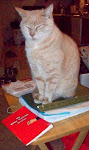
Hobo knows heartache: he was blind, but now he sees. He wants to be a therapy cat and work with kids at hospitals, but he may have to settle for visiting sick kids in his hairless, literary form. To read more about Hobo’s cures for what ails you, visit his blog at frommyshelf.blogspot.com.
Showing posts with label cancer. Show all posts
Showing posts with label cancer. Show all posts
Wednesday, May 13, 2009


Tuesday, July 15, 2008
Relay for Life, Seasons of Life
Kasey Cox
We are coming into the season where local Relay for Life teams start kicking it into high gear, raising money and getting ready for the big event. Mansfield’s Relay for Life is on June 28 this year, and Wellsboro’s follows soon after on July 11. I always keep tabs on the Relay activities, and try to donate as much as I can. I feel a real kinship to cancer patients and their families, although I have never had cancer myself, nor has anyone in my immediate family. Why would I feel so connected to this cause, this journey that people take when they or someone they love is diagnosed with cancer?
Professor, popular lecturer, and recent author Randy Pausch provides an answer. Like the Lance Armstrong yellow plastic bracelets reminding people to “Live Strong”, Pausch’s book “The Last Lecture” focuses his message on LIVING. This most recent of inspirational books to top the bestseller lists, “The Last Lecture” is a true story, unfolding even as you read it, of a young professor, husband, and father, who has written this book as a lasting legacy to those he leaves behind. Pausch has stage four, terminal, pancreatic cancer that has significantly metastasized into his liver. Most likely, by the time most of us are getting out our winter coats again, he will be gone. Unfortunately, as many people involved with the Relay for Life will tell you, Pausch’s story is not unusual. We could read many books that would be variations of what is happening to Randy Pausch and his family. What’s different about “The Last Lecture” is the framework of the book and what Pausch has chosen to say.
The premise for his book, as well as the title, comes from a hypothetical question posed to many professors to be the basis of a lecture: what would you say to this audience if you knew this were your last chance to share your wisdom? For Pausch, this question is no longer an academic exercise, no longer in the realm of “what-if”. The fact that there are many “last lecture” series given on campuses intrigued Pausch, even as he began to plan for the unthinkable – that his youngest child may not remember spending time with her father.
So, the last lecture that Pausch delivered on September 18, 2007, focused on “Really Achieving Your Childhood Dreams”. A lot of the advice he shared – keeping a childlike wonder in looking at the world, thinking outside the box, accepting constructive criticism, accepting help, being the kind of person people want to help, the importance of persistence – is not new, but boy, does it sound different coming from someone who has achieved as much as Pausch, and who is facing death sooner than he ever thought.
Books like this run the high risk of being too maudlin, or overly trite, coming across like a melodramatic country song or a bad Lifetime Channel movie. I began reading “The Last Lecture” hesitantly, fearing I’d be pulling out the waders or the Kleenex too soon. I was pleasantly surprised at how upbeat Randy Pausch’s perspective is, and how practical his advice. The book itself is a quick read: after the first few chapters which set the stage and give the background to this story, the chapters are short, each one summarizing a lesson he wants to share. It would easy to zip through this book and think, “oh, that’s a sad story, with some good advice from a nice, intelligent man.” I think it’s actually best to let Randy Pausch pull you quickly through the first time you read his last lecture. But then make certain you go back through with the proverbial fine-tooth comb. Read one chapter, ruminate, talk with your family and friends about it, journal about it, apply it to working with your colleagues for a week and see what happens. Then bite into a little more. You’ll find that Pausch’s honed abilities as a professor have allowed him to organize and synthesis a lot of information into small packages, but each package, when opened, has a huge gift inside. Ultimately, there are a ton of gifts packed into this little book.
Why do we cheer for folks with cancer? For that matter, why are those country songs and Lifetime movies so popular, why do the stories about people who are struggling with a terminal illness touch us so much? For me, it’s not to sit down and have a good cry, although that sometimes happens. What’s most important is the reminder to live well, as Pausch says, “with the cards you’ve been dealt.”
We are coming into the season where local Relay for Life teams start kicking it into high gear, raising money and getting ready for the big event. Mansfield’s Relay for Life is on June 28 this year, and Wellsboro’s follows soon after on July 11. I always keep tabs on the Relay activities, and try to donate as much as I can. I feel a real kinship to cancer patients and their families, although I have never had cancer myself, nor has anyone in my immediate family. Why would I feel so connected to this cause, this journey that people take when they or someone they love is diagnosed with cancer?
Professor, popular lecturer, and recent author Randy Pausch provides an answer. Like the Lance Armstrong yellow plastic bracelets reminding people to “Live Strong”, Pausch’s book “The Last Lecture” focuses his message on LIVING. This most recent of inspirational books to top the bestseller lists, “The Last Lecture” is a true story, unfolding even as you read it, of a young professor, husband, and father, who has written this book as a lasting legacy to those he leaves behind. Pausch has stage four, terminal, pancreatic cancer that has significantly metastasized into his liver. Most likely, by the time most of us are getting out our winter coats again, he will be gone. Unfortunately, as many people involved with the Relay for Life will tell you, Pausch’s story is not unusual. We could read many books that would be variations of what is happening to Randy Pausch and his family. What’s different about “The Last Lecture” is the framework of the book and what Pausch has chosen to say.
The premise for his book, as well as the title, comes from a hypothetical question posed to many professors to be the basis of a lecture: what would you say to this audience if you knew this were your last chance to share your wisdom? For Pausch, this question is no longer an academic exercise, no longer in the realm of “what-if”. The fact that there are many “last lecture” series given on campuses intrigued Pausch, even as he began to plan for the unthinkable – that his youngest child may not remember spending time with her father.
So, the last lecture that Pausch delivered on September 18, 2007, focused on “Really Achieving Your Childhood Dreams”. A lot of the advice he shared – keeping a childlike wonder in looking at the world, thinking outside the box, accepting constructive criticism, accepting help, being the kind of person people want to help, the importance of persistence – is not new, but boy, does it sound different coming from someone who has achieved as much as Pausch, and who is facing death sooner than he ever thought.
Books like this run the high risk of being too maudlin, or overly trite, coming across like a melodramatic country song or a bad Lifetime Channel movie. I began reading “The Last Lecture” hesitantly, fearing I’d be pulling out the waders or the Kleenex too soon. I was pleasantly surprised at how upbeat Randy Pausch’s perspective is, and how practical his advice. The book itself is a quick read: after the first few chapters which set the stage and give the background to this story, the chapters are short, each one summarizing a lesson he wants to share. It would easy to zip through this book and think, “oh, that’s a sad story, with some good advice from a nice, intelligent man.” I think it’s actually best to let Randy Pausch pull you quickly through the first time you read his last lecture. But then make certain you go back through with the proverbial fine-tooth comb. Read one chapter, ruminate, talk with your family and friends about it, journal about it, apply it to working with your colleagues for a week and see what happens. Then bite into a little more. You’ll find that Pausch’s honed abilities as a professor have allowed him to organize and synthesis a lot of information into small packages, but each package, when opened, has a huge gift inside. Ultimately, there are a ton of gifts packed into this little book.
Why do we cheer for folks with cancer? For that matter, why are those country songs and Lifetime movies so popular, why do the stories about people who are struggling with a terminal illness touch us so much? For me, it’s not to sit down and have a good cry, although that sometimes happens. What’s most important is the reminder to live well, as Pausch says, “with the cards you’ve been dealt.”
Relay for Life, Seasons of Life
Kasey Cox
We are coming into the season where local Relay for Life teams start kicking it into high gear, raising money and getting ready for the big event. Mansfield’s Relay for Life is on June 28 this year, and Wellsboro’s follows soon after on July 11. I always keep tabs on the Relay activities, and try to donate as much as I can. I feel a real kinship to cancer patients and their families, although I have never had cancer myself, nor has anyone in my immediate family. Why would I feel so connected to this cause, this journey that people take when they or someone they love is diagnosed with cancer?
Professor, popular lecturer, and recent author Randy Pausch provides an answer. Like the Lance Armstrong yellow plastic bracelets reminding people to “Live Strong”, Pausch’s book “The Last Lecture” focuses his message on LIVING. This most recent of inspirational books to top the bestseller lists, “The Last Lecture” is a true story, unfolding even as you read it, of a young professor, husband, and father, who has written this book as a lasting legacy to those he leaves behind. Pausch has stage four, terminal, pancreatic cancer that has significantly metastasized into his liver. Most likely, by the time most of us are getting out our winter coats again, he will be gone. Unfortunately, as many people involved with the Relay for Life will tell you, Pausch’s story is not unusual. We could read many books that would be variations of what is happening to Randy Pausch and his family. What’s different about “The Last Lecture” is the framework of the book and what Pausch has chosen to say.
The premise for his book, as well as the title, comes from a hypothetical question posed to many professors to be the basis of a lecture: what would you say to this audience if you knew this were your last chance to share your wisdom? For Pausch, this question is no longer an academic exercise, no longer in the realm of “what-if”. The fact that there are many “last lecture” series given on campuses intrigued Pausch, even as he began to plan for the unthinkable – that his youngest child may not remember spending time with her father.
So, the last lecture that Pausch delivered on September 18, 2007, focused on “Really Achieving Your Childhood Dreams”. A lot of the advice he shared – keeping a childlike wonder in looking at the world, thinking outside the box, accepting constructive criticism, accepting help, being the kind of person people want to help, the importance of persistence – is not new, but boy, does it sound different coming from someone who has achieved as much as Pausch, and who is facing death sooner than he ever thought.
Books like this run the high risk of being too maudlin, or overly trite, coming across like a melodramatic country song or a bad Lifetime Channel movie. I began reading “The Last Lecture” hesitantly, fearing I’d be pulling out the waders or the Kleenex too soon. I was pleasantly surprised at how upbeat Randy Pausch’s perspective is, and how practical his advice. The book itself is a quick read: after the first few chapters which set the stage and give the background to this story, the chapters are short, each one summarizing a lesson he wants to share. It would easy to zip through this book and think, “oh, that’s a sad story, with some good advice from a nice, intelligent man.” I think it’s actually best to let Randy Pausch pull you quickly through the first time you read his last lecture. But then make certain you go back through with the proverbial fine-tooth comb. Read one chapter, ruminate, talk with your family and friends about it, journal about it, apply it to working with your colleagues for a week and see what happens. Then bite into a little more. You’ll find that Pausch’s honed abilities as a professor have allowed him to organize and synthesis a lot of information into small packages, but each package, when opened, has a huge gift inside. Ultimately, there are a ton of gifts packed into this little book.
Why do we cheer for folks with cancer? For that matter, why are those country songs and Lifetime movies so popular, why do the stories about people who are struggling with a terminal illness touch us so much? For me, it’s not to sit down and have a good cry, although that sometimes happens. What’s most important is the reminder to live well, as Pausch says, “with the cards you’ve been dealt.”
We are coming into the season where local Relay for Life teams start kicking it into high gear, raising money and getting ready for the big event. Mansfield’s Relay for Life is on June 28 this year, and Wellsboro’s follows soon after on July 11. I always keep tabs on the Relay activities, and try to donate as much as I can. I feel a real kinship to cancer patients and their families, although I have never had cancer myself, nor has anyone in my immediate family. Why would I feel so connected to this cause, this journey that people take when they or someone they love is diagnosed with cancer?
Professor, popular lecturer, and recent author Randy Pausch provides an answer. Like the Lance Armstrong yellow plastic bracelets reminding people to “Live Strong”, Pausch’s book “The Last Lecture” focuses his message on LIVING. This most recent of inspirational books to top the bestseller lists, “The Last Lecture” is a true story, unfolding even as you read it, of a young professor, husband, and father, who has written this book as a lasting legacy to those he leaves behind. Pausch has stage four, terminal, pancreatic cancer that has significantly metastasized into his liver. Most likely, by the time most of us are getting out our winter coats again, he will be gone. Unfortunately, as many people involved with the Relay for Life will tell you, Pausch’s story is not unusual. We could read many books that would be variations of what is happening to Randy Pausch and his family. What’s different about “The Last Lecture” is the framework of the book and what Pausch has chosen to say.
The premise for his book, as well as the title, comes from a hypothetical question posed to many professors to be the basis of a lecture: what would you say to this audience if you knew this were your last chance to share your wisdom? For Pausch, this question is no longer an academic exercise, no longer in the realm of “what-if”. The fact that there are many “last lecture” series given on campuses intrigued Pausch, even as he began to plan for the unthinkable – that his youngest child may not remember spending time with her father.
So, the last lecture that Pausch delivered on September 18, 2007, focused on “Really Achieving Your Childhood Dreams”. A lot of the advice he shared – keeping a childlike wonder in looking at the world, thinking outside the box, accepting constructive criticism, accepting help, being the kind of person people want to help, the importance of persistence – is not new, but boy, does it sound different coming from someone who has achieved as much as Pausch, and who is facing death sooner than he ever thought.
Books like this run the high risk of being too maudlin, or overly trite, coming across like a melodramatic country song or a bad Lifetime Channel movie. I began reading “The Last Lecture” hesitantly, fearing I’d be pulling out the waders or the Kleenex too soon. I was pleasantly surprised at how upbeat Randy Pausch’s perspective is, and how practical his advice. The book itself is a quick read: after the first few chapters which set the stage and give the background to this story, the chapters are short, each one summarizing a lesson he wants to share. It would easy to zip through this book and think, “oh, that’s a sad story, with some good advice from a nice, intelligent man.” I think it’s actually best to let Randy Pausch pull you quickly through the first time you read his last lecture. But then make certain you go back through with the proverbial fine-tooth comb. Read one chapter, ruminate, talk with your family and friends about it, journal about it, apply it to working with your colleagues for a week and see what happens. Then bite into a little more. You’ll find that Pausch’s honed abilities as a professor have allowed him to organize and synthesis a lot of information into small packages, but each package, when opened, has a huge gift inside. Ultimately, there are a ton of gifts packed into this little book.
Why do we cheer for folks with cancer? For that matter, why are those country songs and Lifetime movies so popular, why do the stories about people who are struggling with a terminal illness touch us so much? For me, it’s not to sit down and have a good cry, although that sometimes happens. What’s most important is the reminder to live well, as Pausch says, “with the cards you’ve been dealt.”
Subscribe to:
Posts (Atom)
