Kevin Coolidge
Once upon a time? No, too cliché. It was a dark and stormy night? It really wasn’t. It was the best of times; it was the worse of times. Already taken, and what does that even mean? Have you ever wanted to write your own story, but wondered where to begin? Getting started can be the hardest part, and Write Your Own Story Book by Usborne Books is a fun activity book full of writing tips, techniques, and methods. It’s just the thing to help a young aspiring writer stop procrastinating and start writing.
The first half of Write Your Own Story contains explanations and prompts for the important elements of the story process. A story is only as strong as its characters, and what better place to begin? There are basic character and setting suggestions, along with helpful activities to come up with story lines, and writing from different points of view. A great story needs a great start. Your main character might set out on a journey, find a treasure map, or run away from home, but something must happen to get the action going. In Write Your Own Story, there’s even space to write it all down.
Every story needs a beginning, a middle, and an ending. It’s your basic story arc, but a great way for a novice to think of it is a mountain. You have the Beginning where you introduce the characters and setting, the Build-up, where something happens to the character to start the action, the Problem, where something goes wrong, the Resolution, where the problem is resolved, and the End, where you threads are tied up. A character can face many problems, and your story may have several peaks. You may want to write an outline first.
The second half of Write Your Own Story has lots of tips to help plan your stories and develop writing skills. Having a great title can lead to a fantastic start. A title can be funny, mysterious, or intriguing, but it should make people curious to read your story.
Your imagination is one of your strongest tools, and there are questions to help you focus that creativity.
When it comes to writing, it’s not enough to have fun characters, an action-packed plot, or an exotic setting. The words you use to describe them make a big difference. Think of interesting adjectives and verbs. Whenever you see a word you don’t understand, look it up in a dictionary and use it in your writing.
Writing is the best way to improve your writing. You could keep a diary, or keep a notebook with you so you can write an idea when it comes to you. Talk to people you have never talked to before, write about something you are passionate about, read a lot, and write about the book you read. Ask people to read your stories, and tell you what they think of them—the good and the bad. Most importantly, you must write.
Great writers aren’t born with a pen in their hand. You must decide to put ink to paper. Writing stories, like any skill, is something you get better at the more you do it. So grab some pencils, an eraser, dictionaries (or maybe a thesaurus), and scrap paper to scribble and plan your stories. Fire up your brain, percolate some ideas, and most importantly, engage your imagination. Keep on reading. Keep on writing…
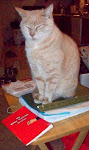
To write? Or to read? Why not both? Comment and let me know! If you want to be the hero of your own story, sometimes you have to write it. My cat did just that, check out his children’s book “Hobo Finds A Home”
Monday, November 21, 2011


Monday, November 14, 2011
The Dogs of War
"Cry, 'Havoc!' and let slip the dogs of war.” Julius Caesar", Act III, scene i.
His ears twitched. One of the soldiers whispered, “Geronimo.” He’d heard that word before, during the intensive training sessions of the last few weeks. Unlike other military dogs trained to sniff out drugs or explosives, he was a specialized search dog known as a combat tracker, who could sniff out a piece of clothing and then find the person it belonged to, even if the scent was several days old.
The humans grew quiet. Cairo sat at attention trying to decipher the emotions of his comrades. His handler placed his hands around his K9 Storm Intruder vest, a canine bulletproof flak jacket, and shook. Nothing loose, no sound to alert the inhabitants of the compound. Cairo and the members of Navy SEAL Team 6 were ready…
You’ve probably heard about Cairo, the Belgian Shepherd. He’s a member of the elite task force that stormed the hiding place of Osama bin Laden. Military working dogs have been part of the American armed forces since the 1830s, being used to track Native Americans and runaway slaves during the Seminole Wars.
So what exactly do these canines do, and how do they learn to sniff out bombs and bad guys? Are they all trained to do what Cairo did? The Dogs of War, written by Lisa Rogak, answers these questions and many more. She writes about the contributions and achievements of the military working dog around the world, and how Cairo is just one example of the thousands of loyal and highly trained dogs that protect our armed forces throughout the world.
You’ll learn how the military acquires the dogs that enter the various training programs, and the different kinds of jobs that canines perform in the military. Lisa also delves into the long and heroic history of dogs serving on the battlefield. In fact, it’s believed that the Egyptians used them in battle as early as 4000 B.C. In ancient Rome, there are references to armor-clad canines, and in the Middle Ages, soldiers trained dogs to carry fire on their backs, run into enemy camps, and shake off the fire.
You’ll read about the military veterinarians who have treated them since World War Two—America’s canine troops first served in great numbers during that conflict—both under the harsh conditions of the front lines, and in the latest high-tech facilities rivaling human soldiers.
There are funny and heartwarming stories too. There’s the tale of Rex, a Vietnam-era dog that was to be euthanized, because he had recently lost thirteen pounds and could no longer bite, an important part of a sentry dog’s job description. The diagnosis was kidney failure, but his handler thought he had lost so much weight because his teeth were hurting.
His roommate was an Air Force dentist, and he found two fractured canines inside Rex’s mouth. The dentist started a covert operation, as the orders were to put the dog to sleep. He performed two root canals, and procured two troy ounces of gold for the crowns by using Rex’s actual service number. Shortly after, Rex returned to duty, which was the only thing that kept the dentist out of Leavenworth, for going against direct orders.
Scattered throughout the book are the stories of special dogs and handlers who have gone beyond the call of duty—such as Robert Hartsock and Duke. Hartsock holds the distinction of being the only dog handler in U.S. military history to be awarded the Medal of Honor for saving the lives of his fellow soldiers, both human and canine.
The Dogs of War offers a glimpse into the lives that these special dogs lead, from pup to retirement. There’s even an index with organizations and associations that help retired military working dogs find good homes. You'll see that Cairo, while highly trained, was only one of many. One dog in an incredible program that includes thousands of loyal, brave four-legged soldiers…
This column is dedicated to all veterans. Those brave souls who have served with courage, love and loyalty. You may be gone, but never forgotten.
His ears twitched. One of the soldiers whispered, “Geronimo.” He’d heard that word before, during the intensive training sessions of the last few weeks. Unlike other military dogs trained to sniff out drugs or explosives, he was a specialized search dog known as a combat tracker, who could sniff out a piece of clothing and then find the person it belonged to, even if the scent was several days old.
The humans grew quiet. Cairo sat at attention trying to decipher the emotions of his comrades. His handler placed his hands around his K9 Storm Intruder vest, a canine bulletproof flak jacket, and shook. Nothing loose, no sound to alert the inhabitants of the compound. Cairo and the members of Navy SEAL Team 6 were ready…
You’ve probably heard about Cairo, the Belgian Shepherd. He’s a member of the elite task force that stormed the hiding place of Osama bin Laden. Military working dogs have been part of the American armed forces since the 1830s, being used to track Native Americans and runaway slaves during the Seminole Wars.
So what exactly do these canines do, and how do they learn to sniff out bombs and bad guys? Are they all trained to do what Cairo did? The Dogs of War, written by Lisa Rogak, answers these questions and many more. She writes about the contributions and achievements of the military working dog around the world, and how Cairo is just one example of the thousands of loyal and highly trained dogs that protect our armed forces throughout the world.
You’ll learn how the military acquires the dogs that enter the various training programs, and the different kinds of jobs that canines perform in the military. Lisa also delves into the long and heroic history of dogs serving on the battlefield. In fact, it’s believed that the Egyptians used them in battle as early as 4000 B.C. In ancient Rome, there are references to armor-clad canines, and in the Middle Ages, soldiers trained dogs to carry fire on their backs, run into enemy camps, and shake off the fire.
You’ll read about the military veterinarians who have treated them since World War Two—America’s canine troops first served in great numbers during that conflict—both under the harsh conditions of the front lines, and in the latest high-tech facilities rivaling human soldiers.
There are funny and heartwarming stories too. There’s the tale of Rex, a Vietnam-era dog that was to be euthanized, because he had recently lost thirteen pounds and could no longer bite, an important part of a sentry dog’s job description. The diagnosis was kidney failure, but his handler thought he had lost so much weight because his teeth were hurting.
His roommate was an Air Force dentist, and he found two fractured canines inside Rex’s mouth. The dentist started a covert operation, as the orders were to put the dog to sleep. He performed two root canals, and procured two troy ounces of gold for the crowns by using Rex’s actual service number. Shortly after, Rex returned to duty, which was the only thing that kept the dentist out of Leavenworth, for going against direct orders.
Scattered throughout the book are the stories of special dogs and handlers who have gone beyond the call of duty—such as Robert Hartsock and Duke. Hartsock holds the distinction of being the only dog handler in U.S. military history to be awarded the Medal of Honor for saving the lives of his fellow soldiers, both human and canine.
The Dogs of War offers a glimpse into the lives that these special dogs lead, from pup to retirement. There’s even an index with organizations and associations that help retired military working dogs find good homes. You'll see that Cairo, while highly trained, was only one of many. One dog in an incredible program that includes thousands of loyal, brave four-legged soldiers…
This column is dedicated to all veterans. Those brave souls who have served with courage, love and loyalty. You may be gone, but never forgotten.
Sunday, November 6, 2011
Ghost Hunting for Beginners
Kevin Coolidge
It’s dark and it’s late. The soft glow from my camcorder gives me little comfort. I’ve been here for hours. I should call it a night, but I might not get another chance. The owner is hesitant for me to find evidence of a haunting. He doesn’t believe that anyone would pay good money to stay in a bed and breakfast that is haunted. He hasn’t experienced the terrifying and life-changing event that can come after contact with the spirit realm.
Professional ghost hunter Rich Newman knows the thrill of brushing up against the unknown, and with a little research, reading, and patience, you can too. In his book, Ghost Hunting for Beginners, he shares proven scientific methods, low-tech approaches, and the latest technology used by the professionals.
What are ghosts? Every culture, every religion, every country has these spectral entities. Are these once-living human beings lingering upon the earth, or are they just memories recorded upon the fabric of space and time that some can see and others cannot? Whatever they may be, a basic tenant of ghost hunting is that we don’t need to fear ghosts, and that we can scientifically research them.
You’ll learn what ghosts are, why hauntings occur, the different types of supernatural phenomena, and the importance of conducting responsible investigations. The book is interspersed with true accounts of historic cases—such as the Bell Witch poltergeist. There are also helpful hints, tips, and the seasoned insights that come with over a decade of fieldwork.
The lone individual can become a ghost hunter, but it is much more effective and fun when investigations are worked as a team. Deciding whom to take along on your ghostly adventures might be one of the most important decisions. Trust is implicit. If a team member tells of a full-bodied apparition appearing, there should be no doubt that it is true.
I opt to keep my team small. There’s less chance to contaminate the audio/video footage, and I can keep track of everyone. I have one male and one female, because certain entities have an easier time responding to a certain gender, and it’s crucial to be able to try different approaches.
If you wish to create a larger network, there’s information on the various types of paranormal groups, as well as advice for interacting with ghosts, how to gather and examine evidence, and how to document your investigation. Newman’s book also gives good advice as what NOT to do when seeking spirits.
Rich Newman has been investigating the paranormal for more than ten years and is the founder of Paranormal Inc. Paranormal Inc. is a group that investigates all aspects of the paranormal, specializing in fact-based (not faith-based or psi-based) techniques. Paranormal Inc. does not charge for investigations and always shares the findings with their clients. They may be contacted via email at info@paranormalincorporated.com
I check my watch, and scan the darkness. The owner hopes the report comes back negative, but a true paranormal researcher is always a little skeptical. That rattle? Just the icemaker in the kitchen. The soft ticking? The sound the heater makes, before it kicks on. A smell of lilac drifting through the air? I have no idea. It wasn’t there a minute ago. The team never wears scents to an investigation. There, in the back corner! Is that a woman in a hoop skirt? Swiftly I bring up the camera, but the display is dark. Damn batteries…
Normal? Or Paranormal? Email me and let me know. Miss a past column? Check out past columns at http://frommyshelf.blogspot.com Want a book with no ghosts or goblins, just a friendly cat? Then get “Hobo Finds A Home” a children’s book about a cat who wanted more than just a life on the farm.
It’s dark and it’s late. The soft glow from my camcorder gives me little comfort. I’ve been here for hours. I should call it a night, but I might not get another chance. The owner is hesitant for me to find evidence of a haunting. He doesn’t believe that anyone would pay good money to stay in a bed and breakfast that is haunted. He hasn’t experienced the terrifying and life-changing event that can come after contact with the spirit realm.
Professional ghost hunter Rich Newman knows the thrill of brushing up against the unknown, and with a little research, reading, and patience, you can too. In his book, Ghost Hunting for Beginners, he shares proven scientific methods, low-tech approaches, and the latest technology used by the professionals.
What are ghosts? Every culture, every religion, every country has these spectral entities. Are these once-living human beings lingering upon the earth, or are they just memories recorded upon the fabric of space and time that some can see and others cannot? Whatever they may be, a basic tenant of ghost hunting is that we don’t need to fear ghosts, and that we can scientifically research them.
You’ll learn what ghosts are, why hauntings occur, the different types of supernatural phenomena, and the importance of conducting responsible investigations. The book is interspersed with true accounts of historic cases—such as the Bell Witch poltergeist. There are also helpful hints, tips, and the seasoned insights that come with over a decade of fieldwork.
The lone individual can become a ghost hunter, but it is much more effective and fun when investigations are worked as a team. Deciding whom to take along on your ghostly adventures might be one of the most important decisions. Trust is implicit. If a team member tells of a full-bodied apparition appearing, there should be no doubt that it is true.
I opt to keep my team small. There’s less chance to contaminate the audio/video footage, and I can keep track of everyone. I have one male and one female, because certain entities have an easier time responding to a certain gender, and it’s crucial to be able to try different approaches.
If you wish to create a larger network, there’s information on the various types of paranormal groups, as well as advice for interacting with ghosts, how to gather and examine evidence, and how to document your investigation. Newman’s book also gives good advice as what NOT to do when seeking spirits.
Rich Newman has been investigating the paranormal for more than ten years and is the founder of Paranormal Inc. Paranormal Inc. is a group that investigates all aspects of the paranormal, specializing in fact-based (not faith-based or psi-based) techniques. Paranormal Inc. does not charge for investigations and always shares the findings with their clients. They may be contacted via email at info@paranormalincorporated.com
I check my watch, and scan the darkness. The owner hopes the report comes back negative, but a true paranormal researcher is always a little skeptical. That rattle? Just the icemaker in the kitchen. The soft ticking? The sound the heater makes, before it kicks on. A smell of lilac drifting through the air? I have no idea. It wasn’t there a minute ago. The team never wears scents to an investigation. There, in the back corner! Is that a woman in a hoop skirt? Swiftly I bring up the camera, but the display is dark. Damn batteries…
Normal? Or Paranormal? Email me and let me know. Miss a past column? Check out past columns at http://frommyshelf.blogspot.com Want a book with no ghosts or goblins, just a friendly cat? Then get “Hobo Finds A Home” a children’s book about a cat who wanted more than just a life on the farm.
Gas Drilling & the Fracking of a Marriage
During the last year or so, all you had to do was mention “gas drilling” or “fracking” to anyone in the Potter, Bradford, or Tioga County region of Pennsylvania, and you’d be sure to get an earful. Everyone in the area has experiences, opinions, ideas, and concerns about the fact that we live smack-dab in the middle of the Marcellus Shale. “Marcellus Shale” refers to the geological formation from which energy companies are aggressively seeking to extract natural gas. The formation extends from the Catskills in New York, south and west through Pennsylvania, into West Virginia and Ohio.
What makes Stephanie Hamel’s experiences with gas drilling any different from yours or mine? In many ways, nothing – except she decided to take hers public. Hamel’s book, Gas Drilling and the Fracking of a Marriage, is a gift to all of us. In honest, thoughtful, bittersweet reflections, Stephanie shares the struggle she and her family went through, from September 2008, when they were offered a gas lease on their family land, until the book went to press in spring of 2011.
In many ways, Stephanie Hamel’s situation is no different from the story of most people living in the Marcellus Shale region. Stephanie is a wife who is concerned about the current threat to her husband’s job, a mother of two young boys, a landowner who would like to be able to put more money into her dreams for the land. Hamel, however, also has the training that gives her a special perspective on the environmental concerns at play here. Stephanie – that is, Dr. Hamel – earned her B.S. in Chemistry from Grove City College; her M.S. in Chemistry from Lehigh University; and a Joint Ph.D. in “Exposure Assessment” from Rutgers University and the Robert Wood Johnson Medical School. She has also done post-graduate research in the Department of Plant Sciences at Rutgers. She is a chemist who loves soil, the land, and people. She has studied extensively about the chemicals we use and the effects they have on our bodies.
Though Hamel’s background as a scientist and a researcher give her a distinctly more academic approach to looking at a problem, she nevertheless decided to write this book from a very personal viewpoint.
As Stephanie explains in her “Notes and Disclaimers” at the beginning of her book, “This is a true story, written first in diary form and in notes taken during telephone conversations… [it] reflects a developing knowledge of the natural gas industry and the legalities associated with land ownership and gas leasing.”
The story opens with Stephanie’s email to her friend, Frank, a colleague from Rutgers who works with the DEP in New Jersey, whose background is hydrogeology. Despite distractions from busy little boys, loads of laundry, this first email outlines the Hamel family’s situation in September 2008 quite succinctly:
“… Two weeks ago, Tom and I were offered $2,500 an acre to lease our natural gas rights up in Wellsboro. The whole of northern PA is singing the Hallelujah Chorus because there is gas under our land, and it is now economically feasible to drill. There is a well within 0.50 miles of my property and I listened to the drilling during my quiet, reflective time – HA! – this summer; there are two more wells within a two mile radius.
"Everyone in the area is seeing dollar signs and is signing up as fast as the lease agreement arrives on the doorstep. Tom Hamel has the unfortunate luck of being married to the only one who regards this windfall as a curse. Frank, it is very easy for me to criticize unrestrained fossil fuel consumption, but it is much more challenging to put my money where my mouth is when a large sum of money is at stake….”
One thing I love about Stephanie is that she doesn’t shirk from discussing the hard truths of our own inherent contradictions, when we strive to be both stewards and consumers; activists with principles, yet humans with wants and needs. Stephanie has both a wry sense of humor and a critical eye on her own hypocrisy. One of my favorite scenes showing Stephanie’s humor is her example of the gas grill she proudly rescued from the landfill. For a few dollars, she fixed the bad burner, pleased to reduce, reuse, recycle – that is, until she walked out on her back porch after writing, and recognized with shock what powered that grill.
Hamel writes with clarity and acute self-awareness about the acronym that all people working in the environmental field learn – NIMBY, “Not In My Backyard”. We all understand the need for finding more energy, having a landfill, building a new highway: we just want it to happen somewhere else.
As the book unfolds, there are times that you, the reader, may be as frustrated with Stephanie’s analyzing as her husband is; where you may be as confused by Stephanie’s circuitous thoughts as Stephanie herself is. There are certainly times when you may want to shout, “Just get on with it! Decide!” You may be tempted to skip to the end to find out what the Hamels ultimately decided. Don’t do it. Life is not lived that way. Hard decisions are made the way Stephanie writes about this. Experience this journey with her, even if you have already experienced it in your own home, on your own land. If you have already struggled with this, you’ll find validation. If you haven’t, you’ll find sympathy and a better understanding for your neighbors who are dealing with.
Let other books about gas drilling be for angry recriminations, for stirring up self-righteousness on one side of the fence or the other, for black-or-white answers. Stephanie’s book is about the struggle to do what is right for oneself, for one’s family, for one’s land, for the community… the earth … the environment … and what to do when those loyalties are at loggerheads. What I love most about Stephanie’s tone is her honesty, her rueful look at her own foibles and contradictions, which definitely hold up a mirror to show us our own. Ultimately, this is not an easy issue, and Stephanie’s book honors that.
What makes Stephanie Hamel’s experiences with gas drilling any different from yours or mine? In many ways, nothing – except she decided to take hers public. Hamel’s book, Gas Drilling and the Fracking of a Marriage, is a gift to all of us. In honest, thoughtful, bittersweet reflections, Stephanie shares the struggle she and her family went through, from September 2008, when they were offered a gas lease on their family land, until the book went to press in spring of 2011.
In many ways, Stephanie Hamel’s situation is no different from the story of most people living in the Marcellus Shale region. Stephanie is a wife who is concerned about the current threat to her husband’s job, a mother of two young boys, a landowner who would like to be able to put more money into her dreams for the land. Hamel, however, also has the training that gives her a special perspective on the environmental concerns at play here. Stephanie – that is, Dr. Hamel – earned her B.S. in Chemistry from Grove City College; her M.S. in Chemistry from Lehigh University; and a Joint Ph.D. in “Exposure Assessment” from Rutgers University and the Robert Wood Johnson Medical School. She has also done post-graduate research in the Department of Plant Sciences at Rutgers. She is a chemist who loves soil, the land, and people. She has studied extensively about the chemicals we use and the effects they have on our bodies.
Though Hamel’s background as a scientist and a researcher give her a distinctly more academic approach to looking at a problem, she nevertheless decided to write this book from a very personal viewpoint.
As Stephanie explains in her “Notes and Disclaimers” at the beginning of her book, “This is a true story, written first in diary form and in notes taken during telephone conversations… [it] reflects a developing knowledge of the natural gas industry and the legalities associated with land ownership and gas leasing.”
The story opens with Stephanie’s email to her friend, Frank, a colleague from Rutgers who works with the DEP in New Jersey, whose background is hydrogeology. Despite distractions from busy little boys, loads of laundry, this first email outlines the Hamel family’s situation in September 2008 quite succinctly:
“… Two weeks ago, Tom and I were offered $2,500 an acre to lease our natural gas rights up in Wellsboro. The whole of northern PA is singing the Hallelujah Chorus because there is gas under our land, and it is now economically feasible to drill. There is a well within 0.50 miles of my property and I listened to the drilling during my quiet, reflective time – HA! – this summer; there are two more wells within a two mile radius.
"Everyone in the area is seeing dollar signs and is signing up as fast as the lease agreement arrives on the doorstep. Tom Hamel has the unfortunate luck of being married to the only one who regards this windfall as a curse. Frank, it is very easy for me to criticize unrestrained fossil fuel consumption, but it is much more challenging to put my money where my mouth is when a large sum of money is at stake….”
One thing I love about Stephanie is that she doesn’t shirk from discussing the hard truths of our own inherent contradictions, when we strive to be both stewards and consumers; activists with principles, yet humans with wants and needs. Stephanie has both a wry sense of humor and a critical eye on her own hypocrisy. One of my favorite scenes showing Stephanie’s humor is her example of the gas grill she proudly rescued from the landfill. For a few dollars, she fixed the bad burner, pleased to reduce, reuse, recycle – that is, until she walked out on her back porch after writing, and recognized with shock what powered that grill.
Hamel writes with clarity and acute self-awareness about the acronym that all people working in the environmental field learn – NIMBY, “Not In My Backyard”. We all understand the need for finding more energy, having a landfill, building a new highway: we just want it to happen somewhere else.
As the book unfolds, there are times that you, the reader, may be as frustrated with Stephanie’s analyzing as her husband is; where you may be as confused by Stephanie’s circuitous thoughts as Stephanie herself is. There are certainly times when you may want to shout, “Just get on with it! Decide!” You may be tempted to skip to the end to find out what the Hamels ultimately decided. Don’t do it. Life is not lived that way. Hard decisions are made the way Stephanie writes about this. Experience this journey with her, even if you have already experienced it in your own home, on your own land. If you have already struggled with this, you’ll find validation. If you haven’t, you’ll find sympathy and a better understanding for your neighbors who are dealing with.
Let other books about gas drilling be for angry recriminations, for stirring up self-righteousness on one side of the fence or the other, for black-or-white answers. Stephanie’s book is about the struggle to do what is right for oneself, for one’s family, for one’s land, for the community… the earth … the environment … and what to do when those loyalties are at loggerheads. What I love most about Stephanie’s tone is her honesty, her rueful look at her own foibles and contradictions, which definitely hold up a mirror to show us our own. Ultimately, this is not an easy issue, and Stephanie’s book honors that.
Monday, October 24, 2011
2012, A Leap of Faith?
Kevin Coolidge
Where did the summer go? Already skeletal limbs scratch at the sky, proclaiming that Halloween is lurking in the shadows, and that means somewhere a fat, jolly dwarf is planning a felony, and will once again attempt to violate my chimney. Then it’s time for too much champagne, too many regrets, and too many of those damn little sausages on a toothpick, and then I get to wake up with a hangover, a bad taste in my mouth, and a fresh start in a New Year. My very last year. Don’t laugh. It’s your last year too…
Yep, in case you didn’t know, 2012 is it, the end, fini, kaputz, the final curtain call. The fat lady isn’t just singing. She’s whistling Dixie, and she’s got a mouthful of crackers. It’s all over folks. It’s an election year, but I’m not talking politics here. The universe is completely bipartisan, or maybe not. Doesn’t matter. It’s the end of the Mayan calendar, and according to the doomsayers, we all have first class tickets off this mortal coil. I’m packing light, because I hate trying to cram my baggage into those overhead bins, but I will be sure to bring along some good books, and my favorite almanac.
Take a deep breath and relax, because according to Baer’s 2012 Almanac, on December 21st, there will be light snow from Pennsylvania and New York to Maine, then fair and very cold. I think I can live with that. After all, it will be December. So, just what is an almanac?
An almanac is an annual publication that includes a calendar with long-range weather forecasts, astronomical information, home and garden advice, trivia, and articles on topics ranging from home remedies to history. You may already be familiar The Farmer’s Almanac.
These useful agricultural almanacs started publishing about two hundred years ago. At that time, printed material was scarce. Most farms possessed only two books—a Bible and a farmer’s almanac. A farmer’s almanac would tell him the best time to plant, when to expect the first frost, and if he planned to take a day off from farming, he could find out the best day to drown worms, and throw a hook in the water. Why, there would even be some great recipes for his wife.
I prefer Baer’s Almanac, because it’s calculated for the Meridian of Pennsylvania and the adjoining states, and it’s published right here in Pennsylvania – published in Lancaster by John Baer’s Sons. It contains the standard charts, weather predictions, anecdotes, and “things worth knowing”, as well as at least one feature article and small informational tidbits scattered through the pages.
John Baer founded the company in 1817. He was an early publisher of Mennonite writings, and printed his first almanac in 1825. In 1831, he added an edition printed in German called Neuer Gemeinnutziger Pennsylvanischer Calender. His almanac is among America’s oldest, but that distinction belongs to The Old Farmer’s Almanac founded in 1792.
Baer’s Almanac has not only survived, but thrives in our modern age thanks to its purchase in 1948 by Gerard Lestz, a Lancaster newspaperman and lover of all things Lancaster. He saved it when it was near extinction and today has a circulation of close to 10,000 copies annually, and is sold as far away as California. Its loyal readers love the lack of advertising as well as the abundance of good reading material.
Today, his daughter Linda continues the publication and she fills the pages with information both interesting and useful. So if want to know how to make a rhubarb sorbet, or you don’t know the origin of the “Ides of March”, you will want pick yourself up a copy. Still worried about the end of days? The great news is that 2012 is a leap year. So, you’ll have an extra day to get caught up on your reading…
End of days? Or days without end? Drop me an email at from_my_shelf@yahoo.com and let me know. Miss a past column? You can check the chart on our blog at http//frommyshelf.blogspot.com. Our cat Hobo was a farm cat, but he left the farm and the scratchy hay. You can read all about his adventures in “Hobo Finds A Home” a children’s book about a cat who wanted more…
Where did the summer go? Already skeletal limbs scratch at the sky, proclaiming that Halloween is lurking in the shadows, and that means somewhere a fat, jolly dwarf is planning a felony, and will once again attempt to violate my chimney. Then it’s time for too much champagne, too many regrets, and too many of those damn little sausages on a toothpick, and then I get to wake up with a hangover, a bad taste in my mouth, and a fresh start in a New Year. My very last year. Don’t laugh. It’s your last year too…
Yep, in case you didn’t know, 2012 is it, the end, fini, kaputz, the final curtain call. The fat lady isn’t just singing. She’s whistling Dixie, and she’s got a mouthful of crackers. It’s all over folks. It’s an election year, but I’m not talking politics here. The universe is completely bipartisan, or maybe not. Doesn’t matter. It’s the end of the Mayan calendar, and according to the doomsayers, we all have first class tickets off this mortal coil. I’m packing light, because I hate trying to cram my baggage into those overhead bins, but I will be sure to bring along some good books, and my favorite almanac.
Take a deep breath and relax, because according to Baer’s 2012 Almanac, on December 21st, there will be light snow from Pennsylvania and New York to Maine, then fair and very cold. I think I can live with that. After all, it will be December. So, just what is an almanac?
An almanac is an annual publication that includes a calendar with long-range weather forecasts, astronomical information, home and garden advice, trivia, and articles on topics ranging from home remedies to history. You may already be familiar The Farmer’s Almanac.
These useful agricultural almanacs started publishing about two hundred years ago. At that time, printed material was scarce. Most farms possessed only two books—a Bible and a farmer’s almanac. A farmer’s almanac would tell him the best time to plant, when to expect the first frost, and if he planned to take a day off from farming, he could find out the best day to drown worms, and throw a hook in the water. Why, there would even be some great recipes for his wife.
I prefer Baer’s Almanac, because it’s calculated for the Meridian of Pennsylvania and the adjoining states, and it’s published right here in Pennsylvania – published in Lancaster by John Baer’s Sons. It contains the standard charts, weather predictions, anecdotes, and “things worth knowing”, as well as at least one feature article and small informational tidbits scattered through the pages.
John Baer founded the company in 1817. He was an early publisher of Mennonite writings, and printed his first almanac in 1825. In 1831, he added an edition printed in German called Neuer Gemeinnutziger Pennsylvanischer Calender. His almanac is among America’s oldest, but that distinction belongs to The Old Farmer’s Almanac founded in 1792.
Baer’s Almanac has not only survived, but thrives in our modern age thanks to its purchase in 1948 by Gerard Lestz, a Lancaster newspaperman and lover of all things Lancaster. He saved it when it was near extinction and today has a circulation of close to 10,000 copies annually, and is sold as far away as California. Its loyal readers love the lack of advertising as well as the abundance of good reading material.
Today, his daughter Linda continues the publication and she fills the pages with information both interesting and useful. So if want to know how to make a rhubarb sorbet, or you don’t know the origin of the “Ides of March”, you will want pick yourself up a copy. Still worried about the end of days? The great news is that 2012 is a leap year. So, you’ll have an extra day to get caught up on your reading…
End of days? Or days without end? Drop me an email at from_my_shelf@yahoo.com and let me know. Miss a past column? You can check the chart on our blog at http//frommyshelf.blogspot.com. Our cat Hobo was a farm cat, but he left the farm and the scratchy hay. You can read all about his adventures in “Hobo Finds A Home” a children’s book about a cat who wanted more…
Monday, October 17, 2011
Fireside Tales
Kevin Coolidge
It’s been a long day, and now it’s a dreary night. Icy pellets rattle against the window, and the damp cold seeps into my body. A good warm fire and a snort of brandy is just the thing I need to ease into my evening and soothe my wearied bones, and nothing goes better with a crackling fire than a good smoke, and a yarn. Just let me get this pipe lit, and I’ll tell you about that night in Panther Hollow…
Pennsylvania Fireside Tales by Jeffrey R. Frazier is filled with legends and folktales of the good old days. The mountains of Pennsylvania have always called to him, or maybe it’s the stories that come out of the dark hollows and remote valleys, and their connection to the past. Regardless, he has found the work of collecting the tales a “labor of love” from the very beginning.
There have been attempts to preserve these stories before, but many of these attempts were limited to specific regions of the state. A fine example of this is Flatlanders and Ridgerunners by James York Glimm, which contains folklore and traditions from Northern Pennsylvania, especially Tioga County. Many tales were saved from extinction through these various efforts, but many others have gone unrecorded and have been lost.
Jeffrey’s endeavors have taken him from Tioga County’s “Grand Canyon” and the Black Forest in Potter County in the north, to the battlefields of Gettysburg and the mountains of Adams County in the south. To the coal regions of Carbon and Schuylkill Counties, and the farms of Pennsylvania Dutch country, as well as the mighty Allegheny Mountains of Blair, Huntingdon, and Indiana.
That’s a lot of territory to cover and a lot of people to talk to--coal miners, lumbermen, hunters, trappers, farmers, railroad men, Native Americans, dowsers, herbalists and even few reputed witches. All have been asked to share their stories.
As you can imagine this has lead to a wide variety of tales. You’ll read of the Indian wars and the Indians in Pennsylvania – including a deadly summer in 1778 when clashes between American Indians and frontiersmen were common, and escaping the scalping knife wasn’t. There are stories of the supernatural with haunted houses, ghosts, and witches, as well as early hunters’ narratives of encounters with wolves, mountain lions, elk, and other “big game” animals. There are also accounts of lost treasure, moonshiners, and huge snakes.
Some of these stories found in Pennsylvania Fireside Tales sound “far-fetched”, but that’s only because they have been embellished and romanticized as they've been told and retold over the years. None have been concocted by Frazier, as was the case with Henry W. Shoemaker, an early collector and writer know for fabrications which he presented as authentic folk stories. The tales are recorded in the same basic outlines in which they were presented to him.
Frazier does, however, go the additional step of trying to uncover any historical truths behind the tales, and this can make it more interesting for those of us who like to solve a good mystery. He’s also added historical footnotes to specific stories. So, you can decide for yourself if these stories are a part of our history, or just a good yarn to pass a cold winter’s night.
It’s time to throw another log on the fire, and enjoy one more tale before I retire for the evening. Stories are a part of our tradition here in the mountains of Pennsylvania, and Jeffrey has been helping preserve them for over forty years. The mountains are calling. Are you ready to listen???
A good yarn, a good snort, or both? Email me at from_my_shelf@yahoo.com and let me know. Miss a past column? You can catch yourself up at http://frommyshelf.blogspot.com. Looking for a tale fit for a child? “Hobo Finds A Home” is about a cat, right here in Tioga County, who wanted more than a life on the farm. A portion of the royalties goes to Second Chance Animal Sanctuaries, in our neck of the woods.
It’s been a long day, and now it’s a dreary night. Icy pellets rattle against the window, and the damp cold seeps into my body. A good warm fire and a snort of brandy is just the thing I need to ease into my evening and soothe my wearied bones, and nothing goes better with a crackling fire than a good smoke, and a yarn. Just let me get this pipe lit, and I’ll tell you about that night in Panther Hollow…
Pennsylvania Fireside Tales by Jeffrey R. Frazier is filled with legends and folktales of the good old days. The mountains of Pennsylvania have always called to him, or maybe it’s the stories that come out of the dark hollows and remote valleys, and their connection to the past. Regardless, he has found the work of collecting the tales a “labor of love” from the very beginning.
There have been attempts to preserve these stories before, but many of these attempts were limited to specific regions of the state. A fine example of this is Flatlanders and Ridgerunners by James York Glimm, which contains folklore and traditions from Northern Pennsylvania, especially Tioga County. Many tales were saved from extinction through these various efforts, but many others have gone unrecorded and have been lost.
Jeffrey’s endeavors have taken him from Tioga County’s “Grand Canyon” and the Black Forest in Potter County in the north, to the battlefields of Gettysburg and the mountains of Adams County in the south. To the coal regions of Carbon and Schuylkill Counties, and the farms of Pennsylvania Dutch country, as well as the mighty Allegheny Mountains of Blair, Huntingdon, and Indiana.
That’s a lot of territory to cover and a lot of people to talk to--coal miners, lumbermen, hunters, trappers, farmers, railroad men, Native Americans, dowsers, herbalists and even few reputed witches. All have been asked to share their stories.
As you can imagine this has lead to a wide variety of tales. You’ll read of the Indian wars and the Indians in Pennsylvania – including a deadly summer in 1778 when clashes between American Indians and frontiersmen were common, and escaping the scalping knife wasn’t. There are stories of the supernatural with haunted houses, ghosts, and witches, as well as early hunters’ narratives of encounters with wolves, mountain lions, elk, and other “big game” animals. There are also accounts of lost treasure, moonshiners, and huge snakes.
Some of these stories found in Pennsylvania Fireside Tales sound “far-fetched”, but that’s only because they have been embellished and romanticized as they've been told and retold over the years. None have been concocted by Frazier, as was the case with Henry W. Shoemaker, an early collector and writer know for fabrications which he presented as authentic folk stories. The tales are recorded in the same basic outlines in which they were presented to him.
Frazier does, however, go the additional step of trying to uncover any historical truths behind the tales, and this can make it more interesting for those of us who like to solve a good mystery. He’s also added historical footnotes to specific stories. So, you can decide for yourself if these stories are a part of our history, or just a good yarn to pass a cold winter’s night.
It’s time to throw another log on the fire, and enjoy one more tale before I retire for the evening. Stories are a part of our tradition here in the mountains of Pennsylvania, and Jeffrey has been helping preserve them for over forty years. The mountains are calling. Are you ready to listen???
A good yarn, a good snort, or both? Email me at from_my_shelf@yahoo.com and let me know. Miss a past column? You can catch yourself up at http://frommyshelf.blogspot.com. Looking for a tale fit for a child? “Hobo Finds A Home” is about a cat, right here in Tioga County, who wanted more than a life on the farm. A portion of the royalties goes to Second Chance Animal Sanctuaries, in our neck of the woods.
Friday, October 7, 2011
…And the Home of the Brave…
Kevin Coolidge
“Minutes drag on like months; seconds are slivers of forever. I’ve waited so long for this book. Why do new books release on Tuesday? Why not Saturday? Or better yet Friday? I’d have the whole weekend to walk through the familiar stone halls of Mahanagh. I can’t wait any longer. I just knew there would be another exciting tale of Apathea Ravenchilde. I’ve had my name on the waiting list since number seven came out…”
It’s not easy being a bookworm. It’s harder when your best friend gets sent to military school, and now you have to face freshman year of high school alone. Neal Barton wants to be left alone so he can enjoy the latest book in his favorite fantasy series, but local activists are trying to get the town library to ban his favorite series: “The Adventures of Apathea Ravenchilde”.
In Americus, written by MK Reed and illustrated by Jonathan Hill, we find Neal struggling to establish his identity and sense of self. He’s learning to interact with girls, stand up for himself, and to do the right thing. He doesn’t want to fight for his favorite book, but sometimes it’s more important to express yourself. Sometimes it’s more than just a book….
Libraries do battle over controversial books. Sometimes, people want to ban a book based on their personal and religious beliefs. Sometimes a book simply offends them. A public library strives to provide equal access to all people of the community, and those needs are both public and private. Banned Book Week is an annual awareness campaign that celebrates the freedom to read and draws attention to banned and challenged books.
Banned Books Week was started in 1982, and is held every year during the last week of September. The freedom to access information and express ideas, even those considered unorthodox or unpopular, is the foundation for Banned Books Week. This campaign stresses the importance of ensuring the availability of viewpoints so individuals can develop their own opinions and conclusions.
Books featured during Banned Books Week have either been targets, or have actually been banned or restricted, but thanks to the efforts of librarians, teachers, booksellers, and members of the community, most of these books have been retained in library collections. Some may argue that these books were never completely censored, and would still be available for purchase in bookstores if removed from the library.
It is, however, a core belief of librarians to provide the public access to materials, to defend a person’s right to read as they choose. Imagine how many more books might be challenged if we did not practice our First Amendment rights, and the power of words by observing and participating in Banned Books Week, which draws attention to the dangers that exist when restraints are imposed on information in a free society. This September 24 to October 1st, visit your local library, choose a good book, and remember just how important a book and a library can be to the overall community.
Ban, burn, or borrow? Drop me an email at from_my_shelf@yahoo.com. Miss a past column. Did your Mom stop you? You can sneak a peek at http://frommyshelf.blogspot.com. We won’t tell…promise. Read the book that would be banned by those crazy canines. Well, if they could read. Grab “Hobo Finds A Home” a children’s story about a cat who found a friend, a home, and his very own bookshelf…
“Minutes drag on like months; seconds are slivers of forever. I’ve waited so long for this book. Why do new books release on Tuesday? Why not Saturday? Or better yet Friday? I’d have the whole weekend to walk through the familiar stone halls of Mahanagh. I can’t wait any longer. I just knew there would be another exciting tale of Apathea Ravenchilde. I’ve had my name on the waiting list since number seven came out…”
It’s not easy being a bookworm. It’s harder when your best friend gets sent to military school, and now you have to face freshman year of high school alone. Neal Barton wants to be left alone so he can enjoy the latest book in his favorite fantasy series, but local activists are trying to get the town library to ban his favorite series: “The Adventures of Apathea Ravenchilde”.
In Americus, written by MK Reed and illustrated by Jonathan Hill, we find Neal struggling to establish his identity and sense of self. He’s learning to interact with girls, stand up for himself, and to do the right thing. He doesn’t want to fight for his favorite book, but sometimes it’s more important to express yourself. Sometimes it’s more than just a book….
Libraries do battle over controversial books. Sometimes, people want to ban a book based on their personal and religious beliefs. Sometimes a book simply offends them. A public library strives to provide equal access to all people of the community, and those needs are both public and private. Banned Book Week is an annual awareness campaign that celebrates the freedom to read and draws attention to banned and challenged books.
Banned Books Week was started in 1982, and is held every year during the last week of September. The freedom to access information and express ideas, even those considered unorthodox or unpopular, is the foundation for Banned Books Week. This campaign stresses the importance of ensuring the availability of viewpoints so individuals can develop their own opinions and conclusions.
Books featured during Banned Books Week have either been targets, or have actually been banned or restricted, but thanks to the efforts of librarians, teachers, booksellers, and members of the community, most of these books have been retained in library collections. Some may argue that these books were never completely censored, and would still be available for purchase in bookstores if removed from the library.
It is, however, a core belief of librarians to provide the public access to materials, to defend a person’s right to read as they choose. Imagine how many more books might be challenged if we did not practice our First Amendment rights, and the power of words by observing and participating in Banned Books Week, which draws attention to the dangers that exist when restraints are imposed on information in a free society. This September 24 to October 1st, visit your local library, choose a good book, and remember just how important a book and a library can be to the overall community.
Ban, burn, or borrow? Drop me an email at from_my_shelf@yahoo.com. Miss a past column. Did your Mom stop you? You can sneak a peek at http://frommyshelf.blogspot.com. We won’t tell…promise. Read the book that would be banned by those crazy canines. Well, if they could read. Grab “Hobo Finds A Home” a children’s story about a cat who found a friend, a home, and his very own bookshelf…
Saturday, September 24, 2011
The Lucky Cat
Kevin Coolidge
You’re either a cat person, or a dog person. Me? I grew up with dogs, big dogs. Dogs so rough and wild and strong, that I’d have to pick my arm off the ground, and screw it back into the socket if a squirrel crossed our path. As you might imagine, I didn’t have a cat. Not that there’s anything wrong with cats – often I’d see scruffy toms scampering ‘round my grandparents’ farm. Good for catching mice, if they didn’t get tromped on by a clumsy cow. Yep, guess you could call me a dog person.
One day, I saw a little kitten hunting in the field. He was scrawny and wet and hungry, and running low on luck. I hate to see any animal go hungry, so I opened a can of tuna and set it out. Well, for some reason that cat just seemed to keep hanging around, so I bought some cheap cat food.
Being it was the country, there were skunks and possums and the occasional raccoon that would pilfer the food, so that tiny kitten would have to be brought inside. Just for a little while, you know. Just long enough that I would make sure he got something in his belly. Well, before I knew it, summer turned to fall, and winter was knocking on the door. To make the story short, that cat sure was a lucky cat…
Hobo, my lucky cat, wasn’t the first lucky cat. There’s a Japanese folktale about Maneki Neko, the beckoning cat. You may have seen a cat figurine with an upraised paw in your favorite Japanese restaurant or shop. Such a sculpture is believed to bring good luck to the owner.
Why is this cat waving at you? To Westerners it may appear that Maneki Neko is waving, but he’s really beckoning. Japanese beckon by holding up the hand, palm out, and repeatedly folding the fingers down and back up. So, why is this cat beckoning you?
Long ago in Japan, a cat set out in search of food and shelter. After a difficult journey, the cat came upon a dilapidated temple. The monk of the modest temple had little to share, but he was a kind man, and welcomed the shivering cat in. That cat, then, was a lucky cat.
One afternoon, a spring thunderstorm raged across the countryside. Through the pouring rain, a weary samurai approached the sagging temple. When he saw how poor and pitiable the temple was, he instead chose to seek shelter beneath a cherry tree. The wealthy man saw the lucky cat beckoning to him, and with a smile of amusement, he took a few steps towards the temple gate. CRACK! Lightning struck, and a large tree limb landed just where the lord had been standing only a moment before.
The grateful man thanked the monk and the cat by restoring the temple and helping it become prosperous. He then became a lifelong friend of both cat and man, and when the cat died, a wooden statue, the first Maneki Neko, was created in his honor.
There are several children books that tell the Japanese legend. My favorite is I Am Tama, Lucky Cat written by Wendy Henrichs and illustrated by Yoshiko Jaeggi. It’s a beautiful hardcover children’s book with breathtaking watercolor illustrations that offers readers a glimpse into Japanese culture while retelling a poignant tale appropriate for children. I’ve always been curious about those little white, orange and black statues. Yep, guess you could call me a cat person…
Lucky Cat? Or Lucky Dog? Comment and let me know.

You’re either a cat person, or a dog person. Me? I grew up with dogs, big dogs. Dogs so rough and wild and strong, that I’d have to pick my arm off the ground, and screw it back into the socket if a squirrel crossed our path. As you might imagine, I didn’t have a cat. Not that there’s anything wrong with cats – often I’d see scruffy toms scampering ‘round my grandparents’ farm. Good for catching mice, if they didn’t get tromped on by a clumsy cow. Yep, guess you could call me a dog person.
One day, I saw a little kitten hunting in the field. He was scrawny and wet and hungry, and running low on luck. I hate to see any animal go hungry, so I opened a can of tuna and set it out. Well, for some reason that cat just seemed to keep hanging around, so I bought some cheap cat food.
Being it was the country, there were skunks and possums and the occasional raccoon that would pilfer the food, so that tiny kitten would have to be brought inside. Just for a little while, you know. Just long enough that I would make sure he got something in his belly. Well, before I knew it, summer turned to fall, and winter was knocking on the door. To make the story short, that cat sure was a lucky cat…
Hobo, my lucky cat, wasn’t the first lucky cat. There’s a Japanese folktale about Maneki Neko, the beckoning cat. You may have seen a cat figurine with an upraised paw in your favorite Japanese restaurant or shop. Such a sculpture is believed to bring good luck to the owner.
Why is this cat waving at you? To Westerners it may appear that Maneki Neko is waving, but he’s really beckoning. Japanese beckon by holding up the hand, palm out, and repeatedly folding the fingers down and back up. So, why is this cat beckoning you?
Long ago in Japan, a cat set out in search of food and shelter. After a difficult journey, the cat came upon a dilapidated temple. The monk of the modest temple had little to share, but he was a kind man, and welcomed the shivering cat in. That cat, then, was a lucky cat.
One afternoon, a spring thunderstorm raged across the countryside. Through the pouring rain, a weary samurai approached the sagging temple. When he saw how poor and pitiable the temple was, he instead chose to seek shelter beneath a cherry tree. The wealthy man saw the lucky cat beckoning to him, and with a smile of amusement, he took a few steps towards the temple gate. CRACK! Lightning struck, and a large tree limb landed just where the lord had been standing only a moment before.
The grateful man thanked the monk and the cat by restoring the temple and helping it become prosperous. He then became a lifelong friend of both cat and man, and when the cat died, a wooden statue, the first Maneki Neko, was created in his honor.
There are several children books that tell the Japanese legend. My favorite is I Am Tama, Lucky Cat written by Wendy Henrichs and illustrated by Yoshiko Jaeggi. It’s a beautiful hardcover children’s book with breathtaking watercolor illustrations that offers readers a glimpse into Japanese culture while retelling a poignant tale appropriate for children. I’ve always been curious about those little white, orange and black statues. Yep, guess you could call me a cat person…
Lucky Cat? Or Lucky Dog? Comment and let me know.
Tuesday, September 13, 2011
September 2011: Calendar of Events!
THURS. Sept. 8: Writers’ Group, 6:30 to 8:30pm
Free & open to the public. For the 1st half, we’ll do a spontaneous “free-write,” based on one of two writing prompts given at the meeting. For the second half of the meeting, writers are invited to bring up to three pages of a current work-in-progress to share. Most likely, we’ll break up into smaller groups for encouragement and constructive critique.
FRI. Sept. 9: Game Night, 6 to 9pm free & open to the public
SAT. Sept. 10: AUTHOR EVENT: 12 to 3pm
the Austin Dam disaster
Authors: Gale Largey, “The Austin Dam Disaster, 1911
as reported in the media, before radio, television, the Internet...”
Paul Heimel, “1911: The Austin Flood”
SUN. Sept. 11: CLOSED
FRI. Sept. 16: Game Night, 6 to 9pm free & open to the public
SAT. Sept. 17: KLUTZ Craft & Activity Night, 6 to 8pm!!
Join us for a night of good, old-fashioned, non-electronic fun!
Children under age 10 need to be accompanied by an older sibling or by an adult.
Adults do not need to be accompanied by children!!
PURCHASE OF ONE KLUTZ KIT REQUIRED: member discounts gladly applied.
Shrinky Dinks, Jacks, Body Crayons, Clothespin Cars, Paper Stained Glass, Marbles, Rubber Band-Powered Flying Machines, Coin Tricks, Design 'Em Yourself Stickers … and many more choices! Since each kit usually contains enough supplies to do more than one project, or is a game to share with people, we expect there to be many opportunities to swap and share!
SUN. Sept. 18: CLOSED
FRI. Sept. 23: Game Night, 6 to 9pm, free & open to the public
if you have extra folding chairs, please bring one!
TUES. Sept. 27: Book Club, 7 to 9pm
Discussing Stef Penney’s novel, “The Tenderness of Wolves”
You need not be a “regular” member; anyone who has read the book for
the month’s discussion is welcome to attend! Please join us!
SAT. Oct. 1: Author Event with Carolyn Turgeon!
12 to 3pm, light refreshments served
Carolyn is the author of the novel “Rain Village”,
as well as two ‘fractured fairy tales’:
“Mermaid: A Twist on the Classic Tale” and
“Godmother: The Secret Cinderella Story”
Normal hours: Monday – Thursday, 9am to 6pm
Friday, 9am to 9pm
Saturday, 9am to 6pm
Open some Sundays, 11am to 3pm, check calendar of events or call
From My Shelf bookstore … your hometown bookstore …
Building community, with you, one book at a time, one event at a time
www.wellsborobookstore.com
on facebook: under “Kasey Cox” or From My Shelf
(570) 724-5793
Free & open to the public. For the 1st half, we’ll do a spontaneous “free-write,” based on one of two writing prompts given at the meeting. For the second half of the meeting, writers are invited to bring up to three pages of a current work-in-progress to share. Most likely, we’ll break up into smaller groups for encouragement and constructive critique.
FRI. Sept. 9: Game Night, 6 to 9pm free & open to the public
SAT. Sept. 10: AUTHOR EVENT: 12 to 3pm
the Austin Dam disaster
Authors: Gale Largey, “The Austin Dam Disaster, 1911
as reported in the media, before radio, television, the Internet...”
Paul Heimel, “1911: The Austin Flood”
SUN. Sept. 11: CLOSED
FRI. Sept. 16: Game Night, 6 to 9pm free & open to the public
SAT. Sept. 17: KLUTZ Craft & Activity Night, 6 to 8pm!!
Join us for a night of good, old-fashioned, non-electronic fun!
Children under age 10 need to be accompanied by an older sibling or by an adult.
Adults do not need to be accompanied by children!!
PURCHASE OF ONE KLUTZ KIT REQUIRED: member discounts gladly applied.
Shrinky Dinks, Jacks, Body Crayons, Clothespin Cars, Paper Stained Glass, Marbles, Rubber Band-Powered Flying Machines, Coin Tricks, Design 'Em Yourself Stickers … and many more choices! Since each kit usually contains enough supplies to do more than one project, or is a game to share with people, we expect there to be many opportunities to swap and share!
SUN. Sept. 18: CLOSED
FRI. Sept. 23: Game Night, 6 to 9pm, free & open to the public
if you have extra folding chairs, please bring one!
TUES. Sept. 27: Book Club, 7 to 9pm
Discussing Stef Penney’s novel, “The Tenderness of Wolves”
You need not be a “regular” member; anyone who has read the book for
the month’s discussion is welcome to attend! Please join us!
SAT. Oct. 1: Author Event with Carolyn Turgeon!
12 to 3pm, light refreshments served
Carolyn is the author of the novel “Rain Village”,
as well as two ‘fractured fairy tales’:
“Mermaid: A Twist on the Classic Tale” and
“Godmother: The Secret Cinderella Story”
Normal hours: Monday – Thursday, 9am to 6pm
Friday, 9am to 9pm
Saturday, 9am to 6pm
Open some Sundays, 11am to 3pm, check calendar of events or call
From My Shelf bookstore … your hometown bookstore …
Building community, with you, one book at a time, one event at a time
www.wellsborobookstore.com
on facebook: under “Kasey Cox” or From My Shelf
(570) 724-5793
Tuesday, September 6, 2011
DUST & DECAY
Kevin Coolidge
I wake to darkness, open my eyes, and smell…nothing. I must be the first one up. Usually, if my rumbling stomach doesn’t wake me up, my nose teases me awake with the mouth-watering aroma of bacon and eggs wafting up from the kitchen. Grandpa is the best cook. I quickly pull on my jeans, toss on a shirt, unlock my door and rush down the steps. I have never beaten the old man, and today is the day! He’s in his favorite chair still asleep with a dog-eared copy of the Bible in his lap.
“Hey, lazy bones, let’s make breakfast!”
I hear his low answering moan from across the room. His head jerks up; his eyes flutter open--cold and empty--dentures clacking together. Grandpa is gone. No trace of humanity remains--just a creature driven by a need for human flesh. I must quiet him. I will give him peace. I draw my belt knife. I’m gonna have to make this quick…
In Dust & Decay, the follow-up to Rot & Ruin, author Jonathan Maberry remembers that zombies were people too. It’s just a sad fact that after “First Night”, everyone who dies comes back as a zombie. It’s been almost sixteen years since that fatal night. The night that civilization died, and the dead reanimated. We don’t know why. We don’t know how. We just know that the world we knew is gone. Mankind lives inside isolated communities behind fences with the great “Rot & Ruin” lurking outside.
In Rot & Ruin, Benny, the male protagonist, comes of age, and must pick a career. He finally chooses to apprentice with his half-brother as a zombie bounty hunter. He can’t wait to get outside and kill some “zoms”, but he learns more than just survival in the wasteland. He learns about himself, his past, and what it is his brother really does. He also quickly learns that flesh-eating zombies aren’t the most dangerous animals around.
In his young adult novels, Jonathan doesn’t skip on the brains, gore, or the action, but there’s also a lot of heart. There’s a strong focus on the complex relationship between Benny and his brother, Tom. The actions of another cruel bounty hunter drive the plot, and Benny learns more than he ever thought possible about life and death.
Seven months after the end of Rot & Ruin, we find Benny, his friends, and his brother in Dust & Decay. The “Rot & Ruin” may lie outside the secure fences of Mountainside, but what is beyond that? It’s time to leave their home forever and search for a better future. It sounds easy.
But everything goes wrong: they are pursued by the living dead, escaped zoo animals, and deranged murderers. The teens must apply all their training if they wish to stay alive, and what’s worse is that there is evidence that a former foe is still alive, angry, and evil as ever. In the great “Rot & Ruin,” everything wants to kill you, and not everyone is going to come out alive…
In Dust & Decay, we see further character development of Benny and Tom, as well as the romantic relationship with his girlfriend Nix. I found the excerpts from Nix’s diary a great addition to the story, giving the reader more background about other bounty hunters, Nix’s thoughts and feelings. This diary shows us more information about their world, as well as providing thought-provoking questions for the reader—can zombies feel pain? Why don’t they attack each other?
Benny begins to mature and build upon the lessons learned in the “Rot & Ruin”, and grow into a man who is strong, but different from his brother. This series is sure to be satisfying for anyone who enjoyed The Hunger Games by Suzanne Collins, or World War Z by Max Brooks. This is not just a book that I can enthusiastically recommend to lovers of the zombie or dystopian novel, but to anyone who loves a good coming of age story with heart, brains, and a little intestine…
The Rot? Or the Ruin? Drop me an email at from_my_shelf@yahoo.com and let me know. Taking a dirt nap and miss a past column? See them all at http://frommyshelf.blogspot.com Looking for a children’s book with heart? “Hobo find a Home” is a children’s book about a cat who found a home and a friend. Be sure to catch Hobo’s next exciting adventure, “Hobo and the Carnivorous Ponies”
I wake to darkness, open my eyes, and smell…nothing. I must be the first one up. Usually, if my rumbling stomach doesn’t wake me up, my nose teases me awake with the mouth-watering aroma of bacon and eggs wafting up from the kitchen. Grandpa is the best cook. I quickly pull on my jeans, toss on a shirt, unlock my door and rush down the steps. I have never beaten the old man, and today is the day! He’s in his favorite chair still asleep with a dog-eared copy of the Bible in his lap.
“Hey, lazy bones, let’s make breakfast!”
I hear his low answering moan from across the room. His head jerks up; his eyes flutter open--cold and empty--dentures clacking together. Grandpa is gone. No trace of humanity remains--just a creature driven by a need for human flesh. I must quiet him. I will give him peace. I draw my belt knife. I’m gonna have to make this quick…
In Dust & Decay, the follow-up to Rot & Ruin, author Jonathan Maberry remembers that zombies were people too. It’s just a sad fact that after “First Night”, everyone who dies comes back as a zombie. It’s been almost sixteen years since that fatal night. The night that civilization died, and the dead reanimated. We don’t know why. We don’t know how. We just know that the world we knew is gone. Mankind lives inside isolated communities behind fences with the great “Rot & Ruin” lurking outside.
In Rot & Ruin, Benny, the male protagonist, comes of age, and must pick a career. He finally chooses to apprentice with his half-brother as a zombie bounty hunter. He can’t wait to get outside and kill some “zoms”, but he learns more than just survival in the wasteland. He learns about himself, his past, and what it is his brother really does. He also quickly learns that flesh-eating zombies aren’t the most dangerous animals around.
In his young adult novels, Jonathan doesn’t skip on the brains, gore, or the action, but there’s also a lot of heart. There’s a strong focus on the complex relationship between Benny and his brother, Tom. The actions of another cruel bounty hunter drive the plot, and Benny learns more than he ever thought possible about life and death.
Seven months after the end of Rot & Ruin, we find Benny, his friends, and his brother in Dust & Decay. The “Rot & Ruin” may lie outside the secure fences of Mountainside, but what is beyond that? It’s time to leave their home forever and search for a better future. It sounds easy.
But everything goes wrong: they are pursued by the living dead, escaped zoo animals, and deranged murderers. The teens must apply all their training if they wish to stay alive, and what’s worse is that there is evidence that a former foe is still alive, angry, and evil as ever. In the great “Rot & Ruin,” everything wants to kill you, and not everyone is going to come out alive…
In Dust & Decay, we see further character development of Benny and Tom, as well as the romantic relationship with his girlfriend Nix. I found the excerpts from Nix’s diary a great addition to the story, giving the reader more background about other bounty hunters, Nix’s thoughts and feelings. This diary shows us more information about their world, as well as providing thought-provoking questions for the reader—can zombies feel pain? Why don’t they attack each other?
Benny begins to mature and build upon the lessons learned in the “Rot & Ruin”, and grow into a man who is strong, but different from his brother. This series is sure to be satisfying for anyone who enjoyed The Hunger Games by Suzanne Collins, or World War Z by Max Brooks. This is not just a book that I can enthusiastically recommend to lovers of the zombie or dystopian novel, but to anyone who loves a good coming of age story with heart, brains, and a little intestine…
The Rot? Or the Ruin? Drop me an email at from_my_shelf@yahoo.com and let me know. Taking a dirt nap and miss a past column? See them all at http://frommyshelf.blogspot.com Looking for a children’s book with heart? “Hobo find a Home” is a children’s book about a cat who found a home and a friend. Be sure to catch Hobo’s next exciting adventure, “Hobo and the Carnivorous Ponies”
Subscribe to:
Posts (Atom)
