Monday, June 17, 2013

The Naked Roommate

Kevin Coolidge


You’ve been waiting. The day has finally come. Your teachers, your parents, and you did a great job of getting you through high school, even after that little cadaver incident. You will soon graduate and never again be forced to shower with 40 sweaty guys, or suffer through another boring study hall again, but now what?

You don’t know what you want to do with the rest of your life. Thankfully, there’s college and the undeclared major. You didn't know what to expect, but it was never this.

As you walk into your dorm room, your new roommate looks up from his video game, a long string of hot cheese dangling from his mouth. If he’s not more careful, he’s going to singe something, and it’s going to be painful, because he’s nude, but you’re the one feeling naked.

College is a big change. Classes with hundreds of people, staying out late, making your own choices. There’s a big difference between high school and college life. The Naked Roommate: And 107 Other Issues You Might Run Into in College written by Harlan Cohen can help you prepare.

Harlan went to college feeling it was going to be an easy transition. He was sure everything would just fall into place, but instead he felt out of place. It took two semesters and a transfer to figure it all out. He realized there’s so much no one tells about life in college, and that’s why he decided to write this book.

He wanted to share all the things that will make college life easier to handle. Much of what students experience is universal, and whether it is a commuter campus, or a university far from home. You are about to experience a higher education inside and outside of the classroom.

Learn to expect the unexpected. You might think you know what will happen in college, but you really don’t. You expect you will stay together forever with your high school sweetheart (probably not). You may have always gotten As in high school. You might, but not with the same amount of work. You expect your friendships to be like high school, but it takes time to develop quality friendships.

Most of college life is great, but once in awhile it’s not so great. There are some great tips—such as handling a drunk or high roommate (don’t let them use this book for rolling papers). How to get the best deal on college textbooks (one of the biggest scams in the industry). Learn inexpensive-to-down-right cheap strategies for eating (or barely eating). There’s an art of reading (or not reading) a college textbook, and of course the rules of college love (or sometimes just lust).

There are a lot of firsts happening here—first time away from home, first time borrowing thousands of dollars, first time managing money, and first time having to make some important choices on your own. It’s not going to be comfortable. Comfort takes time, but college can be the best four, five, six, or seven years of your life…

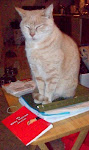
No shirt, no shoes, no service? Or Come as you are? Email me at from_my_shelf@yahoo.com and let me know. Miss a past column? Here’s a tip. Catch up at http://frommyshelf.blogspot .com Hobo, bookstore cat, is a proud graduate of the School of Hard Knocks. You can help him pay his rent by checking out “Hobo Finds A Home”, a children’s book about a cat who wanted more out of life.

If you'd like to buy this book, why not buy it where you tried it? Simply click on the photo below, or the title, highlighted throughout this post, to purchase the book at From My Shelf Books & Gifts, and to support the writers of this fine blog ;) We thank you!

Saturday, June 15, 2013

The Widow of the South

Kasey Cox

Read the Printed Word!
*
*
The Widow of the South was a real woman, a fact I did not realize when we chose the book of the same title to read for our book club selection. Carrie McGavock did, in fact, exist, and as she and the cemetery of Confederate soldiers she tended on the land of her family’s former plantation, her reputation grew. People all over the still-healing nation came to know her devotion to one of the largest private military cemeteries ever built. When Oscar Wilde made a tour of the United States in 1882, he insisted that itinerary would include a visit to Tennessee, “to meet the Widow McGavock, the high priestess of the temple of dead boys.”

Carrie McGavock, her family home of Carnton, outside the little town of Franklin, Tennessee – all these became symbols of the sacrifice of a nation in the final months of the Civil War. Why did Carrie McGavock become “The Widow of the South”? Why Franklin, Tennessee, a town many of us have never heard of, in this anniversary year 150 years after the Gettysburg battle? As a child, I was lucky to have parents who took me to visit historical sites, so I thought I knew quite a bit about the Civil War – Harper’s Ferry, Bull Run (Manassas), Antietam, the courthouse at Appomattox? The movies gave me scenes of Sherman’s burning of Atlanta and “the turkey shoot” at the battle of Petersburg. Now, history websites give me short lists of “famous” bloody Civil War battles that include Chickamauga (Georgia), Chancellorsville (Virginia), Spotsylvania (Virginia), Shiloh (Tennessee), and “the Battle of the Wilderness” in Virginia. I’ve at least heard of all of these places, whether or not I know all the details. Perhaps in 2013, we are too far removed from the Civil War and the Reconstruction period that followed.

This era has been either completely romanced for us by film or TV mini-series, or it has become nothing more than a chain of dry facts and figures memorized for history tests. In the mid-1980s, author Robert Hicks was invited to be on the board of a nonprofit organization founded to restoring the Carnton “Big House”. Hicks was already involved in museum projects dedicated to Southern music and culture, but immediately became drawn into the story of Franklin. His work with restoration at Carnton drove him to a ton of research on the pivotal place it served in our nation’s history. A talk with celebrated Civil War historian and award-winning author Shelby Foote convinced Robert Hicks to go ahead with his idea for a historical fiction work that might breathe life into the people involved in the battle of Franklin and its aftermath.

In his research, Hicks found memoirs written by General Isaac R. Sherwood, who had been a Lieutenant Colonel with the 111th Ohio Infantry when he was wounded at the Battle of Franklin. General Sherwood was one of the last Civil War veterans to serve in Congress after the War. In his Memories of the War, Sherwood eloquently and succinctly explains how the surrender of the Confederate Army happened at Appomattox in April of 1865, but that the final outcome of the War was decided at Franklin. “Franklin dug the grave of the Confederacy,” Sherwood wrote. “The final day was Appomattox, four months after Franklin; but Appomattox was not a battle. It was an event, surrender…. The epochal date was April 1865, but the forces that made that date possible were marshaled on the green hills around the Harpeth River, south of Nashville…. The finger of destiny was lifted, pointing the open road to Appomattox.”

On an Indian summer afternoon, on November 30, 1864, Confederate forces marching to Nashville met entrenched Federal troops in the little town of Franklin. In a battle lasting a little more than five hours, 9,200 men fell dead – 2,500 Union and 6,700 Confederate casualties. This is more casualties in five hours than in the nineteen hours of D-Day in World War II, and on one of the smallest battlefield areas in the United States. In the aftermath, a town of 2,500 people were left to try to take bury or heal more than three times the number of their population, with few resources.

The “Big House” at Carnton became the largest field hospital in the area. Carrie McGavock and her servant-friend-lifelong companion, Mariah, spent hours tending to wounded and dying men, tearing up sheets, clothes, linens, curtains, and anything they could find to make bandages. Thousands of dead men ended up in shallow graves in the Carnton fields. Eventually, those not claimed were moved, by the McGavock family, to a plot of land close to their house, which became the infamous cemetery. Carrie McGavock kept meticulous records of each body’s identification – the soldier’s name, rank, what state he fought with – for the rest of her days. Although a relatively young woman when the Confederacy fell at her feet, the experience had changed her for life. In this way, she became a symbol of what the nation, as a whole, had lost.

Robert Hicks’s novel, The Widow of the South, gives honor and new life to a place and a time we as a nation should remember, amongst all the pomp and circumstance of these anniversary years of our nation’s Civil War. Hicks allows his cast of characters to be real people, with sorrows and regrets, pride and the possibility of hope. The people of The Widow of the South are a study in contrasts, as the nation was in 1864, and as it continues to be now.

Monday, June 3, 2013

Faust’s Secret War

Kevin Coolidge

Frederick Schiller Faust was born on May 29, 1892 in Seattle, Washington. His parents were poor, and life was tough. He would escape his hardscrabble life through his fertile imagination and his love of medieval literature. His parents died when he was still young.

When orphaned, he was sent to live with a distant relative, Thomas Downey, a high school principal. Downey introduced him to mythology. Greek and Latin literature would continue to feed his love of storytelling throughout his life.

He went on to attend the University of California, Berkeley, and wrote for student publications, poetry magazines and newspapers. He showed promise as a writer, and had a natural inclination towards poetry. He was not, however, a good student. He was too restless, a maverick, and never graduated.

When the United States entered World War I, Faust tried to enlist, but was rejected even for the Ambulance Corps, because of an enlarged heart. He then turned his focus to becoming a major poet. He worked manual labor until Mark Twain’s sister read a letter he wrote to The New York Times. She was so impressed that she arranged for him to meet the editor of Munsey Publications.

He began writing extensively for pulp magazines. By the time he sold his third story, he had begun to write under a pen name. This was more than the desire to be anonymous. America was at war with Germany, and using a German name would destroy his career. What name is more German than Faust?

Once he felt his new vocation as a magazine writer was secure, he married his college sweetheart, Dorothy Schillig. He began to write for more upscale magazines, and many of his stories inspired films. His character Dr. Kildare was adapted to radio, movies, and even comic books.

He made a small fortune from these adaptations. He also began working as a screenwriter for Hollywood studios. At one point, he was making $3,000 a week from Warner Brothers, at a time when most people didn’t even make that in a year. Faust became one of the highest paid writers of his time.

Faust disparaged his commercial success. He only used his real name for his poetry. He would spend each morning devoted to the work that he regarded as his literary calling. He considered three lines crafted as a successful day. In the afternoon, he might write crank out thirty pages of a story.

Many of Faust’s characters died a heroic death in battle. Perhaps, it was this romantic notion that made Faust insist on doing his part when the Untied States entered World War II. He had missed the Great War, and he wasn’t going to miss another.

He was well into middle age, and had a chronic heart condition, so he had to use all his connections to become a front line war correspondent on the Italian front. There he lived among men who had grown up reading his stories of heroes and great deeds, and there he died. In 1944, he was mortally wounded by shrapnel in what some historians have called the “bloodiest conflict of the entire war.” President Franklin D. Roosevelt personally commended him for bravery.

Often condemned by those seeking realistic detail in fiction, this didn’t stop Faust from becoming one of the world’s most popular and prolific storytellers. His love of mythology and storytelling drove him to write more than 500 novels, and almost as many short stories. His literary output is estimated at between 25 and 30 million words. He was a poet, an author of romance, fairy tales, legends, dreams and dramas, and wrote over 300 Western novels and stories.

Faust wrote under many pseudonyms—including George Owen Baxter, David Manning, Evan Evans, George Evans, John Frederick, George Challis, Peter Morland, and Frederick Frost, but you probably know him as Max Brand, the Shakespeare of the Western range…

Make your Brand? Or Does Grey matter? Email me at from_my_shelf@yahoo.com and let me know. Miss a past column? No need to worry none. You can catch yourself up at http://frommyshelf.blogspot.com. At the heart of every tale, you’ll find a hero, “Hobo Finds A Home” is the journey of a little, furry one…


.

Tuesday, May 21, 2013

To Make a Story Short

Kevin Coolidge


There were no bookstores in Wellsboro, Pennsylvania, when I was a kid. Sure there were places to borrow books. The Green Free library in town, the bookmobile that visited my elementary school, and the library at the middle school were great resources.

There were fewer places to buy books. I bought the Hardy Boys at the local five & dime, an occasional paperback at the grocery store, but the nearest real bookstore was an hour away, and it didn’t take long for me to go through my allowance when I visited.

Reading wasn’t a habit I could just shelve, and I found ways to feed it. My mom loved going to yard sales, and in the summer I would often go with her. People sold their books? People would often take less than what was marked, and if it interested me, I bought it.

One of my early loves is science fiction, and a staple of the genre is the short story. I was able to find short fiction by such authors as Ray Bradbury, Gordon R. Dickson, and Isaac Asimov. Science Fiction is incredibly diverse and hard to define, as is the short story.

This brief work of literature emerged from oral storytelling traditions and has morphed into an important and exciting literary form. What is a short story? Short stories have no set length. No set word count. It’s more than an anecdote, but it’s less than a novel.

The short story is less complex than a novel. It evokes a mood and does this by focusing on one incident, a single plot, a single setting, and a small number of characters. All covered in short period of time.

It may use many of the same literary techniques as a novel—such as plot, rising action, and climax. It may start in the middle of the action. It may not offer a practical lesson. It may have an abrupt ending. It may take you to a place you’ve never been.

Books broaden. Stories can show us things we’ve never seen. Limiting your reading defeats that. It limits us. I believe the short story matters, and so should you.

May has been declared National Short Story Month, much like April is National Poetry Month. I’m not sure who decides these things. I don’t remember voting, but I love a good short story.

Get your lunch to go, grab a bench, soak in some sun, and read a good anthology like Warriors edited by George R. R. Martin & Gardner Dozois. Martin is known for his fantasy, but it’s not a fantasy anthology, though it has some good fantasy in it.

Gardner Dozois has edited science fiction for decades, but Warriors is not a science fiction anthology, but it has some great science fiction. It also has some pieces I won’t label. I’m not even going to try. They are stories. Just stories…

Novel idea? Or, short on inspiration? Email me at from_my_shelf@yahoo.com and let me know. Miss a past column? Get inspired at http://frommyshelf.blogspot.com Hobo, the cat, tells his story in “Hobo Finds a Home” a book that is child-sized, but not short on story…

Saturday, May 18, 2013

Stop Pretending You Don't Know About Mental Illness

Kasey Cox

Read the Printed Word!

*
*

I saved this column, so I could post it in conjunction with other "Blogs for Mental Health", many of whom were to post all together on May 15.... then I missed May 15. I can only blame this a little bit on my own mental health issues: I do get more easily tired than "normal" (whatever that is) people my age who do not deal with mental health issues. I have limited energy, and a tendency to go into a certain sensory overload sooner than other people do. But, as I have learned over the years, we ALL have limits on our energy. We are, almost to a person, in this modern age ALL dealing with sensory overload. So, I'll just say, I got a little behind this week, and forgive myself for not posting it until a little window of space opened up for me at the end of the week. It's the dose of "so what?" that helps my mental health most of all.

*

I was thinking I’d write this week’s column on Antoine St. Exupery’s classic “children’s” book, The Little Prince, which celebrates its 70th year of being printed in English, as of April 6. I adore The Little Prince, and I have more than enough to say about this lovely collection of parables. I have also been considering, for some time, reviewing Sonya Sones’ young adult book, Stop Pretending: What Happened When My Big Sister Went Crazy. I’ve hesitated to do the review of Sones’ book because it hits more than close to home and I don’t let myself go wandering into certain dark corners often. I maintain the level of health I currently enjoy because I keep myself focused on not the peaks or the valleys of my life, but on as happy a medium as I can.

And then came the national news headlines: Friday morning, April 5, 2013, Rick Warren’s youngest son, Matthew, took his own life at the age of 27. Rick Warren is one of the founding members of the “megachurch” movement in the United States, where churches seek to become more like a campus and an entire life-center for their congregants. Through his bestselling book, The Purpose Driven Life, and through his church in Saddleback, CA, Pastor Rick Warren’s mission has been to translate the Gospel of the more traditional, evangelical church into a modern style that might reach wider audiences. In the first news headlines, church staff shared that Matthew’s suicide came after a lifetime struggle with mental illness, severe bouts of depression, mood instability, and suicidal thoughts. Matthew’s friends describe him as a man who was often effervescent, outgoing, and brilliant, but who was also regularly debilitated by excruciating emotional pain and dark holes of depression. Ten years ago, after another treatment attempt provided no relief, Matthew told his father that he just wished his earthly suffering was over. Reverend Warren, though infinitely saddened to lose his son now, is proud that Matthew was brave enough to hold on for another ten years. Warren explained that his son’s mental illness, despite all the best treatments and prayers that modern medicine and his faith could offer, was never completely under control.

The first time I was hospitalized in a psychiatric unit, I was nineteen. My younger siblings were seventeen and eleven, respectively. My family and I were able to pretend a lot longer and more frequently than author Sonya Sones and her family. The only symptoms we dealt with for a long time were the bouts of depression. When it became apparent over the years that my illness involved more than the occasional depressive episode, I still only stopped being too stubborn to interrupt my “normal” life so that I could actually properly deal with my illness when I got too sick to pretend otherwise. This was not the case for Sonya Sones, a story which she shares in Stop Pretending. When Sonya was thirteen and her sister was nineteen, Sonya’s sister had a full-fledged, break-with-reality, seemingly out-of-the-blue nervous breakdown. The family was shocked, devastated, and, for the six months that her sister was in the psychiatric hospital, nearly nonfunctional themselves. During most of this time, Sonya kept journals, but it was only many years later that she began to share these experiences from her early teen years with other writers.

In a Master Class with poet Myra Cohn Livingston, Sonya was encouraged to go deeper and to share more of the feelings, memories, and events from “what happened when [her] big sister went crazy.” What emerged was a collection of poems which speak clearly and profoundly of how families are affected when one member falls gravely or suddenly ill. The poems in Stop Pretending allow the reader to touch on painful, intense subjects without getting mired down completely. Many of Sones’ poems are short, packing a tremendous array of hope, despair, jealousy, anger, sadness, discomfort, and anxiety into less than 250 words per page. In doing so, Sones has given other teens, indeed other families, permission to speak more openly about the experience of mental illness.
When Sonya Sones’s fellow writers and her mentor first encouraged her to seek publication, Sonya wasn’t sure how exposed her sister would feel. She was afraid of upsetting her sister by sharing these feelings in their rawest form. Instead, Sonya’s sister told her she was pleased and proud that Sonya was taking this opportunity to help other people talk about mental illness. I, as the older sister in a similar story to Sonya’s, would re-iterate the same message. Discussions of mental illness need not be hidden in dark corners for shame, but instead shared in the light of validation and love, which may not always bring a cure, but can definitely bring healing.

Hobo & I want to remind Tioga County that there’s a new NAMI support group in the area. NAMI is the National Alliance on Mental Illness. The weekly meeting for the Tioga Chapter is Wednesday nights at the First Presbyterian Church in Wellsboro, except the last Wednesday of each month, when the meeting is held at the St. James Apartments in Mansfield. FMI: contact 570-439-1417

Sunday, May 12, 2013

Kilt Dead in Maine

Read the Printed Word!

*

(Written, obviously, in the beginning of January 2013)

The first week in January, I finished reading one of the best novels I’ve read in the past six months. Sure, I’ve read a lot of books since last summer, and most of them have been enjoyable, even excellent reads. But I’ve been exclaiming about Emma Donoghue’s Room ever since I started it; even more so when I finished it.

There are, however, a couple of good reasons why I won’t be reviewing Room in this week’s column. The book club at the bookstore doesn’t meet until the evening of Tuesday, January 22nd, so I don’t want to tell everyone my opinions this far out. I don’t want to give spoilers or unduly influence other members’ experience of reading the book. Also, as I type this column on Sunday night, the 13th (why, no, editor, I don’t write my columns at the last minute! Whatever makes you think I’d procrastinate like that?), there is still a week and a half to tempt other folks to read Room and join us at this month’s meeting. I guarantee you’ll fly through the pages of this book: even if you are just reading this column on Thursday or Friday just before the book club meeting, I’m certain you can finish Room in a weekend. It is that compelling.

Nevertheless, it still being obvious how much I wavered in my decision, I finally asked my husband and bookstore business partner – the person best for me when bouncing around both personal and “professional” book reviews – “which should I do this week’s column on, Room by Emma Donoghue, or those Scottish mysteries by Kaitlyn Dunnett?” Knowing my enthusiastic response to both authors, and the possibilities for discussing each, Kevin didn’t hesitate. “The Dunnett mysteries,” he answered, “because they’re more fun. Besides, you can always do a review on Room later, after the book club meeting.”

And that is why, loyal readers, you’ll have to take a teaser on Room, and hear about how much I have enjoyed Kaitlyn Dunnett’s cozy mystery series about the little western Maine town of Moosetookalook and its charming cast of characters. At the ripe old age of twenty-seven, Liss MacCrimmon finds her career as a professional dancer cut short when she severely injures her knee. Though surgery guarantees she will walk normally again, Liss can never risk going back to dancing the high-impact Scottish folk dances of her troupe, Strathspey (think Riverdance, only the heritage of the Scots, not the Irish). Now instead of touring the U.S. as the lead dancer fifty weeks out of the year, Liss returns home to her small town in Maine, to continue to heal up and decide what comes next. In the meantime, she’ll work in her Aunt Margaret’s shop, the Scottish Emporium, purveyors of custom-order kilts, beautiful tartan fabrics, shortbread, canned haggis, Celtic jewelry, books on Scotland, and many niche gifts. Though Tandy’s Music Shop takes care of major musical instruments, including the bagpipes, the Scottish Emporium does have practice chanters, pennywhistles, and drumsticks. They even sell the sgian dubh, the small, traditional “black dagger” of the Scots.

While the sgian dubh is not the murder weapon used in the first book, Kilt Dead, it does make a gruesome appearance in The Corpse Wore Tartan, the fourth book in the series, when the Scottish Heritage Appreciation Society hosts their annual Burns Night Dinner at the Spruces, a resort overlooking Moosetookalook. Liss’s boyfriend, Dan Ruskin, and his family, have slaved to re-open the old-fashioned resort, hoping to bring more tourism to their area. Having the Robert Burns Dinner scheduled there over a winter weekend is a great foray into the kind of business they hope to attract, especially since the dinner is an annual event. But the staff at the Spruces notices right away that Scottish Heritage Appreciation Society has a shared history beyond Scottish ancestry, and, before you know it, a fresh body is found in a storage room, throat apparently slit with his own sgian dubh. In true Agatha Christie style, a huge snowstorm blows in, trapping all the guests at the hotel for several days, without electricity and with a murderer in their midst.

It’s no surprise that Liss is often getting herself in the midst of “work better left to professional detectives, Ms. MacCrimmon,” since she adores murder mysteries, shying away from the forensic stories, but loving the amateur sleuths. Liss, her friend Angie (who runs the local bookstore), and all the small business owners of Moosetookalook are thrilled when the Spruces hosts a mystery writers’ conference in Scotched. Sadly, a famous writer falls to her death at the local lovers’ leap, and the circumstances are too strange not to ask questions.

In many ways a typical “cozy” mystery series, but with plenty of Maine local color and a fresh idea with the addition of Scottish-American heritage theme, Liss MacCrimmon and the gang are a welcome new act in the crowded field of fun, light mysteries.

Monday, May 6, 2013

The Hobo Handbook

Kevin Coolidge


Driving the same route to work. Parking in the same spot. Eating at the same places. The daily grind has finally ground me down. If I have to listen to my boss yak about his weekend one more time, I’m going to stab myself in the eye just to see if he’ll shut up, and ask why I’m not answering the phone.

Taking stock of my life, I wonder how I became so complacent. Why did I ever buy into the bills, the stupid landlord, alarm clocks, parking tickets, and the damn IRS? There has to be something better out there.

The open road calls. I hear its sweet, seductive whisper as I swallow the last of my espresso. Ahhh, caffeine is civilization. Beer may have got it brewing, but we can thank dancing goats for getting us past the Bronze Age*. It’s so obvious. I don’t know why I didn’t think of it before. I’ll quit my job. Cut up my credit cards, and become a hobo. I see the future. I can feel the rush of fresh air against my face as I gaze at the scenery rushing by the open door, but as the air conditioning clicks off, I find I have some questions. Where do I begin???

You might think the lifestyle of crossing a still-wild frontier on the rails is dead, but there is a niche for the twenty first-century hobo. Modern-days tramps are more likely to find a temporary job on Craiglist while sipping a latte paid with a debit card than brewing a pot of cowboy coffee over a small campfire, and might catch a Greyhound instead of a freight train**. Enter The Hobo Handbook: A Field Guide to Living by Your Own Rules written by Josh Mack. This book is a guide for taking your life on the road. Learn how to set up camp, find some work, catch some food, grab some transport, and when the time comes, how to sleep in a ditch.

Where did the original “hobos” come from? The first American hobo came with the end of the Civil War. Two Union soldiers found themselves far from home, and decided hopping a passing freight train was the fastest way back. They beat their friends home and soon other soldiers followed. President Lincoln had authorized the first transcontinental railroad, and as the tracks surged West, men followed—riding the rails while finding work building, repairing, and maintaining them. The railroads were initially happy to provide transport.

On the road again, you might decide that you’ve found your true calling, or you may be saying, “Well, that was a terrible idea. My job may suck, but I get to go home at 5pm, and a little rent once a month doesn’t sound so bad, I guess,” and return to your regularly scheduled life. Either way, the road called, and you answered…

*It is said that an Ethiopian goat herder discovered coffee while looking for his goats. Goats ate the berries, and the coffee break was invented.

**Hopping a freight train is illegal, but even worse, it’s incredibly dangerous. It’s estimated that from 1929 to 1939 more than 24,000 people were killed. Maybe you should take the bus.

Hobo? Tramp? Or just bumming around? Email me a from_my_shelf@yahoo.com and let me know. Miss a past column? Next time you have public access just go to http://frommyshelf.blogspot .com and read your fill. Hobo, the cat used to be a tramp, but now he’s just a bookstore bum. It’s a nice gig if you can get it. Stop by and see for yourself…


Monday, April 29, 2013

He Fell From a Star

Read the Printed Word!
*
*
This month marks the 70th anniversary for the publication of The Little Prince, by French author, Antoine de Saint-Exupery. St-Exupery’s life, writing, and death have fascinated people for all these years: the story behind the story is just as interesting as the plots of his most well-loved works.

“St-Ex” was a little too old to be a war pilot (although this didn’t stop him) when the Nazi regime swept across Europe. Born in 1900, St-Exupery learned to fly with the generation of pilots who sought to fly longer distances, faster, across large sections of the globe. These pilots – including Charles Lindbergh and Amelia Earhart – flew more with guts and intuition than with instrumentation. St-Exupery was a pioneer of international postal flight—-the original “Aeropostale” for all you modern mall shoppers. Through the late 1920s, St-Exupery innovated and developed these mail routes connecting Europe, Africa, and South America. While participating in the Paris-to-Saigon air race in December of 1935, he and his mechanic-navigator crashed in the Saraha Desert and miraculously survived.

In the beginning of World War II in Europe, St-Exupery joined the French Air Force, but exiled himself when France surrendered to German occupation in 1940. The author-aviator-aristocrat spent the next three years in the US., encouraging Americans to enter the war, and writing some of his most famous pieces – including The Little Prince.

The Little Prince is one of the best-selling books of all time, making the list of the few titles that have sold over 100 million copies (current stats put it at about 140 million copies sold). Although there are many book series that have sold between 50 and 100 million copies, there are very few single titles that populate this esteemed list. Part of the reason for these staggering numbers of sales is that The Little Prince has been translated into more than 250 languages and dialects. Furthermore, in many countries, The Little Prince has gone through several translations – there have been six English translations, fifteen translations in Japanese, and more than fifty translations into Chinese.

Strangely enough, The Little Prince was not well-received by many of St-Exupery’s contemporary admirers. He was known for his tales of life as a pilot, in such books as Wind, Sand and Stars, for which he won the U.S.’s National Book Award. Though The Little Prince is the story of a pilot who crashes in the Saraha Desert, it was marketed as a children’s book, with its fantastical plot of the little prince from a far-away asteroid who meets the downed pilot in the desert. The strange mix of parables, talking animals, and pessimistic commentary on adult behaviors and cultural mores, didn’t appeal to the audience that St-Exupery had built. Nevertheless, it was published posthumously to growing acclaim, and, obviously, continues to charm generations around the world.

Though superior officers, friends, and concerned colleagues tried to permanently ground St-Exupery several times, citing his age, his health problems from earlier crashes, and his tendency to focus more on musing above the earth rather than on flying, St-Exupery continued flying missions for the Free French Air Force from 1943 through 1944. Adding to mystery to his legend, he took off from the southern coast of France on a reconnaissance mission in July 1944, when he was to gather information about German troop movements in the Rhone Valley, prior to a planned Ally invasion of that area. St-Exupery and his “war-weary” plane disappeared in stormy weather over the Mediterranean not long into his flight. There were no further clues to the mysterious end of an author who has himself become an icon of France until 1998, when a fisherman found a silver ID bracelet engraved with the names of St-Exupery, his wife, and his French publishing house – known to have been on his flight suit. In 2000, a diver found parts of the same make and model as St-Exupery’s, spread on the Mediterranean floor near the location of the bracelet.

I can tell you “the story behind the story”, but the question remains, why is The Little Prince so beloved? For decades, authors and publishers have wished that they could repeat the formula, that they could somehow bottle the charm, the lessons, the inspiration, that comes from less than 100 pages of a “children’s story.” Ultimately, to solve this mystery of the life and impact of Antoine St-Exupery, you will have to read The Little Prince for yourself.

Monday, April 22, 2013

Massage for Dummies

Kevin Coolidge

Have you ever had a massage? My first massage was from a girl friend. My back was stiff and sore from too much overtime and not enough sleep. She had gotten one of those how-to videos in the mail, and wanted to try some of the massage techniques. I’m not sure of the right word to use, but incredible will suffice. I could feel my stress drain away.

She wasn’t a professional massage therapist. She didn’t have a lot of training, but I felt the relief of muscle tension right away. Massage has many benefits. It increases circulation, which helps promote the healing of tissues and raises immune efficiency, reduces levels of stress, and can greatly improve your health and wellness

If you’d like to learn how soothe stress and reduce pain, you can read Massage for Dummies, written by licensed massage therapist Steve Capellini. This book has numerous step-by-step, hands-on photos and illustrations. You too can learn the basics and give and receive a therapeutic massage.

There are hundred of types of massage practiced around the world, from using wooden spoons to hit pressure points, a specialty of the Mongol hordes, to Rolfing, a form of structural bodywork that is quite intense*. These different styles of massage are called modalities, and most massage therapists today are trained in several.

There’s a chapter to help you choose the right style for you, learn some massage jargon, and how to choose a massage therapist. That’s right, one of the best ways to learn massage is to get massage. Most massage schools require students to have received a professional massage before applying.

According to the American Massage Therapy Association, only about 20% of Americans have received a professional massage. The biggest barrier for most people is that they don’t know what to expect. I didn’t. I would have found the information in this chapter very useful before I received my first professional massage.

You will find you will get more out of the massage if you know what you are hoping to achieve. People generally decide to get massage to relax, to feel better, or to improve the body’s functioning. Often, it’s a combination of all three. Letting your massage therapist know this can help you get the most out of your massage.

You can also get more out of your massage if you do a little planning. It’s best not to eat a large meal or consume alcohol before. I also don’t suggest wearing a lot of jewelry. This can eat into your massage time. An hour massage includes time before and after the massage to prepare. It usually leaves 50 minutes on the table. It’s also impossible to perform a proper effleurage** with a necklace in the way.

If you want to perform massage, Steve writes about working with massage oils, if you should invest in a massage table, or just use the floor, and attending to the comfort of your recipient. Body temperature usually drops during a massage, even the most warm-blooded cool when receiving massage, and it’s hard to relax if you’re shivering.

In chapter ten you’ll learn some of the basic massage moves and how to put them together to perform an actual massage. Massage is more a series of techniques, but a flow in which you don’t concentrate on techniques so much as focus on the feel and the movement.

Did massage change my life? I did go on to experience several professional massages, and eventually I enrolled in the Boulder School of Massage Therapy and became a trained and certified massage therapist. Massage helped get back in touch with what matters. Life matters. Health matters. People matter…

*I personally have received all ten Rolfing sessions, and exquisitely painful might be a better word choice here.
** A fancy French word meaning, “to skim” It’s a massage stroke used in Swedish massage used to prepare the muscle for deeper work.

Get rubbed the right way? Or Thanks, but I don’t knead it? Email me at from_my_shelf@yahoo.com and let me know. Miss a past column? Take a breath and relax. They are all available at http://frommyshelf.blogspot.com Hobo is a CMF. Certified Massage Feline. Stop by and he’ll train you to rub him the right way. Don’t forget the ears…

Monday, April 8, 2013

The Ultimate Man’s Survival Guide

Kevin Coolidge


The rite of passage, the transition from boy to man—a Spartan would be torn from his mother and forced to make his way in the wilderness. The bravest Cheyenne warriors would rouse a sleeping grizzly and then outrun the bear, or be mauled to death. Today this transition is subtler, more often marked by ages than feats.

You can smoke and gamble at eighteen. You can drink at twenty-one. Alcohol, tobacco, and playing blackjack are considered manly things, but it won’t turn a boy into a man. How do we become men when there’s no test to pass? Despite the lack of rite of passage, every male strives to be a man.

There’s more to being a man than fighting, drinking, and fornication. There’s being a father, a husband, a good friend, and a citizen. It’s keeping your own counsel and knowing when to seek advice. It’s knowing when to keep your mouth shut, but not being afraid to speak. It means standing your ground and finding your path even if there is no guide.

Luckily, there is a guide and that guide is The Ultimate Man’s Survival Guide written by Frank Minter. It’s a must-have guide on how to hunt, fish, shoot, survive in the wild, and everything else a man should know. Including the riddle that befuddles the most manly of men, “What do women want?”

Frank Sinatra, who had a Ph.D. on the subject of women, didn’t know, and the man who invented psychoanalysis, Sigmund Freud, never was able to answer it, but Minter knows. His chapter 6 titled “Romantic” is loaded with advice from women and the time-tested skills of ultimate romantics—such as Lord Byron and the Bard.

Minter divides his book into different parts labeled for modern archetypes*. In “Survivor,” there’s everything from fighting off a bear to meeting your water needs. In “Provider”, you’ll learn something about guns, shooting, and hunting, and in “Athlete,” you’ll learn how to throw the perfect pass and why a jab is better than a roundhouse.

A modern hero needs to be able to hold, feed, and change a baby, and to respond to a car accident. With this book, you can also learn how to buy and smoke a cigar. You can run with the bulls in Pamplona, Spain, and be able to live to talk about it over a properly mixed drink. A drink slowly savored and not gulped, because a drink among friends should be a bonding experience, not drunken debauchery.

According to Frank Minter every male must learn to be a man as best he can. This knowledge isn’t written in our genetic codes. Being a man is not just courage, intellect, and brawn. Training shapes a soldier, a poet, and a boxer. Knowledge instills confidence. Understanding breeds self-reliance, and The Ultimate Man’s Survival Guide packs a whole lot of assuredness between the covers of a book. Chances are you’ll learn something you didn’t know. So pick one up for yourself, your son, your nephew and your niece…

*An archetype is a universally understood symbol or pattern of behavior and is often used in myths and storytelling telling across different cultures.

Speak softly? Carry a big stick? Or Both? Email me at from_my_shelf@yahoo.com and let me know. Miss a past column? You can search them out for yourself at http://frommyshelf.blogspot.com Hobo was a kitten who grew to be a cat. His journey is the hero’s journey, but it’s cute and short and colorful, and you can read about it in “Hobo Finds A Home” Hobo—warrior, king, fool…