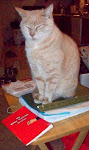
For many bibliophiles, New Year’s Resolutions are not so important as is a plan of action for reading in the coming year. Just in the past week, I’ve had five different people come to the bookstore to ask for suggestions to populate their upcoming book club calendars. Just like athletes devising a training schedule, or business owners aiming to diversify their customer base, many book lovers scheme a reading plan for the months to follow.
In her popular blog, www.thebookladysblog.com, the passionate bibliophile Rebecca Jones Schinsky recently mused on her reading goals for 2011. For 2009, she tried to read 100 books in a year; in 2010, she made a list of specifically-chosen books, so that she might read “more deliberately”; for 2011, her goal is to become a more well-rounded reader, by reading at least one book from every section of her favorite independent bookstore. In her endeavor for 2011, I believe “the Book Lady” is taking practical steps to meet her more loftily stated goals of “expanding her literary horizons” by “exploring new genres.”
I had been pondering a more “deliberate” list for myself, since I feel as though I end up recommending many of the same books over and over. They are certainly excellent books, all of which I’ll continue to recommend, but I need some new fodder for my “recommended” list as well as new challenges in my own reading life. I sorted through books in my huge “TBR” (to be read) pile, slid in a couple of classics I want to challenge myself to read, mixed in several genres, borrowed a few from the newsletters of other independent bookstores, and, voila, the reading list I’ve set for myself for 2011. My goal is to read as many on list as possible before year’s end; hopefully, I’ll read all of them and more. I haven’t set too many “rules” for myself, except the following: I really have to hate it to quit a book on the list; I can only quit after getting at least halfway through it; that if I quit a book, I need to try to pick it up at least once more during the year; and there’s no specific order in which I need to read them. Brief reasons for each selection follow each title.
The Sweetness at the Bottom of the Pie by Alan Bradley: came highly recommended from all over the book world, even when it was in hardcover. The main character is a plucky eleven year old chemistry nerd, determined to solve a murder mystery which lands in her backyard. A book written for adults yet featuring a child as the narrator; a British period piece written by an American who had never been to England; a debut novel from a 70 year old author; a well-written novel that just happens to be a mystery novel – there are so many aspects of this book which call to me. This has been on my “TBR” pile for over a year, so it’s definitely time.
Unbroken by Laura Hillenbrand -- the newest book from the acclaimed author of Seabiscuit brings us the incredible story of one American man’s wild journey of a life through a hell-raising youth during the Great Depression to the track in the 1936 Olympics in Berlin, on to the skies above the Pacific in World War II, to the depths of a Japanese POW camp, and the silent torments of recovering from all the trauma this man, and so many other soldiers like him, had to face. Hey, I’m a sucker for stories of resilience and survival, and for World War II history. In the gifted hands of a writer and researcher like Hillenbrand, no wonder folks are raving.
The Watchmen by Alan Moore: I find graphic novels harder to read, because I am someone who processed so predominantly through words, and graphic novels require the reader to process a story via words and pictures. Although we process story visually and auditorily by watching movies, which I also enjoy, when it comes to the page in front of me, I find it more difficult to process with the visual images and the words. I have a growing admiration for storytellers who are giving us their complicated, elaborate stories in this visual and literary format, and want to challenge myself to be more comfortable in this genre. Although there are many excellent graphic novels available, The Watchman was the only graphic novel listed by Time magazine as one of the top 100 books written in the U.S. since the 1920s.
Zen and the Art of Motorcycle Maintenance by Robert M. Pirsig: one of the “new classics”, originally written in 1974 as a novel exploring, among other things, our philosophical heritage, why our technology often leaves us feeling separate from the world, the quest to balance our lives between disparate experiences by being feeling present to them. This book is commonly given to people to pave the way more gently into the “big” questions of philosophy and all the tomes of philosophic rhetoric that attempt to address those questions. It is one of my sister’s favorite books, and she even documented her struggles with it in a gigantic mixed-media painting that became part of the collection of works she presented for her college senior showing. Philosophy intrigues me a great deal, as I have long been interested in “THE BIG QUESTIONS”, but have been afraid of reading too much, for fearing of falling too deeply into the rabbit hole. This seems a safe way to begin.
Tune in next week for the rest of the list! With the introduction of said list out of the way this week, there will be much more room for the actual listing and describing of the rest of the books. For a cheat peek, check our blog at http://frommyshelf.blogspot.com, where you’ll find the entire list now, but not the description or reasons. Can’t steal Hobo’s fire for next week! By the way, Hobo’s hat wasn’t stolen by a grinch, but was returned by a good Samaritan who found it run over in the street.
Showing posts with label HOBO. Show all posts
Showing posts with label HOBO. Show all posts
Sunday, January 16, 2011


Wednesday, December 9, 2009
Hobo gets a tattoo

Stop me if this sounds familiar: big, muscled guy with tattoos, who can come across as a little intimidating until you know him, ends up having the biggest heart for homeless, neglected and/or abused animals. At first, he and his family adopt dogs that they find wandering alongside the road. He imagines he’ll never really be a cat person, but once that first stray cat finds its way into his home, he’s in love, and begins to do more serious work with animal protection and advocacy associations.
Surprisingly enough, I’m not talking about my partner Kevin Coolidge, his childhood dogs Kirby and Hoover, or Hobo. Or, at any rate, I’m not just talking about them. For the purposes of a BOOK review, I was actually referring to a touching new book about Rescue, Ink. The eponymously-titled Rescue, Ink recently released by Viking Publishing, was penned by Denise Flam with a great deal of input from the ten-man New York City animal rescue group. This core group of guys has a lot in common – most are big guys, with at least a couple of tattoos, interested in classic cars and motorcycles, who grew up rough and aren’t easily intimidated. Their “daytime” jobs span the gambit from managing the family catering business to retired police chief to personal trainer to bar bouncer. What they brings them together, though, is a deep love for animals, and an intense dedication to changing the lives of those who are neglected or abused.
The cover photo on the book – all ten guys, eighty tattoos, dogs, kittens, and turtles among them – is worth the proverbial thousand words, but, thankfully, that’s only the beginning of the fascinating stories here. This book, which could have just been a publicity stunt in the wrong hands, instead flows with individual stories about different rescue cases that wonderfully showcase who these men are, what their mission is, and how they have gone about implementing it. Here are the stories of the cat rescued from sixty feet up a tree; the help given to the family whose cat population had ballooned to over 150 in the house; the rescues of “bait” dogs, mostly Rottweilers and Pit Bulls, who are miraculously rehabilitated; the delivery of new dog houses to shelter big dogs left in their yards, under the elements; the ‘undercover’ work at a slaughterhouse in the Pocono area; and many more.
Though the men of Rescue Ink have been adopting individual animals throughout most of their own lives, and now facilitate the adoption of individual animals, their mission is as big as their hearts, and bigger than the largest member of the group, “Big Ant. (Anthony)”, who weighs in at 320 pounds and whose tattooed arms are bigger than most people’s thighs. These men also confront abusers, offer help to overwhelmed rescuers and pet owners, build doghouses and better dog runs, maintain feral cat colonies, give talks at community centers and schools, and work with the larger network of animal rescue societies across the nation.
I could recap the specific stories of this book, but that would take away from your experience with it. I invite you to dig in to the personal stories of Big Ant, who had to learn to walk again, or Joe Panz, whose scars – five bullet holes, knife wounds, and burns – bear silent but powerful testament to the way he grew up, or Des, who joined a gang young to survive his neighborhood. All these men have powerful stories of their own, and yet, the focus of this book is on the incredible work they do. Gentle giants, every one, with attitude to spare. They’re not afraid to knock on a door in a bad neighborhood in New York City, and tell a guy to his face that he’s abusing his dog; then offer to take the dog, whom they treat with only gentleness, love and respect. This is the powerful combination that Rescue Ink offers.
Hobo gives his two thumbs up to Rescue Ink, the SPCA, Second Chance Animal Sanctuaries, and Animal Rescue Societies everywhere for the work they do. Special thanks to the people who adopted the two abandoned kittens out of the bookstore this weekend. Jeers to the idiot who dropped them off in a cardboard box in the middle of the night. Hobo would like to remind everyone to stop by the Second Chance Animal table at the BookFest this weekend, AND make sure you spay/neuter your pets!
Saturday, May 9, 2009
Cozy Mysteries as Comfort Food
Kasey Cox
Sigh. It’s Sunday night, and I’ve worked all week. I had a meeting with the accountant on Wednesday night, and I finally got back to my exercise class on Thursday night. I was supposed to take some time off on Thursday afternoon, but I had a meeting with a local author I’m helping. The dishes have been piled up in the sink for several days, and there’s laundry to be done, including extra sheets from the massage room. My sister and I have been playing phone tag for at least a week.
When I check my facebook account, I see some friends talking about John Updike. Updike, arguably one of the best American novelists of the last century, winner of two Pulitzer Prizes, died on January 27th of this year. My academic, well-read, bibliophile friends are lamenting his death, as well as how few people are reading Updike these days. I silently beat myself with my own personal “YOU SHOULD BE READING…” cat-o-nine-tails, telling myself I should be as “well-read” as people think I am. The guilt washes over me. For our last book club meeting, I couldn’t bring myself to finish the book. It’s a shame, because I’ve wanted to read “The Other Boelyn Girl” for quite some time. Philippa Gregory is not John Updike, but she’s provided us with several good, solid reads in historical fiction, backed by a ton of research on life in medieval England. I read Updike in college. I usually love historical fiction. So what’s wrong with me? (besides the Seasonal Affective slump that hits most of us in this area from January to April…..)
Thank God for a little fluff, and for friends who understand. When I confessed to my book club that I just couldn’t seem to stay with “The Other Boelyn Girl”, one of the women reassured me that she couldn’t read much of anything when she worked full time. Now that she’s retired, she’s happy to join a book club, and tackle some meatier books: she’s been reading our book of the month in addition to re-visiting many of the classics. Another woman I know – well-educated, intelligent, articulate – saunters into the bookstore regularly, boldly asking for her dose of “smut.” She has three very busy children, teenagers each involved in his own activities, to which she chauffeurs them on a daily basis, while running the household, helping with the family business, and being actively involved in local charities.
When your brain is completely consumed with keeping your life (not to mention the lives of your family, boss, clients, pets, church, favorite charity, etc.) going forward with at least a modicum of balance, it can be difficult to keep track of a list of characters and their heart-wrenching struggles. At this point, some women turn to bodice-rippers. I have discovered my brain comfort food in “cozy mysteries.” Although I do enjoy the forensic science fad that has swept the country over the past few years, watching countless episodes of “CSI” on TV and reading Patricia Cornwell along with half the U.S. population, cozy mysteries don’t go into much detail on science, blood, or sex. A cozy mystery is one that you’d be comfortable having your teenager read. According to this wonderful website I found, www.cozy-mystery.com, “cozy” readers are usually intelligent women (or men!) looking for a fun, engaging read. (Once again, words to soothe my literary ego.)
A cozy mystery draws the reader in with a spunky or eccentric protagonist, usually a woman who is not by profession a police officer or private detective. This amateur sleuth often finds herself accidentally associated with a murder investigation, and, being the intuitive, curious, social person she is, ends up helping to solve the crime. Why the term “cozy”? I’m not sure if it refers to the discreet references to violence or sex, or the fact that most of these stories take place in small towns, or if a cozy is usually murder among friends. As much as the reader might enjoy and identify with this spunky lady, you wouldn’t want her to move into your town, because the next one to turn up dead just might be you! Do you really want Jessica Fletcher or Miss Marple to be your new neighbor?
Hobo says don’t worry about the new neighbors; he and Gypsy are on Neighborhood Watch. He also promises not to write any of those cozy mysteries about a lady who solves crimes with her cats. Search for other clues about the mysteries of small town life at Hobo’s blog, http://frommyshelf.blogspot.com
Sigh. It’s Sunday night, and I’ve worked all week. I had a meeting with the accountant on Wednesday night, and I finally got back to my exercise class on Thursday night. I was supposed to take some time off on Thursday afternoon, but I had a meeting with a local author I’m helping. The dishes have been piled up in the sink for several days, and there’s laundry to be done, including extra sheets from the massage room. My sister and I have been playing phone tag for at least a week.
When I check my facebook account, I see some friends talking about John Updike. Updike, arguably one of the best American novelists of the last century, winner of two Pulitzer Prizes, died on January 27th of this year. My academic, well-read, bibliophile friends are lamenting his death, as well as how few people are reading Updike these days. I silently beat myself with my own personal “YOU SHOULD BE READING…” cat-o-nine-tails, telling myself I should be as “well-read” as people think I am. The guilt washes over me. For our last book club meeting, I couldn’t bring myself to finish the book. It’s a shame, because I’ve wanted to read “The Other Boelyn Girl” for quite some time. Philippa Gregory is not John Updike, but she’s provided us with several good, solid reads in historical fiction, backed by a ton of research on life in medieval England. I read Updike in college. I usually love historical fiction. So what’s wrong with me? (besides the Seasonal Affective slump that hits most of us in this area from January to April…..)
Thank God for a little fluff, and for friends who understand. When I confessed to my book club that I just couldn’t seem to stay with “The Other Boelyn Girl”, one of the women reassured me that she couldn’t read much of anything when she worked full time. Now that she’s retired, she’s happy to join a book club, and tackle some meatier books: she’s been reading our book of the month in addition to re-visiting many of the classics. Another woman I know – well-educated, intelligent, articulate – saunters into the bookstore regularly, boldly asking for her dose of “smut.” She has three very busy children, teenagers each involved in his own activities, to which she chauffeurs them on a daily basis, while running the household, helping with the family business, and being actively involved in local charities.
When your brain is completely consumed with keeping your life (not to mention the lives of your family, boss, clients, pets, church, favorite charity, etc.) going forward with at least a modicum of balance, it can be difficult to keep track of a list of characters and their heart-wrenching struggles. At this point, some women turn to bodice-rippers. I have discovered my brain comfort food in “cozy mysteries.” Although I do enjoy the forensic science fad that has swept the country over the past few years, watching countless episodes of “CSI” on TV and reading Patricia Cornwell along with half the U.S. population, cozy mysteries don’t go into much detail on science, blood, or sex. A cozy mystery is one that you’d be comfortable having your teenager read. According to this wonderful website I found, www.cozy-mystery.com, “cozy” readers are usually intelligent women (or men!) looking for a fun, engaging read. (Once again, words to soothe my literary ego.)
A cozy mystery draws the reader in with a spunky or eccentric protagonist, usually a woman who is not by profession a police officer or private detective. This amateur sleuth often finds herself accidentally associated with a murder investigation, and, being the intuitive, curious, social person she is, ends up helping to solve the crime. Why the term “cozy”? I’m not sure if it refers to the discreet references to violence or sex, or the fact that most of these stories take place in small towns, or if a cozy is usually murder among friends. As much as the reader might enjoy and identify with this spunky lady, you wouldn’t want her to move into your town, because the next one to turn up dead just might be you! Do you really want Jessica Fletcher or Miss Marple to be your new neighbor?
Hobo says don’t worry about the new neighbors; he and Gypsy are on Neighborhood Watch. He also promises not to write any of those cozy mysteries about a lady who solves crimes with her cats. Search for other clues about the mysteries of small town life at Hobo’s blog, http://frommyshelf.blogspot.com
Hobo's Book Club: a review for kids to read
Kasey Cox
Hi, everyone! I’d like to choose the next book for Hobo’s Book Club, but on this one, I’d like to include the kids. Moms, dads, grandparents, teachers, scout leaders, big brothers, librarians, older sisters, and all other friends of our younger audience, would you please share the review below with the kids in your life? I’d love to see the kids feel more involved in reading their local newspaper! Especially in a rural community, the weekly newspaper is an important way to keep up on sporting events, concerts, fundraisers, support groups, township meetings, job openings, and a lot more. We rely more on our newspaper and local radio stations than people in more metropolitan areas, who often have a daily newspaper and/or a TV station specifically for their city. Since we continue to hear a lot of wonderful feedback from parents and teachers about how much the kids enjoy Hobo, we thought a word or two from Hobo to the kids about a cool book would be just the right place to start. Look for more reviews and notes direct from Hobo to the kids in coming months. And now, here’s ……….. HOBO!
Hi! Hobo here! The book I want to tell you about is Fat Cat by Margaret Read MacDonald. I picked this book for my friend Gypsy, because she is a fat cat. Just like the cat in this book, Gypsy has a little head on top of a round, fat body. I like the drawings in this book. They are fun and have a lot of colors. The fat cat is dark orange. He wants more food. He eats and eats, but he wants more. He eats anyone who tells him he is fat! He gets bigger and bigger. At the end, he eats his friend, the mouse. She has a way to cut a hole out of his big tummy, and everyone who was inside gets out! Then she sews nice patches over the hole. Now the cat is flat, not fat, and he gives Mouse a part of whatever he eats. This story is like many other old stories called folk tales.
What I liked about this book: The funny fat cat gets bigger and bigger. The pictures are so cool!! There is something fun to look at on every page. The little mouse is cute. I like the song the fat cat keeps saying, “I may be fat, but I’m still a hungry cat.” This book is easy to read, by myself, or with my family. Kevin read it and now he tells Gypsy, “YOU are a fat cat!” Gypsy has not eaten Kevin. Yet.
What I did not like: I was a little afraid when the mouse cut a hole in the cat’s tummy. But, the mouse made it okay for everyone. He fixed the hole with nice fabric. I think the cat looked even better at the end, but not better than me. I am the prettiest orange cat I know.
I would love for you to write to me about the book you like best, or tell me what you think of my book. Tell me about your pets: do you know any fat cats? How about dogs? Or hedgehogs? What do you like to eat when you are hungry? Do you like to draw? I like to hear about you! Write me at: Hobo, 87 Main St, downstairs, Wellsboro, PA 16901 or email me at frommyshelf@epix.net Thanks!
Hi, everyone! I’d like to choose the next book for Hobo’s Book Club, but on this one, I’d like to include the kids. Moms, dads, grandparents, teachers, scout leaders, big brothers, librarians, older sisters, and all other friends of our younger audience, would you please share the review below with the kids in your life? I’d love to see the kids feel more involved in reading their local newspaper! Especially in a rural community, the weekly newspaper is an important way to keep up on sporting events, concerts, fundraisers, support groups, township meetings, job openings, and a lot more. We rely more on our newspaper and local radio stations than people in more metropolitan areas, who often have a daily newspaper and/or a TV station specifically for their city. Since we continue to hear a lot of wonderful feedback from parents and teachers about how much the kids enjoy Hobo, we thought a word or two from Hobo to the kids about a cool book would be just the right place to start. Look for more reviews and notes direct from Hobo to the kids in coming months. And now, here’s ……….. HOBO!
Hi! Hobo here! The book I want to tell you about is Fat Cat by Margaret Read MacDonald. I picked this book for my friend Gypsy, because she is a fat cat. Just like the cat in this book, Gypsy has a little head on top of a round, fat body. I like the drawings in this book. They are fun and have a lot of colors. The fat cat is dark orange. He wants more food. He eats and eats, but he wants more. He eats anyone who tells him he is fat! He gets bigger and bigger. At the end, he eats his friend, the mouse. She has a way to cut a hole out of his big tummy, and everyone who was inside gets out! Then she sews nice patches over the hole. Now the cat is flat, not fat, and he gives Mouse a part of whatever he eats. This story is like many other old stories called folk tales.
What I liked about this book: The funny fat cat gets bigger and bigger. The pictures are so cool!! There is something fun to look at on every page. The little mouse is cute. I like the song the fat cat keeps saying, “I may be fat, but I’m still a hungry cat.” This book is easy to read, by myself, or with my family. Kevin read it and now he tells Gypsy, “YOU are a fat cat!” Gypsy has not eaten Kevin. Yet.
What I did not like: I was a little afraid when the mouse cut a hole in the cat’s tummy. But, the mouse made it okay for everyone. He fixed the hole with nice fabric. I think the cat looked even better at the end, but not better than me. I am the prettiest orange cat I know.
I would love for you to write to me about the book you like best, or tell me what you think of my book. Tell me about your pets: do you know any fat cats? How about dogs? Or hedgehogs? What do you like to eat when you are hungry? Do you like to draw? I like to hear about you! Write me at: Hobo, 87 Main St, downstairs, Wellsboro, PA 16901 or email me at frommyshelf@epix.net Thanks!
Short and Bittersweet
“Short and Bittersweet”
By Kasey Cox
A little over a year ago, Kevin and I helped a friend publish a collection of short stories. Local author Joe Parry had freelanced for outdoor magazines for more than twenty years, having his stories and columns most regularly published in “The Pennsylvania Game News” and in our own Wellsboro Gazette. As we made inquiries on Joe’s behalf at various small presses and publishing houses around the country, the polite rejection was often the same: “Short story collections are a tough sell these days.”
At the bookstore, I am often asked for suggestions for possible titles for a book club to read. I learned pretty quickly not to include short story collections in that list of potentials. Even the members of the long-running library book club, who read a wide variety of selections, shy away from short stories. As for the casual book club which currently meets out of the bookstore, they vehemently voted down my desire to try a recent, particularly interesting title, St. Lucy’s Home for Girls Raised by Wolves.
I don’t understand why short stories are getting the cold shoulder in the current movements in popular literature. It seems the short story would be perfect for a culture accustomed to multitasking, instant gratification, text messages, and other conveniences that allow for living on high speed. When you’re busy chauffeuring three kids to their various activities, or balancing your work schedule with that of your spouse, or taking care of an ill parent or partner, what could be better than a collection of stories that you can easily finish in little bursts? No need to keep track of a complicated cast of characters across hundreds of pages; perfect for the five minutes before you fall asleep each night; just the right size to read on your work break. Short stories are the perfect quick peek into the intimate details of someone else’s life, like reading a facebook page or one of Frank Warren’s “PostSecret” books.
Maybe that’s the exact reason why we shy away from the modern short story: the well-crafted story is a condensed version of the truths spelled out more subtly in novels, like a shot of espresso instead of a large cup of coffee. Perhaps short stories act too much the mirror, reflecting back things we don’t want to see quite so closely about our own lives.
Without a doubt, intense is definitely the best word for Adam Haslett’s 2002 collection, You Are Not A Stranger Here. Breaking with recent trends, Haslett’s book was a finalist for both the Pulitzer Prize and the National Book Award. Certainly Haslett’s stories are no more emotionally intense than the best-selling novels of Jodi Picoult or Wally Lamb, and they are beautifully written. Haslett’s characters are often trying to make their way in the world, despite struggles with mental illness, or the weight of a terrible secret, like leading the double life of the closeted homosexual. Haslett writes with obvious compassion for his characters, but that doesn’t stop him from telling the truth about the pain in their lives, or from going for the gut-wrenching surprise ending that often clenches a great short story.
Many well-known, now award-winning authors begin by publishing a collection of their short stories. Be sure to check out Barbara Kingsolver’s early short story collection, Homeland and Other Stories. I found these stories populated with a wonderful variety of characters, and the reading is accessible, although some readers might be a little intimidated if they knew that Kingsolver’s novel The Poisonwood Bible didn’t just get chosen by Oprah; it was shortlisted for the Pulitzer Prize.
The magic of a well-crafted story is that it sticks with you. Sometimes, I’ll read a story, and decide I don’t like it. It bothers me. The ending doesn’t satisfy me. Or I feel I can’t relate to the characters. Nevertheless, several years later, I can still tell you about the tension between the two women, or the ending that made me gasp. Z Z Packer’s story “Brownies” comes to mind – a story she penned and published in a national magazine when she was only 19, now part of her collection, Drinking Coffee Elsewhere. I didn’t even finish reading Coffee the first time I tried it, because the stories got under my skin. Now I believe that’s the mark of excellent writing. Instead of wading through a voluminous “Great American Novel” to get that, give a short story collection a try.
Hobo’s hard at work on the next GREAT AMERICAN NOVEL. After all, he’s a “Hemingway” cat. Let’s convince him to give us his short stories instead: email him your short story suggestions at frommyshelf@epix.net, or read some of his past shorter blurbs at his blog, http://frommyshelf.blogspot.com.
By Kasey Cox
A little over a year ago, Kevin and I helped a friend publish a collection of short stories. Local author Joe Parry had freelanced for outdoor magazines for more than twenty years, having his stories and columns most regularly published in “The Pennsylvania Game News” and in our own Wellsboro Gazette. As we made inquiries on Joe’s behalf at various small presses and publishing houses around the country, the polite rejection was often the same: “Short story collections are a tough sell these days.”
At the bookstore, I am often asked for suggestions for possible titles for a book club to read. I learned pretty quickly not to include short story collections in that list of potentials. Even the members of the long-running library book club, who read a wide variety of selections, shy away from short stories. As for the casual book club which currently meets out of the bookstore, they vehemently voted down my desire to try a recent, particularly interesting title, St. Lucy’s Home for Girls Raised by Wolves.
I don’t understand why short stories are getting the cold shoulder in the current movements in popular literature. It seems the short story would be perfect for a culture accustomed to multitasking, instant gratification, text messages, and other conveniences that allow for living on high speed. When you’re busy chauffeuring three kids to their various activities, or balancing your work schedule with that of your spouse, or taking care of an ill parent or partner, what could be better than a collection of stories that you can easily finish in little bursts? No need to keep track of a complicated cast of characters across hundreds of pages; perfect for the five minutes before you fall asleep each night; just the right size to read on your work break. Short stories are the perfect quick peek into the intimate details of someone else’s life, like reading a facebook page or one of Frank Warren’s “PostSecret” books.
Maybe that’s the exact reason why we shy away from the modern short story: the well-crafted story is a condensed version of the truths spelled out more subtly in novels, like a shot of espresso instead of a large cup of coffee. Perhaps short stories act too much the mirror, reflecting back things we don’t want to see quite so closely about our own lives.
Without a doubt, intense is definitely the best word for Adam Haslett’s 2002 collection, You Are Not A Stranger Here. Breaking with recent trends, Haslett’s book was a finalist for both the Pulitzer Prize and the National Book Award. Certainly Haslett’s stories are no more emotionally intense than the best-selling novels of Jodi Picoult or Wally Lamb, and they are beautifully written. Haslett’s characters are often trying to make their way in the world, despite struggles with mental illness, or the weight of a terrible secret, like leading the double life of the closeted homosexual. Haslett writes with obvious compassion for his characters, but that doesn’t stop him from telling the truth about the pain in their lives, or from going for the gut-wrenching surprise ending that often clenches a great short story.
Many well-known, now award-winning authors begin by publishing a collection of their short stories. Be sure to check out Barbara Kingsolver’s early short story collection, Homeland and Other Stories. I found these stories populated with a wonderful variety of characters, and the reading is accessible, although some readers might be a little intimidated if they knew that Kingsolver’s novel The Poisonwood Bible didn’t just get chosen by Oprah; it was shortlisted for the Pulitzer Prize.
The magic of a well-crafted story is that it sticks with you. Sometimes, I’ll read a story, and decide I don’t like it. It bothers me. The ending doesn’t satisfy me. Or I feel I can’t relate to the characters. Nevertheless, several years later, I can still tell you about the tension between the two women, or the ending that made me gasp. Z Z Packer’s story “Brownies” comes to mind – a story she penned and published in a national magazine when she was only 19, now part of her collection, Drinking Coffee Elsewhere. I didn’t even finish reading Coffee the first time I tried it, because the stories got under my skin. Now I believe that’s the mark of excellent writing. Instead of wading through a voluminous “Great American Novel” to get that, give a short story collection a try.
Hobo’s hard at work on the next GREAT AMERICAN NOVEL. After all, he’s a “Hemingway” cat. Let’s convince him to give us his short stories instead: email him your short story suggestions at frommyshelf@epix.net, or read some of his past shorter blurbs at his blog, http://frommyshelf.blogspot.com.
Monday, February 2, 2009
Hobo's Book Club: Hobo, on "Bad Dogs"
Kasey Cox
I promised you – my loyal fans, readers, and admirers – that I would declare a “Hobo’s Book Club” selection each month. Kasey reminded me that it’s been more than a month since I wrote about “Dewey: The Small-Town Library Cat Who Touched the World”. I guess it’s not enough that I work two or three days a month at the bookstore. A cat’s life is hard, but a famous cat’s life is even harder. Though I love you all (even the littlest ones who swoop down on me, shrieking, when I visit the store!), I’d rather sleep on the couch or spy on the neighbors than work.
It is in this spirit that I chose the second book for my club: “Bad Dogs Have More Fun: Selected Writings on Family, Animals, and Life, from The Philadelphia Inquirer”. This is a cross-section of some of the columns that John Grogan wrote for the Philly newspaper from 2003 to 2006. During this time, Grogan was working on his best-selling book, “Marley & Me: Life and Love with the World’s Worst Dog”, which was first published in October 2005, and has gone on to sell an obscene amount of hardcovers, various sizes of paperbacks, children’s book spinoffs, and movie tickets. Go, Marley! Never underestimate the power and appeal of pets, I say! May some of your success rub off on me. (Just for the record, Marley is exactly the kind of dog I like – cute on paper, and on screen. Not live, at my house. Sorry, pups, but I’m a pen-pal kind of friend to the likes of you.)
What I like about “Bad Dogs Have More Fun”: (1) The title. For reasons previously stated above, as well as my general admiration for clever titles. (2) Many people have published this kind of book – a collection of essays, or a selection of columns they’ve written for a newspaper – but many of those newspaper columnists should have stayed with writing columns. John Grogan can write. He’s funny, and thoughtful, by turns sentimental or sarcastic or philosophical. He has great range. (3) This is the perfect kind of book to pick up when you don’t have a lot of time for un-interrupted reading, or if your attention span is short (nothing wrong with that: I’m distracted by important stuff, like naps, or cars going by outside!). This is a “Chicken Soup” kind of book, with a little more grit, more substance, less fluff, but still a lot of “feel-good” stories. Gift this to someone in the hospital, or nursing home, or leave a copy in the waiting home at the office. Put one on your bedside table, or in the wicker basket of magazines next to the toilet.
What I don’t like about “Bad Dogs”: (1) The fine print. John Grogan is not making any money on this book. “Oh, well,” you may say, “he’s already made a mint on ‘Marley’ stuff.” While this is true, it still doesn’t sit well with me. In the tiniest font possible, at the very bottom of the back cover, this is what it says, verbatim: “The articles in this book were originally written by John Grogan and published as columns by The Philadelphia Inquirer, which owns the rights to them. This book is being published through an arrangement with The Philadelphia Inquirer. Mr. Grogan has not participated in its publication and is not profiting from it.” Nevertheless, you better believe John Grogan’s name is splattered all over the front cover, to get you to buy the book. I understand that newspapers are feeling the pinch as production costs rise and readership drops. I still don’t like it. I’ll have you know that the Wellsboro Gazette lets me keep the rights to my articles, and publish them on my blog. Joe Parry, who wrote an outdoor column for the Gazette for years, as well as for Pennsylvania Game News, was allowed to keep the rights to his stories, and was able to publish a book which he benefits from. Kudos, Gazette.
(2) This collection has pieces which work for the time and place they were written about, and for, but don’t have the universal appeal that a reader is looking for in a collection like this. That’s what comes from putting newspaper columns into a book. I prefer a collection like this to run a little smoother and broader, like Robert Fulghum’s writing. Except, maybe, instead of “All I Needed to Know I Learned in Kindergarten”, you should try learning a few things from your cat.
Why not learn a few things from Hobo? Check out his past lessons at his blog, http://frommyshelf.blogspot.com. (Don’t put in the “www” prefix we’re all so used to.) Hobo hopes to be a star on the silver screen, but it might take away from his busy schedule or his book club time, so he’s not sure. Send your suggestions for the next Hobo Book Club selection to frommyshelf@epix.net.
I promised you – my loyal fans, readers, and admirers – that I would declare a “Hobo’s Book Club” selection each month. Kasey reminded me that it’s been more than a month since I wrote about “Dewey: The Small-Town Library Cat Who Touched the World”. I guess it’s not enough that I work two or three days a month at the bookstore. A cat’s life is hard, but a famous cat’s life is even harder. Though I love you all (even the littlest ones who swoop down on me, shrieking, when I visit the store!), I’d rather sleep on the couch or spy on the neighbors than work.
It is in this spirit that I chose the second book for my club: “Bad Dogs Have More Fun: Selected Writings on Family, Animals, and Life, from The Philadelphia Inquirer”. This is a cross-section of some of the columns that John Grogan wrote for the Philly newspaper from 2003 to 2006. During this time, Grogan was working on his best-selling book, “Marley & Me: Life and Love with the World’s Worst Dog”, which was first published in October 2005, and has gone on to sell an obscene amount of hardcovers, various sizes of paperbacks, children’s book spinoffs, and movie tickets. Go, Marley! Never underestimate the power and appeal of pets, I say! May some of your success rub off on me. (Just for the record, Marley is exactly the kind of dog I like – cute on paper, and on screen. Not live, at my house. Sorry, pups, but I’m a pen-pal kind of friend to the likes of you.)
What I like about “Bad Dogs Have More Fun”: (1) The title. For reasons previously stated above, as well as my general admiration for clever titles. (2) Many people have published this kind of book – a collection of essays, or a selection of columns they’ve written for a newspaper – but many of those newspaper columnists should have stayed with writing columns. John Grogan can write. He’s funny, and thoughtful, by turns sentimental or sarcastic or philosophical. He has great range. (3) This is the perfect kind of book to pick up when you don’t have a lot of time for un-interrupted reading, or if your attention span is short (nothing wrong with that: I’m distracted by important stuff, like naps, or cars going by outside!). This is a “Chicken Soup” kind of book, with a little more grit, more substance, less fluff, but still a lot of “feel-good” stories. Gift this to someone in the hospital, or nursing home, or leave a copy in the waiting home at the office. Put one on your bedside table, or in the wicker basket of magazines next to the toilet.
What I don’t like about “Bad Dogs”: (1) The fine print. John Grogan is not making any money on this book. “Oh, well,” you may say, “he’s already made a mint on ‘Marley’ stuff.” While this is true, it still doesn’t sit well with me. In the tiniest font possible, at the very bottom of the back cover, this is what it says, verbatim: “The articles in this book were originally written by John Grogan and published as columns by The Philadelphia Inquirer, which owns the rights to them. This book is being published through an arrangement with The Philadelphia Inquirer. Mr. Grogan has not participated in its publication and is not profiting from it.” Nevertheless, you better believe John Grogan’s name is splattered all over the front cover, to get you to buy the book. I understand that newspapers are feeling the pinch as production costs rise and readership drops. I still don’t like it. I’ll have you know that the Wellsboro Gazette lets me keep the rights to my articles, and publish them on my blog. Joe Parry, who wrote an outdoor column for the Gazette for years, as well as for Pennsylvania Game News, was allowed to keep the rights to his stories, and was able to publish a book which he benefits from. Kudos, Gazette.
(2) This collection has pieces which work for the time and place they were written about, and for, but don’t have the universal appeal that a reader is looking for in a collection like this. That’s what comes from putting newspaper columns into a book. I prefer a collection like this to run a little smoother and broader, like Robert Fulghum’s writing. Except, maybe, instead of “All I Needed to Know I Learned in Kindergarten”, you should try learning a few things from your cat.
Why not learn a few things from Hobo? Check out his past lessons at his blog, http://frommyshelf.blogspot.com. (Don’t put in the “www” prefix we’re all so used to.) Hobo hopes to be a star on the silver screen, but it might take away from his busy schedule or his book club time, so he’s not sure. Send your suggestions for the next Hobo Book Club selection to frommyshelf@epix.net.
Monday, January 19, 2009
Kasey Cox
This last column of 2008 is my chance to give you an overview of a few books that touched me this past year. While I was able to review many for you in the Marketplace, there’s only so much time and space. The following books draw us forward and onward, with ties to the past, and more to give in the coming year.
Life Disrupted: Getting Real About Chronic Illness in Your Twenties and Thirties – by Laurie Edwards. Wow, do I wish I knew about this book when I wrote my mental health book review back in January 2008, nearly one year ago. Even more, I really wish this book was around for me in my twenties, when I was trying to learn how to live a normal life despite the setbacks and isolation the come to anyone struggling with a chronic illness, but especially so to those who are young. Young people don’t get sick. Young people deal with other problems – like surviving college, or their first apartment, or getting engaged, or their first professional job. But what if you’re trying to do those things, on top of being in and out of the hospital, adjusting to medication changes, or filling out tons of insurance paperwork? Laurie Edwards shows the way and provides sympathy without pity. Better than anything the doctor could have ordered.
Houses of Stone – this is one of the lesser-known mystery novels by Barbara Michaels (pen name for Barbara Mertz, who also writes as Elizabeth Peters). As the Elizabeth Peters’ Egyptology mysteries grew more popular, many of the Barbara Michaels’ novels were dropped from circulation and are only lately being brought back into print. In my teens, I read “Houses” when it was first published, and I never forgot it. Cleverly structured – a book about a book, a gothic novel within a gothic novel, “Houses” follows a young literature professor who has discovered a manuscript that may be the earliest gothic novel written in America. The manuscript appears to be written by a mysterious contemporary of Emily Bronte or Jane Austen, who wrote under the pen name Ismene, and disappeared without a trace. The professor’s race to discover Ismene’s historical identity, to transcribe the manuscript and claim it as her own discovery before other academics beat her to it becomes as exciting, romantic, and deadly a story as the one in Ismene’s novel. Well-written, and a real gift to mystery lovers who also love history and the stories behind books, this one returns to print as a mass-market paperback in February 2009.
As I mentioned in my column on Patrick Rothfuss’s The Name of the Wind, sometimes the superlatives fail us. Too many times in the fantasy genre, people who want to sell books, or who can’t think of anything original to say, compare some new author to Tolkien, or to J.K. Rowling. Rothfuss is at once in the same class, and in a class of his own. Both a wonderful storyteller and a technically skilled writer, this author is one to watch. Luckily for us, the second book – The Wise Man’s Fear – in this series is due out in April 2009.
And, winding up the year, is a hilarious children’s book we discovered just in time for Christmas gifting, and one I intend to recommend a lot this next year for kids to giggle over with friends and family – I Stink! by Kate & Jim McMullan. An adorably-drawn, smiling, hungry, and stinky garbage truck tells readers all about his job, and leads them through an alphabet of the garbage he eats every day. Available as a board book for the littlest kids as well as a larger paperback to share with the whole family or classroom.
As always, we try to give you a fun cross-section of books to choose from, be they new or old, for children or most decidedly not, niche-market or general audience. If variety is the spice of life, may our column always be on your table, alongside a large pile of books.
Hobo says, “Have a happy, healthy New Year, and may old books never be forgot” Miss a past column? Dig it up at www.frommyshelf.blogspot.com. Be sure to look for Hobo’s ball to drop, in Times Square, New Year’s Eve, as he counts down the top books of 2008.
This last column of 2008 is my chance to give you an overview of a few books that touched me this past year. While I was able to review many for you in the Marketplace, there’s only so much time and space. The following books draw us forward and onward, with ties to the past, and more to give in the coming year.
Life Disrupted: Getting Real About Chronic Illness in Your Twenties and Thirties – by Laurie Edwards. Wow, do I wish I knew about this book when I wrote my mental health book review back in January 2008, nearly one year ago. Even more, I really wish this book was around for me in my twenties, when I was trying to learn how to live a normal life despite the setbacks and isolation the come to anyone struggling with a chronic illness, but especially so to those who are young. Young people don’t get sick. Young people deal with other problems – like surviving college, or their first apartment, or getting engaged, or their first professional job. But what if you’re trying to do those things, on top of being in and out of the hospital, adjusting to medication changes, or filling out tons of insurance paperwork? Laurie Edwards shows the way and provides sympathy without pity. Better than anything the doctor could have ordered.
Houses of Stone – this is one of the lesser-known mystery novels by Barbara Michaels (pen name for Barbara Mertz, who also writes as Elizabeth Peters). As the Elizabeth Peters’ Egyptology mysteries grew more popular, many of the Barbara Michaels’ novels were dropped from circulation and are only lately being brought back into print. In my teens, I read “Houses” when it was first published, and I never forgot it. Cleverly structured – a book about a book, a gothic novel within a gothic novel, “Houses” follows a young literature professor who has discovered a manuscript that may be the earliest gothic novel written in America. The manuscript appears to be written by a mysterious contemporary of Emily Bronte or Jane Austen, who wrote under the pen name Ismene, and disappeared without a trace. The professor’s race to discover Ismene’s historical identity, to transcribe the manuscript and claim it as her own discovery before other academics beat her to it becomes as exciting, romantic, and deadly a story as the one in Ismene’s novel. Well-written, and a real gift to mystery lovers who also love history and the stories behind books, this one returns to print as a mass-market paperback in February 2009.
As I mentioned in my column on Patrick Rothfuss’s The Name of the Wind, sometimes the superlatives fail us. Too many times in the fantasy genre, people who want to sell books, or who can’t think of anything original to say, compare some new author to Tolkien, or to J.K. Rowling. Rothfuss is at once in the same class, and in a class of his own. Both a wonderful storyteller and a technically skilled writer, this author is one to watch. Luckily for us, the second book – The Wise Man’s Fear – in this series is due out in April 2009.
And, winding up the year, is a hilarious children’s book we discovered just in time for Christmas gifting, and one I intend to recommend a lot this next year for kids to giggle over with friends and family – I Stink! by Kate & Jim McMullan. An adorably-drawn, smiling, hungry, and stinky garbage truck tells readers all about his job, and leads them through an alphabet of the garbage he eats every day. Available as a board book for the littlest kids as well as a larger paperback to share with the whole family or classroom.
As always, we try to give you a fun cross-section of books to choose from, be they new or old, for children or most decidedly not, niche-market or general audience. If variety is the spice of life, may our column always be on your table, alongside a large pile of books.
Hobo says, “Have a happy, healthy New Year, and may old books never be forgot” Miss a past column? Dig it up at www.frommyshelf.blogspot.com. Be sure to look for Hobo’s ball to drop, in Times Square, New Year’s Eve, as he counts down the top books of 2008.
Saturday, January 10, 2009

Thursday, July 3, 2008
The Name of the Wind
Kasey Cox
Sometimes, the superlatives aren’t enough.
I have been accused of tending towards hyberbole. I have a hard time holding myself back, though: I say “H-U-G-E!”, drawing out the letters for emphasis; I say “awesome” and “amazing” quite a bit; I also like “fantastic” and “fabulous”. As a person who loves life and feels things deeply, it’s not unusual that my descriptions would be on the dramatic end of the spectrum.
This presents a bit of a problem, on occasion, when reviewing books. I love books. It’s easy to give all kinds of books an enthusiastic thumbs-up, employing any one of my favorite words noted above. But then what to do when a truly special book comes along? How to explain that this book, this author, the writing here, set themselves apart from anything else you’ve read in a long time?
Well, is that enough build-up, or have I exceeded my exaggeration threshold once again? If you can’t hear me on this, then look at what authors Ursula LeGuin, Terry Brooks, Anne McCaffrey, and Orson Scott Card – to name just a few – have to say about Patrick Rothfuss’s debut fantasy novel, “The Name of the Wind.” In just the short time since the first printing in hardcover in April 2007, Rothfuss has garnered praise from major newspapers all across the U.S. and Europe, Amazon’s “Best Pick of the Year 2007 … So Far” summer award, as well as earning starred reviews in The New York Times, the Library Journal, Publishers Weekly, and The Onion A.V. Club. Reviewers didn’t just intimate that this was the next Harry Potter or Lord of the Rings series, they crowed it from the rooftops.
If you’re not a huge fantasy reader, you may still enjoy “The Name of the Wind” and the books to follow in ‘The Kingkiller Chronicles.’ Rothfuss’s writing is so mature, so capable, so smooth, that it transcends genre. In the same way that Tolkien wrote his Middle Earth books inspired by the legends of Classic Literature that he taught, so too, Rothfuss’s story reads like a modern telling of the heroes of old, the story of a man who became a legend in his own time. Rothfuss’s protagonist Kvothe reminds me of a Ulysses or Achilles, or more recently of Tolkien’s Aragorn. His story is by turns sentimental and sweet, intriguing, sad and desperate, triumphant, exciting, frightening. Both plot and the telling kept me turning pages well into the night.
If you are a fantasy reader, one who is still grieving the end of Harry Potter, or author Robert Jordan’s death before finishing his series … one who has been impatiently waiting the third installment in Christopher Paolini’s “Eragon (Inheritance)” series … one who re-watches the Lord of the Rings movies every year, and can provide a direct translation of all the Elvish phrases in Tolkien’s books … wait no longer. “The Name of the Wind” is just the book to sink your teeth into this summer. The only problem then: waiting for Rothfuss’s second installment, “The Wise Man’s Fear.”
Hobo, too, is hard at work on the second installment in his ongoing tales of a hero’s journey. In his first book, “Hobo Finds A Home”, the hero leaves his birthplace and begins his wandering and his adventures in the wider world. He just feels lucky he didn’t see any cottonmouth snakes! Who knows what he’ll see on his Summer Book Tour 2008? Check out his website for updates! http://frommyshelf.blogspot.com
Sometimes, the superlatives aren’t enough.
I have been accused of tending towards hyberbole. I have a hard time holding myself back, though: I say “H-U-G-E!”, drawing out the letters for emphasis; I say “awesome” and “amazing” quite a bit; I also like “fantastic” and “fabulous”. As a person who loves life and feels things deeply, it’s not unusual that my descriptions would be on the dramatic end of the spectrum.
This presents a bit of a problem, on occasion, when reviewing books. I love books. It’s easy to give all kinds of books an enthusiastic thumbs-up, employing any one of my favorite words noted above. But then what to do when a truly special book comes along? How to explain that this book, this author, the writing here, set themselves apart from anything else you’ve read in a long time?
Well, is that enough build-up, or have I exceeded my exaggeration threshold once again? If you can’t hear me on this, then look at what authors Ursula LeGuin, Terry Brooks, Anne McCaffrey, and Orson Scott Card – to name just a few – have to say about Patrick Rothfuss’s debut fantasy novel, “The Name of the Wind.” In just the short time since the first printing in hardcover in April 2007, Rothfuss has garnered praise from major newspapers all across the U.S. and Europe, Amazon’s “Best Pick of the Year 2007 … So Far” summer award, as well as earning starred reviews in The New York Times, the Library Journal, Publishers Weekly, and The Onion A.V. Club. Reviewers didn’t just intimate that this was the next Harry Potter or Lord of the Rings series, they crowed it from the rooftops.
If you’re not a huge fantasy reader, you may still enjoy “The Name of the Wind” and the books to follow in ‘The Kingkiller Chronicles.’ Rothfuss’s writing is so mature, so capable, so smooth, that it transcends genre. In the same way that Tolkien wrote his Middle Earth books inspired by the legends of Classic Literature that he taught, so too, Rothfuss’s story reads like a modern telling of the heroes of old, the story of a man who became a legend in his own time. Rothfuss’s protagonist Kvothe reminds me of a Ulysses or Achilles, or more recently of Tolkien’s Aragorn. His story is by turns sentimental and sweet, intriguing, sad and desperate, triumphant, exciting, frightening. Both plot and the telling kept me turning pages well into the night.
If you are a fantasy reader, one who is still grieving the end of Harry Potter, or author Robert Jordan’s death before finishing his series … one who has been impatiently waiting the third installment in Christopher Paolini’s “Eragon (Inheritance)” series … one who re-watches the Lord of the Rings movies every year, and can provide a direct translation of all the Elvish phrases in Tolkien’s books … wait no longer. “The Name of the Wind” is just the book to sink your teeth into this summer. The only problem then: waiting for Rothfuss’s second installment, “The Wise Man’s Fear.”
Hobo, too, is hard at work on the second installment in his ongoing tales of a hero’s journey. In his first book, “Hobo Finds A Home”, the hero leaves his birthplace and begins his wandering and his adventures in the wider world. He just feels lucky he didn’t see any cottonmouth snakes! Who knows what he’ll see on his Summer Book Tour 2008? Check out his website for updates! http://frommyshelf.blogspot.com
Friday, June 6, 2008
Hobo's Summer Book Tour 2008
Hobo is on tour of Tioga County and the Twin Tiers this summer! Here's an update of all the places you can find Hobo in the upcoming months! Come pet the goofy golden boy, get your picture taken with him, let your kids cart him around, have him autograph a copy of his book especially for you!
To start the summer off right, Hobo returns to his hometown bookstore. That's right, Hobo is the kickoff author in the Laurel Festival week of author events at From My Shelf. Hobo will be at the store on Monday, June 16th, from 1 to 2:30 pm. We'll be reading his book several times and he will be available to play with the kids. Bring your cameras, he's a star!
Hobo will also be doing a children's story hour at Galeton Library on Saturday June 14th, at 1pm.
Besides his events with kids, Hobo has quite a line up of dates with local Senior Centers. Come visit the members of our community in their golden years and hang out with the golden boy!
Friday, July 11: 11am at the Wellsboro Senior Center
Monday, July 14: 11am at the Elkland Senior Center
Tuesday, July 22: 11am at the Millerton Senior Center
Wednesday, July 30: 12:15pm Westfield Senior Center
We'll let you know as more events are scheduled! If you'd like to have Hobo come to an event for your organization, email us or call:
from_my_shelf@yahoo.com
(570) 724-5793
To start the summer off right, Hobo returns to his hometown bookstore. That's right, Hobo is the kickoff author in the Laurel Festival week of author events at From My Shelf. Hobo will be at the store on Monday, June 16th, from 1 to 2:30 pm. We'll be reading his book several times and he will be available to play with the kids. Bring your cameras, he's a star!
Hobo will also be doing a children's story hour at Galeton Library on Saturday June 14th, at 1pm.
Besides his events with kids, Hobo has quite a line up of dates with local Senior Centers. Come visit the members of our community in their golden years and hang out with the golden boy!
Friday, July 11: 11am at the Wellsboro Senior Center
Monday, July 14: 11am at the Elkland Senior Center
Tuesday, July 22: 11am at the Millerton Senior Center
Wednesday, July 30: 12:15pm Westfield Senior Center
We'll let you know as more events are scheduled! If you'd like to have Hobo come to an event for your organization, email us or call:
from_my_shelf@yahoo.com
(570) 724-5793
Wednesday, May 21, 2008
The acme of mystery's evolution: THE CAT!
Kasey Cox
Hey, all! Hobo here. Kevin keeps pestering me to get working on my next book, but I’ve been a little intimidated by all his insistence on showing him a solid marketing plan, providing him with statistics on popular genres, profit margins, and projected trends in the bookselling world. Usually when he starts digging me about this stuff, I turn in circles on the bed, show him my rear, stretch, kneed the blanket a little, and curl up to nap.
I didn’t want Kevin to think I was taking him too seriously, or that his lectures actually work on me – can’t let humans think they have any real control over cats – so I conducted my online research when Kevin wasn’t home. (Ha! Lest he wonder why there was so much hair in his keyboard, I threw him off by rubbing along his arms as he was trying to type, and by walking on the keys when he was playing games the other day!) That’s when I knew for certain: my next book should be a mystery.
I found that the genre of the mystery has been around for more than most cats’ nine lives. Mystery stories have their origins in the spooky tales that were part of Edgar Allen Poe’s repertoire, followed soon after by the novels of Wilkie Collins, and then the first real famous detective, Arthur Conan Doyle’s Sherlock Holmes. It seems lots of humans enjoy reading “whodunit” stories, and the mystery genre has continued to spark the imagination, taking on as many forms as colors of cats, producing some of the most beloved popular writers ever, including Agatha Christie and Alfred Hitchcock. Kids got in the action early with super-sleuths Nancy Drew and the Hardy Boys.
As the mystery has moved into contemporary American culture, we now have a true American melting pot of folks who catch the bad guy and save the day. The Superhero genre is one great spin-off, and so is the Western. Think of all the choices! Today’s mysteries feature perky bounty hunters, gritty private investigators, sharp young lawyers, otherwise burnt-out investigative journalists, leftist ex-governors, forensic scientists, smart kids with nicknames like “Encyclopedia” or “Cam” (for Camera), women who run catering businesses or B&B’s. And, the superlative of sleuths, the obvious pinnacle to the evolutionary process of crimesolvers – THE CAT.
In order to check out the competition, maybe steal a few secrets for my own mystery series and avoid re-inventing the wheel, I decided to read one cat mystery by several of the most popular cat mystery authors. And before those of you nay-sayers or cat-doubters start snickering into your newspapers, let me tell you that not only are cat mysteries popular, but they have incredible holding power on bestseller lists, and yes, there are many authors who write in this sub-genre. So even if you think little old ladies who wear cat sweaters and hold up the line at the grocery store with huge bags of cat food aren’t exactly cute, you’d better admire their influence.
I chose one book from Lillian Jackson Braun’s long-running “The Cat Who…” series, one book from Shirley Rousseau Murphy’s Joe Gray mysteries, and one book from Rita Mae Brown’s pet mysteries that she writes with her cat, Sneaky Pie Brown. What I found surprised me. I was certain that Braun’s cats who, as the longest and most successful of these series, would be the one that I enjoyed the most. I know I’ll probably offend a lot of humans when I tell you that I thought the cat characters in these books are stupid. First of all, the two cats are Siamese, and even friendly cats like myself have some issues with Siamese. I mean, I love everybody, and I’m a pretty laid back guy – except when Kevin’s parents’ dog Buster comes to visit – and even I think Siamese cats can be pretty obnoxious. Anyway, these two cats in Lillian Jackson Braun’s series could be okay, even as Siamese, but they don’t talk or anything!! They don’t really help out that much, at least not in the book I read. I did like the setting for this book, in a remote part of the northern United States, like Michigan’s Upper Peninsula, and I really liked the main human character, Mr. Qwilleran, but my respect for him was greatly diminished by the dreadful names he gave his cats – Koko and Yum-Yum. Isn’t Koko that famous gorilla they taught sign language to? And Yum-Yum? Please. I do feel a bit sorry for those cats.
Shirley Rousseau Murphy’s supernaturally-smart feline detective, Joe Gray, and his pals, made for a pretty great read, one I warmed to the deeper I got into the book. Unfortunately for me, I chose a book from near the end of the series, and this is a series you should probably read in order. Although Murphy provides recaps of important events from earlier books, I would have enjoyed these cats and their community more if I’d read the full stories myself.
The winner of these three authors, in my not-so-humble opinion? Rita Mae Brown and Sneaky Pie, hands and paws down. These stories are well-written; all characters, human and animal, have interesting, fleshed out, individual personalities and voices; the community in a little town in Virginia had echoes, albeit in a Southern tone, of small-town life in Wellsboro; and it didn’t matter at all which book I picked up first.
Now I just have to think of a title for the first book in my mystery series…. Hobo and the Missing Aquari-Yums? No, I guess that’s not much of a mystery. If you have any ideas, email me at frommyshelf@epix.net. Searching for past reviews? Get a clue about books at http://frommyshelf.blogspot.com
Hey, all! Hobo here. Kevin keeps pestering me to get working on my next book, but I’ve been a little intimidated by all his insistence on showing him a solid marketing plan, providing him with statistics on popular genres, profit margins, and projected trends in the bookselling world. Usually when he starts digging me about this stuff, I turn in circles on the bed, show him my rear, stretch, kneed the blanket a little, and curl up to nap.
I didn’t want Kevin to think I was taking him too seriously, or that his lectures actually work on me – can’t let humans think they have any real control over cats – so I conducted my online research when Kevin wasn’t home. (Ha! Lest he wonder why there was so much hair in his keyboard, I threw him off by rubbing along his arms as he was trying to type, and by walking on the keys when he was playing games the other day!) That’s when I knew for certain: my next book should be a mystery.
I found that the genre of the mystery has been around for more than most cats’ nine lives. Mystery stories have their origins in the spooky tales that were part of Edgar Allen Poe’s repertoire, followed soon after by the novels of Wilkie Collins, and then the first real famous detective, Arthur Conan Doyle’s Sherlock Holmes. It seems lots of humans enjoy reading “whodunit” stories, and the mystery genre has continued to spark the imagination, taking on as many forms as colors of cats, producing some of the most beloved popular writers ever, including Agatha Christie and Alfred Hitchcock. Kids got in the action early with super-sleuths Nancy Drew and the Hardy Boys.
As the mystery has moved into contemporary American culture, we now have a true American melting pot of folks who catch the bad guy and save the day. The Superhero genre is one great spin-off, and so is the Western. Think of all the choices! Today’s mysteries feature perky bounty hunters, gritty private investigators, sharp young lawyers, otherwise burnt-out investigative journalists, leftist ex-governors, forensic scientists, smart kids with nicknames like “Encyclopedia” or “Cam” (for Camera), women who run catering businesses or B&B’s. And, the superlative of sleuths, the obvious pinnacle to the evolutionary process of crimesolvers – THE CAT.
In order to check out the competition, maybe steal a few secrets for my own mystery series and avoid re-inventing the wheel, I decided to read one cat mystery by several of the most popular cat mystery authors. And before those of you nay-sayers or cat-doubters start snickering into your newspapers, let me tell you that not only are cat mysteries popular, but they have incredible holding power on bestseller lists, and yes, there are many authors who write in this sub-genre. So even if you think little old ladies who wear cat sweaters and hold up the line at the grocery store with huge bags of cat food aren’t exactly cute, you’d better admire their influence.
I chose one book from Lillian Jackson Braun’s long-running “The Cat Who…” series, one book from Shirley Rousseau Murphy’s Joe Gray mysteries, and one book from Rita Mae Brown’s pet mysteries that she writes with her cat, Sneaky Pie Brown. What I found surprised me. I was certain that Braun’s cats who, as the longest and most successful of these series, would be the one that I enjoyed the most. I know I’ll probably offend a lot of humans when I tell you that I thought the cat characters in these books are stupid. First of all, the two cats are Siamese, and even friendly cats like myself have some issues with Siamese. I mean, I love everybody, and I’m a pretty laid back guy – except when Kevin’s parents’ dog Buster comes to visit – and even I think Siamese cats can be pretty obnoxious. Anyway, these two cats in Lillian Jackson Braun’s series could be okay, even as Siamese, but they don’t talk or anything!! They don’t really help out that much, at least not in the book I read. I did like the setting for this book, in a remote part of the northern United States, like Michigan’s Upper Peninsula, and I really liked the main human character, Mr. Qwilleran, but my respect for him was greatly diminished by the dreadful names he gave his cats – Koko and Yum-Yum. Isn’t Koko that famous gorilla they taught sign language to? And Yum-Yum? Please. I do feel a bit sorry for those cats.
Shirley Rousseau Murphy’s supernaturally-smart feline detective, Joe Gray, and his pals, made for a pretty great read, one I warmed to the deeper I got into the book. Unfortunately for me, I chose a book from near the end of the series, and this is a series you should probably read in order. Although Murphy provides recaps of important events from earlier books, I would have enjoyed these cats and their community more if I’d read the full stories myself.
The winner of these three authors, in my not-so-humble opinion? Rita Mae Brown and Sneaky Pie, hands and paws down. These stories are well-written; all characters, human and animal, have interesting, fleshed out, individual personalities and voices; the community in a little town in Virginia had echoes, albeit in a Southern tone, of small-town life in Wellsboro; and it didn’t matter at all which book I picked up first.
Now I just have to think of a title for the first book in my mystery series…. Hobo and the Missing Aquari-Yums? No, I guess that’s not much of a mystery. If you have any ideas, email me at frommyshelf@epix.net. Searching for past reviews? Get a clue about books at http://frommyshelf.blogspot.com
Hobo and Kevin's Summer Book Tour!
Look out, world .... or at least Twin Tiers .... as Hobo and Kevin go on tour! That's right, check out when Hobo will be at a library or senior center near you! If you'd like to schedule Hobo to come to an event at your school or community center, email or call us: (570) 724-5793 or frommyshelf@epix.net And now, on with the show!
HOBO'S SUMMER TOUR 2008
Thursday, May 22nd Mansfield Senior Center 12:30pm
Saturday, June 14th Galeton Library children's story hour
Friday, July 11th Wellsboro Senior Center 11am
Monday, July 14th Elkland Senior Center 11am
Tuesday, July 22nd Millerton Senior Center 11am
As many of you know, Hobo has already made successful appearance at the Blossburg Library, and had his book read to the kids at the Bradford-Tioga Head Start. He'd love to go see the kids at Head Start, or other story hours, or go sit in the laps of folks at other senior centers. If you have an idea for people or places who would benefit from time with Hobo, let us know!
HOBO'S SUMMER TOUR 2008
Thursday, May 22nd Mansfield Senior Center 12:30pm
Saturday, June 14th Galeton Library children's story hour
Friday, July 11th Wellsboro Senior Center 11am
Monday, July 14th Elkland Senior Center 11am
Tuesday, July 22nd Millerton Senior Center 11am
As many of you know, Hobo has already made successful appearance at the Blossburg Library, and had his book read to the kids at the Bradford-Tioga Head Start. He'd love to go see the kids at Head Start, or other story hours, or go sit in the laps of folks at other senior centers. If you have an idea for people or places who would benefit from time with Hobo, let us know!
Subscribe to:
Posts (Atom)
