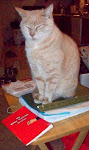
My “Read Deliberately” Plan for 2011, Part Two: If you missed part one last week, suffice it to say that I’ve made a list of books that I intend to read this year, set down a few rules for said reading plan, gave a partial list, as well as descriptions of and reasons for choosing these books. The list continues here:
The Undertaking, by Thomas Lynch: reading a review for this National Book Award finalist simultaneously put goosebumps up my neck, tears in my eyes, and a wry smile on my face. Written by a poet-essayist-undertaker from small-town Michigan, this book collects Lynch’s reflections on life and death, as seen from the perspective of one who “serves the living by caring for the dead.” I immediately thought of my friend Jim, who has a lovely, quirky sense of humor, a fine mind, a compassionate nature, and one of the hardest jobs in the world. You’ll see him greeting people at the door of Tussey-Mosher. People skills? Ministry? Science? To face daily those bedrock issues of being human, to help others deal at the worst time, all with diplomacy and gentility? A book chronicling these experiences? Wow.
Everything That Rises Must Converge, by Flannery O’Connor: the last collection of short stories written by O’Connor, published shortly after her death in 1965. O’Connor was a brilliant woman whose writing career was cut short by debilitating hereditary lupus; a devout Catholic living in the Protestant deep South; a Christian academic who refused to write apologetics. Her appreciation for the ironies of her life – indeed, of our lives in general – was readily apparent in her stories, where strange and often unlikeable characters found their intentions turned around to slap them in ways they hadn’t expected. O’Connor’s stories consistently wove together the grotesque and the sacred, wrestling with morality, ethics, with a trademark use of foreshadowing and allegory. My favorite professor in college was a die-hard fan. Evidently, so are many other American book lovers, since last year her “Collected Stories” was voted the best book to have captured the title of “National Book Award” in sixty years.
A Visit from the Goon Squad, by Jennifer Egan: Jen Egan has been an author I’ve trumpeted about ever since I read her first novel, The Invisible Circus, over ten years ago. I keep telling people, “she’s one to watch. In the meantime, read her books.” Goon Squad is her newest endeavor, and showed up on no less than four “big name” lists as one of the best novels written in 2010.
Anna Karenina, by Leo Tolstoy: I need to read this for many reasons – because I have never read any Tolstoy; because I need to try some of the “classics” again; because I am woefully ignorant of “the Russians” but have many crazy friends who adore them; because I do not want to read War and Peace.
A Fine Balance, by Rohinton Mistry: Once upon a time, a popular television talk show host named Oprah had a list of book club suggestions, and she chose authors that the general public may not have known but whom deserved to be read. Many of the books she chose told sad stories about characters struggling mightily, but the writing of said stories was beautiful, and Oprah did a wonderful service, bringing these books and their authors to national attention. A Fine Balance was one of the books on the Oprah List for 2001, before she chickened out and chose books from the required freshman reading list at half the colleges in the nation. I am finally reading it, after being drawn to stories about India, by way of wonderful recent reads from Jhumpa Lahiri, Chitra Banerjee Divakaruni and Abraham Verghese.
Murder in the Marais, by Cara Black: I really do enjoy the entire gamut of styles and situations offered by the mystery genre, but I especially appreciate a well-written novel that happens to focus on unraveling a mystery – a disappearance, a murder, a motive. After hearing me wax ecstatic about Elizabeth George’s “Scotland Yard” mystery novels, and knowing my Francophile streak, Judge Dalton recommended these mysteries to me, featuring French-American computer forensic specialist, Aimee LeDuc, with this first novel set in the Jewish quarter of Paris.
As will no doubt happen with my reading plan, I am running short – on column space now, most assuredly on calendar pages later – and so need to end my blabbing about these great books before I actually finish listing them. No matter: If I ever expect to make progress on the list, I need to get away from the computer and put my nose in a book. Seems like good advice on many levels, for most of us.
Miss last week’s launch of the list? Stop by Hobo’s blog at http://frommyshelf.blogspot.com to see it from the start. Want to share your own reading plan for the year? Email Hobo at from_my_shelf@yahoo.com, or stop by the bookstore for your own personalized reading plan.
Showing posts with label bookladysblog. Show all posts
Showing posts with label bookladysblog. Show all posts
Tuesday, January 25, 2011


Sunday, January 16, 2011
Reading Deliberately in the New Year, Part One
For many bibliophiles, New Year’s Resolutions are not so important as is a plan of action for reading in the coming year. Just in the past week, I’ve had five different people come to the bookstore to ask for suggestions to populate their upcoming book club calendars. Just like athletes devising a training schedule, or business owners aiming to diversify their customer base, many book lovers scheme a reading plan for the months to follow.
In her popular blog, www.thebookladysblog.com, the passionate bibliophile Rebecca Jones Schinsky recently mused on her reading goals for 2011. For 2009, she tried to read 100 books in a year; in 2010, she made a list of specifically-chosen books, so that she might read “more deliberately”; for 2011, her goal is to become a more well-rounded reader, by reading at least one book from every section of her favorite independent bookstore. In her endeavor for 2011, I believe “the Book Lady” is taking practical steps to meet her more loftily stated goals of “expanding her literary horizons” by “exploring new genres.”
I had been pondering a more “deliberate” list for myself, since I feel as though I end up recommending many of the same books over and over. They are certainly excellent books, all of which I’ll continue to recommend, but I need some new fodder for my “recommended” list as well as new challenges in my own reading life. I sorted through books in my huge “TBR” (to be read) pile, slid in a couple of classics I want to challenge myself to read, mixed in several genres, borrowed a few from the newsletters of other independent bookstores, and, voila, the reading list I’ve set for myself for 2011. My goal is to read as many on list as possible before year’s end; hopefully, I’ll read all of them and more. I haven’t set too many “rules” for myself, except the following: I really have to hate it to quit a book on the list; I can only quit after getting at least halfway through it; that if I quit a book, I need to try to pick it up at least once more during the year; and there’s no specific order in which I need to read them. Brief reasons for each selection follow each title.
The Sweetness at the Bottom of the Pie by Alan Bradley: came highly recommended from all over the book world, even when it was in hardcover. The main character is a plucky eleven year old chemistry nerd, determined to solve a murder mystery which lands in her backyard. A book written for adults yet featuring a child as the narrator; a British period piece written by an American who had never been to England; a debut novel from a 70 year old author; a well-written novel that just happens to be a mystery novel – there are so many aspects of this book which call to me. This has been on my “TBR” pile for over a year, so it’s definitely time.
Unbroken by Laura Hillenbrand -- the newest book from the acclaimed author of Seabiscuit brings us the incredible story of one American man’s wild journey of a life through a hell-raising youth during the Great Depression to the track in the 1936 Olympics in Berlin, on to the skies above the Pacific in World War II, to the depths of a Japanese POW camp, and the silent torments of recovering from all the trauma this man, and so many other soldiers like him, had to face. Hey, I’m a sucker for stories of resilience and survival, and for World War II history. In the gifted hands of a writer and researcher like Hillenbrand, no wonder folks are raving.
The Watchmen by Alan Moore: I find graphic novels harder to read, because I am someone who processed so predominantly through words, and graphic novels require the reader to process a story via words and pictures. Although we process story visually and auditorily by watching movies, which I also enjoy, when it comes to the page in front of me, I find it more difficult to process with the visual images and the words. I have a growing admiration for storytellers who are giving us their complicated, elaborate stories in this visual and literary format, and want to challenge myself to be more comfortable in this genre. Although there are many excellent graphic novels available, The Watchman was the only graphic novel listed by Time magazine as one of the top 100 books written in the U.S. since the 1920s.
Zen and the Art of Motorcycle Maintenance by Robert M. Pirsig: one of the “new classics”, originally written in 1974 as a novel exploring, among other things, our philosophical heritage, why our technology often leaves us feeling separate from the world, the quest to balance our lives between disparate experiences by being feeling present to them. This book is commonly given to people to pave the way more gently into the “big” questions of philosophy and all the tomes of philosophic rhetoric that attempt to address those questions. It is one of my sister’s favorite books, and she even documented her struggles with it in a gigantic mixed-media painting that became part of the collection of works she presented for her college senior showing. Philosophy intrigues me a great deal, as I have long been interested in “THE BIG QUESTIONS”, but have been afraid of reading too much, for fearing of falling too deeply into the rabbit hole. This seems a safe way to begin.
Tune in next week for the rest of the list! With the introduction of said list out of the way this week, there will be much more room for the actual listing and describing of the rest of the books. For a cheat peek, check our blog at http://frommyshelf.blogspot.com, where you’ll find the entire list now, but not the description or reasons. Can’t steal Hobo’s fire for next week! By the way, Hobo’s hat wasn’t stolen by a grinch, but was returned by a good Samaritan who found it run over in the street.
In her popular blog, www.thebookladysblog.com, the passionate bibliophile Rebecca Jones Schinsky recently mused on her reading goals for 2011. For 2009, she tried to read 100 books in a year; in 2010, she made a list of specifically-chosen books, so that she might read “more deliberately”; for 2011, her goal is to become a more well-rounded reader, by reading at least one book from every section of her favorite independent bookstore. In her endeavor for 2011, I believe “the Book Lady” is taking practical steps to meet her more loftily stated goals of “expanding her literary horizons” by “exploring new genres.”
I had been pondering a more “deliberate” list for myself, since I feel as though I end up recommending many of the same books over and over. They are certainly excellent books, all of which I’ll continue to recommend, but I need some new fodder for my “recommended” list as well as new challenges in my own reading life. I sorted through books in my huge “TBR” (to be read) pile, slid in a couple of classics I want to challenge myself to read, mixed in several genres, borrowed a few from the newsletters of other independent bookstores, and, voila, the reading list I’ve set for myself for 2011. My goal is to read as many on list as possible before year’s end; hopefully, I’ll read all of them and more. I haven’t set too many “rules” for myself, except the following: I really have to hate it to quit a book on the list; I can only quit after getting at least halfway through it; that if I quit a book, I need to try to pick it up at least once more during the year; and there’s no specific order in which I need to read them. Brief reasons for each selection follow each title.
The Sweetness at the Bottom of the Pie by Alan Bradley: came highly recommended from all over the book world, even when it was in hardcover. The main character is a plucky eleven year old chemistry nerd, determined to solve a murder mystery which lands in her backyard. A book written for adults yet featuring a child as the narrator; a British period piece written by an American who had never been to England; a debut novel from a 70 year old author; a well-written novel that just happens to be a mystery novel – there are so many aspects of this book which call to me. This has been on my “TBR” pile for over a year, so it’s definitely time.
Unbroken by Laura Hillenbrand -- the newest book from the acclaimed author of Seabiscuit brings us the incredible story of one American man’s wild journey of a life through a hell-raising youth during the Great Depression to the track in the 1936 Olympics in Berlin, on to the skies above the Pacific in World War II, to the depths of a Japanese POW camp, and the silent torments of recovering from all the trauma this man, and so many other soldiers like him, had to face. Hey, I’m a sucker for stories of resilience and survival, and for World War II history. In the gifted hands of a writer and researcher like Hillenbrand, no wonder folks are raving.
The Watchmen by Alan Moore: I find graphic novels harder to read, because I am someone who processed so predominantly through words, and graphic novels require the reader to process a story via words and pictures. Although we process story visually and auditorily by watching movies, which I also enjoy, when it comes to the page in front of me, I find it more difficult to process with the visual images and the words. I have a growing admiration for storytellers who are giving us their complicated, elaborate stories in this visual and literary format, and want to challenge myself to be more comfortable in this genre. Although there are many excellent graphic novels available, The Watchman was the only graphic novel listed by Time magazine as one of the top 100 books written in the U.S. since the 1920s.
Zen and the Art of Motorcycle Maintenance by Robert M. Pirsig: one of the “new classics”, originally written in 1974 as a novel exploring, among other things, our philosophical heritage, why our technology often leaves us feeling separate from the world, the quest to balance our lives between disparate experiences by being feeling present to them. This book is commonly given to people to pave the way more gently into the “big” questions of philosophy and all the tomes of philosophic rhetoric that attempt to address those questions. It is one of my sister’s favorite books, and she even documented her struggles with it in a gigantic mixed-media painting that became part of the collection of works she presented for her college senior showing. Philosophy intrigues me a great deal, as I have long been interested in “THE BIG QUESTIONS”, but have been afraid of reading too much, for fearing of falling too deeply into the rabbit hole. This seems a safe way to begin.
Tune in next week for the rest of the list! With the introduction of said list out of the way this week, there will be much more room for the actual listing and describing of the rest of the books. For a cheat peek, check our blog at http://frommyshelf.blogspot.com, where you’ll find the entire list now, but not the description or reasons. Can’t steal Hobo’s fire for next week! By the way, Hobo’s hat wasn’t stolen by a grinch, but was returned by a good Samaritan who found it run over in the street.
Subscribe to:
Posts (Atom)
