Sunday, November 21, 2010

Cat Tales: Writing About Reading

”Independent

“Hey! That’s not work-related reading!” – a certain husband to his wife, when he found her doing logic puzzles instead of reading her book for book club or writing her book review column for this week’s newspaper.


When I was in middle school, the “gifted and talented” students were allowed, for one year only, to go to “enrichment” classes during the seventh grade’s normally-scheduled “reading” coursework. I was one of those lucky students who thought we were getting away with murder. For one period a day, I escaped those horrid “reading” textbooks – usually containing stories about some simpering kid who was more of a goody-two shoes than I was – and the dry as dirt worksheets that accompanied each assignment. I read enough exciting stuff on my own, so my teachers had miraculously agreed to let me go take “mini-courses” (one for each nine week period) in subjects such as logic, communications, creative writing, and psychology (and didn’t I feel like a big shot, with titles like that?).

It was only years later that I began to understand that I didn’t escape “reading” assignments in seventh grade, and certainly not with those mini-courses. If hard-pressed, I would have acknowledged that all my classes in the Wellsboro school system – even Ms. MacNaight’s gym classes in ninth grade, where, much to my chagrin, she gave us written tests on the rules of field hockey – required some ability to read. I just never realized how much literacy affects us until I sought my French teacher certification at Mansfield University.

In order to graduate from Mansfield University with a degree in education, every future teacher must take a class in teaching reading. Certainly, one would expect elementary school teachers to invest a great deal of time in their students’ acquisition of reading proficiency, but what about secondary teachers? Why should a high school teacher in the chemistry classroom, or the wood shop, or the culinary arts department, spend much time assessing how well their students comprehend what they read? Nevertheless, I found myself in a class entitled, “Reading in the Content Area”, sitting by people hoping to teach everything from algebra and geometry to foreign language to home economics. As someone who has always enjoyed reading as a hobby, pastime, and source of entertainment, I had never truly thought about how difficult school would be for a student who couldn’t read the instructions on a test, the homework questions for chemistry problems, or the definitions of vocabulary terms on the dreaded worksheets.

Why is it, then, that we are still so hung up on getting our school children to read books – and almost exclusively FICTION novels – for reading programs such as “AR” (Accelerated Reading) and Scholastics’ “Reading Counts”? Why shouldn’t we give equal rewards to kids who like to read articles in Car and Driver, or Fly Fisherman, magazines? What’s wrong with letting reluctant readers show their reading prowess with gourmet cookbooks, ultralight construction manuals, or logic puzzle problems?

To look at this another way, I recently had a grandmother come to the bookstore, looking for suggestions of “puzzle books” for her young granddaughter. She and her granddaughter had enjoyed doing some of grandma’s easier crossword puzzles, word searches, and “what’s different between these pictures?” logic problems from a book the grandmother owned, but the child was only able to do these because the grandmother read the words and/or explained the directions. Grandma wanted a book of these kinds of puzzles that the child could do by herself. Literacy levels, however, do come into play, even in picture puzzles, or with number-oriented puzzles, like Sudoku, so this was not an easy task.

How, then, should we encourage children to read, especially children who would prefer to play in the mud or build a Boxwood Derby car rather than curl up with Harry Potter? I propose we expand our definitions of “reading” and “literacy”, to encourage people of all ages and across all interest levels into our schools, libraries and bookstores. So, whether your favorite hobby is photography, gunsmithing, knitting, or fantasy football, before you dismiss “reading” from the list, check out all the great information that is waiting for you in the written word.

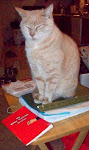
Hobo loves to curl up and read with his humans. He wanted to encourage kids to read, so he wrote a fun, easy to read story about his adventures as a stray kitten in Hobo Finds A Home – perhaps you’ve heard of it? Lately, Hobo has been reading up on military history, ballistics, quilting, Christian romance, marketing, wood carving, and werewolves. Check out his other book reviews at his blog, http://frommyshelf.blogspot.com.

Monday, November 15, 2010

ALL OF THE ABOVE

by Kevin Coolidge

So many books, so little time—it’s hard choose just one. So, I didn’t. Lately, I’ve been reading young adult novels, and I’m going to share my recent favorites.


I enjoy a good zombie novel. Why? Face it. Deep down I’d love to see the world end. Wouldn’t you? Relax. It’s a natural instinct to crave chaos. Breathe in. Breathe out. Watch the empire expand; watch it crumble into dust. Grab the best parking spot. A good zombie novel lets us do that in the comfort of our home, as a writer conjectures on society’s demise, gives us some socially acceptable violence, and allows us to draw pleasure from it without breaking out the shovel or the lime.

That’s why I loved Rot & Ruin by Jonathan Maberry. It’s fifteen years since “First Night” and Benny needs to join the work force—or he’ll lose his food ration. He’s not really interested in taking on the family business, zombie hunting. He expects a boring job of destroying zombies for cash. What he discovers is a job that will teach him what it really means to be human.

Rot & Ruin is about more than just the brains, but the heart as well. Benny’s brother Tom is a first class bounty hunter who prefers to be called a “closure specialist”. A zombie may be a shambling, rotting meat puppet, but it was once someone’s loved one, and would you want just anyone to mulch mom? Just because you’re a zombie doesn’t mean you are a monster, and sometimes the most terrible monsters of all are human.

Fear of the unknown. It’s our deepest fear. It’s why we fear death, because no matter what you claim to believe, no matter what you want to believe, you just don’t know. It’s why the necromancer in Hold me Closer, Necromancer by Lish McBride is such a terrifying adversary. Meet Sam, just your average college dropout rocking the fast-food career. Enter Douglas, a powerful and vicious necromancer. Douglas recognizes Sam as a fellow necromancer—which is news to Sam—and he’s not happy to have competition.

Now Sam’s pal is an animated head, a werewolf wants to devour him, the necromancer wants him neutralized, and a cop has a “few” questions to ask. All Sam has to do is stay alive, figure out how to use his mysterious, latent powers, and save himself and his friends without being consumed by power.

It’s been said that a writer must suffer for his craft, but anyone who’s attended the public school system and the torment that is middle school has all the requirements needed. Undersized weaklings share the hallways with taller, meaner kids who need to shave twice a day. Being a kid can really stink, and no one knows this better than Greg Heffley. Diary of a Wimpy Kid takes place in the first year of middle school. There’s the terror of the school play, the prestige of safety patrol, the ebb and flow of popularity, and the sibling rivalry of being the middle child. The author and illustrator Jeff Kinney introduces an unlikely hero that children of any age can identify with.

Choosing not to choose is a choice, but sometimes one just isn’t enough for the true bibliophile. Winter is approaching, the nights are longer, and next adventure--or three-- awaits…

Sepulchral? Or School? Drop me an email at from_my_shelf@yahoo.com and let me know. Miss us? Check the crypt for those columns we’ve put to rest at http://frommyshelf.blogspot.com Hobo has learned his lesson. He used to be a hobo, but now he’s just a bum. Read about his past life in “Hobo Finds A Home” a children’s book about a kitten’s adventures.

Flannery O'Connor Goes to Wisconsin: A Northern Gothic, or A Good Woman is Hard to Find


One of Americans’ all-time favorite series about the settlers on the frontier remains the Little House on the Prairie, based on Laura Ingalls Wilder’s life and remembrances. Although hardships exist both in the Little House books and TV series, the abiding feeling is one of sweetness of this simple life. Without a doubt, this time period is romanticized in our literature, our movies, our imaginations and even our “history” books. The starting premise, then, of Robert Goolrick’s novel, A Reliable Wife, is familiar: in 1907, widower Ralph Truitt, a wealthy businessman in an isolated settlement of Wisconsin, places an ad in a Chicago newspaper, asking for a woman to come be his wife. He offers perhaps not a life of love, but one of comfort and respect. The woman he chooses is Catherine Land, who, in answer to Truitt’s ad, describes herself as “a simple, honest woman.” In further letters, she sends a photo of a plain, serious-looking woman, telling him of her life alongside her missionary father, who has recently died.

Certainly, this premise has been used in other historical novels, since it was a common enough occurrence for the times. Indeed, a series of books by Christian romance author Janette Oke, beginning with Love Comes Softly, were such huge hits that they spawned several movies, and still continue to be solid bestsellers, more than twenty years after their first publication. Following in Oke’s footsteps, entire careers of Christian romance authors have been built on this theme and era, bringing couples together across the prairies and mountains, as rough and beautiful lands are settled and civilized.

Perhaps Goolrick’s shockingly different approach to what has become a rather pedestrian plot is the reason the critics and the independent bookstores alike have focused on this new novel. Goolrick’s style of writing, and the twisted plot he fashions, is anything but ordinary. Described by more than one reviewer as a “Northern Gothic”, A Reliable Wife evokes Faulkner’s disturbing family dramas of the deep South. His style compares to that of Cormac McCarthy’s writing in The Road. Ultimately, Goolrick’s wording in this novel is as stark and flintlike as the harsh Wisconsin landscape he describes. This author holds no punches. In those long winters, in the raw landscape, as a result of the bleak life of endless work, he reminds the reader frequently that people went raving mad. After too many winters where they buried too many children, where they worked their fingers to the bone and still barely survived, they killed themselves, their families, other townspeople. They gave up. Against the constant reminder of this brutal environment, Goolrick brings his main characters into play. This is no sweet Christian romance. This is a chess board, with lonely, desperate people who believe they have little to lose.

Why would a reader choose to stay with a story like this? For much of the book, it is simply the reader’s anxious curiosity which will drive him on to read through uncomfortable erotic scenes; grim descriptions of poverty, insanity, depravity and hopelessness; interactions with characters he isn’t sure he likes. Goolrick’s talent is revealed in the subtle but insistent undertow of curiosity the reader feels, because, ultimately, the reader wants to know: what will happen to Ralph Truitt, at the hands of his “reliable wife”? From the beginning, the reader knows Catherine Land is playing a role. She is neither simple nor honest. She has come with plans of her own – to marry, placate, and eventually kill Truitt, slowly but surely, with poison. Ralph Truitt has plans for his future family, which will use his new wife to draw his estranged son home. The author has other plans for his characters, though, where even amidst such depravity, loss, confusion, and pain, there may be a glimpse of grace, the slightest possibility of hope.

Ultimately, readers will be glad they read A Reliable Wife even if they don’t particularly like it: Goolrick’s writing is accomplished; his technique and plot structure, talented and clever. Though they may want to give up as the pace sags a bit in the middle, the end is incredibly satisfying, making it more than worth any discomfort along the way. A Reliable Wife may be more literary, historical crime novel than moral tale. Nevertheless, the author obviously struggles with deeper issues, and the realization that not everyone can saved, but even the most destitute may be forgiven. Perhaps Goolrick’s books have more in common with those Christian writers than would first appear.

Hobo was in hiding, but now he’s back and immortalized in a lovely butternut wood. He wants you to believe he was out tramping on the prairie, but really he was sleeping the summer away. He hopes you will forgive a writer’s (and a cat’s) depraved ways. Email Hobo your thoughts on sin and sloth, fiction and forgiveness at from_my_shelf@yahoo.com.

Wednesday, November 3, 2010

Walk Like An Egyptian! Rick Riordan & the Red Pyramid


All the school kids so sick of books ….
When the buzzer rings (oh way oh)
They’re walkin’ like an Egyptian…

--“Walk Like An Egyptian”, performed by The Bangles, lyrics by Liam Sternberg

Well, folks, summer vacation is here! [Well, it was when I first wrote this!!] The kids always think they’re so sick of school, but the first time they say they complain they’re bored, tell them to walk like an Egyptian, right into their local bookstore.

If you and your kids are fans of the Rick Riordan series that relayed the adventures of Percy Jackson and the Olympians, then you’re in luck! (If you don’t know about Percy Jackson, or the Lightning Thief, or this great young adult series weaving new, contemporary fun out of Greek and Roman mythology, then check out past reviews in our blog, from earlier this year.) Alas, the Percy Jackson series is finished, but bestselling author and former history teacher Riordan has gifted us a brand new series, focusing on Egyptian mythology, beginning with the book The Red Pyramid.

Riordan’s newest venture, “The Kane Chronicles”, gives brother and sister team, Carter and Sadie Kane, the chance to tell their story of how the world of ancient Egypt exploded from ancient history to modern reality during their vacation. Their father, brilliant Egyptologist Dr. Julius Kane, takes them to visit the Rosetta Stone fragment housed at the British Museum in London. Ever since their mother’s death several years ago, the two siblings have lived separately – Sadie, with her grandparents, in London; Carter, traveling with his father, doing research, going on digs, and being homeschooled along the way. When the two Carter men come visit Sadie, Dr. Kane enigmatically promises to “set things right,” then disappears in a huge explosion at the Museum. Before they can gather their wits or mourn their father, Sadie and Carter are whisked away by strange relatives, traveling through time-and-space warps with an ancient Egyptian boat, protected by a cat and a crocodile, befriended by a baboon, attacked by mythological creatures, and charged with saving the world.

Some of the devices Riordan uses in The Red Pyramid follow the same plotline as his “Olympians” series, making the book at times a little formulaic, although there are some wonderful additions to the Kane Chronicles which promise to hook an even wider audience. First of all, the story is told from alternating perspectives, with chapters switching back and forth between Carter, the older brother, a young black man who has traveled with his famous father but longs for a permanent home; and Sadie, younger sister, fairer-skinned like her mother, little Brit smart-aleck ‘tween, longing for time with her father and for world-traveling adventures like her brother. I really enjoyed the modern truths about mixed-race families, both the normalcy of it alongside the reality of people’s deep-seeded reactions. I was also extremely pleased to have the story from both brother and sister, a narrative which should draw in the children who grew up on the Magic Tree House series.

Since I know little about Egyptian history, culture, or mythology, I decided to bone up a little by studying Linda Honan’s guide, Spend the Day in Ancient Egypt. Written predominantly for use with 8 to 12 year old children, perhaps as a curriculum guide, Honan’s book describes a typical day in ancient Egypt, following a fictitious but probable family, including mother, father, son, daughter, and the family cat. This wonderful book gives little pieces of history, explanations for customs and beliefs, information about clothing and food (including recipes!), typical names, lessons on basic hieroglyphics, games and activities, the geography and weather of the region, and more. I learned more history, culture and geography from this little book than I would have learned in a summer school session devoted to Egypt! Perhaps my favorite part was learning how to play Senet, the world’s oldest board game….. but don’t tell Hobo the game was my favorite. He’s still convinced I read this book to learn how cats ruled ancient Egypt, with some help from their assistants, the Pharoahs.

Since Hobo wants to continue his “vacation” from writing the column for the Gazette, Kasey and Kevin are stepping up to do it again. In the meantime, Hobo will be studying up on the ways cats were honored in ancient Egypt – just don’t pierce his ears! The Bangles or bangles & bling? Tell us what you think at from_my_shelf@yahoo.com. Want to go back and read past columns, like the earlier ones on Rick Riordan? Check out our blog at frommyshelf.blogspot.com.

Monday, November 1, 2010

Curiosity is the Cat's Saving Grace


Drilling for natural gas and oil. The protection of state forests and parks. Fathers who are in the National Guard as part-time soldiers, called up to serve in Iraq or Afghanistan. The worries of families left behind. The hope of maybe, one day, seeing an elusive animal in the wild land nearby – the panther, the puma, the cougar.

When I picked up Carl Hiaasen’s newest young adult novel, Scat, I had no idea the storyline would be so relevant to our current experiences in Wellsboro, Pennsylvania. I just wanted to read Scat because I’ve enjoyed Hiaasen’s other books – those mysteries written for adults, and the eco-adventures more recently penned for the younger crowd.

Hiaasen is a great summer read, as his crazy cast of characters faces off over environmental issues, political scandals, and corporate greed-driven lies. The fodder for Hiaasen’s fiction comes straight from the headlines he helped write in his many years as investigative journalist for the Miami Herald. Hiaasen joined the writing team at the Miami Herald when he was 23 years old, first as a staff reporter, then later on their award-winning investigative team. As his novels became best-sellers, he decided to cut back to writing a weekly column for the Herald, but he likes to joke in interviews and on his personal website about how he has “pissed off just about everybody in South Florida, including his bosses,” most of whom he has outlasted at the Herald.

This aspect of his professional life shows up in several of his novels, including Tourist Season, Skin Tight, and Basket Case, which feature slightly washed-up, burned-out and otherwise cynical retired investigative journalists who have gotten involved, usually against their will, in cleaning up the dirt in some local Floridian scandal. As Steve Kroft of 60 Minutes commented after an interview with Hiaasen, “Whether he's writing fiction or journalism, Carl Hiaasen's main character is always Florida.” When I picked up Scat to enjoy for a little summer reading, I expected a book about kids helping get to the bottom of an environmental scandal in their area of Florida, the same structure Hiaasen used in his first two books for young adults – Hoot, which won a Newbery Honor Award and was made into a movie; and Flush – my personal favorite.

Certainly, Scat is standard Hiaasen fare, but I was so pleased and surprised to find how the elements of this Hiaasen novel, in particular, dovetail the experiences many kids in this area are having right now. Every day, our children are hearing about gas drilling, oil companies, corporate greed, protecting the environment, state game lands, fathers and friends’ fathers in the National Guard, or off on a tour of duty in the Middle East. Furthermore, although Scat follows the saga of the endangered Florida panther, this panther is a relative of the cougar, the mountain lion that folks around here love to talk about. It was so easy for me to put myself in the shoes of Nick, the main character in Scat, and his mom, and his best friend, Marta.

Although Nick and Marta and their classmates find their teacher Mrs. Starch more than a little strange, Nick is glad for her yearly field trip to the Everglades, for he desperately hopes to get a glimpse of the majestic, elusive, powerful Florida panther. When Mrs. Starch disappears after the field trip, most kids at the Truman School rejoice, but Nick and Marta grow suspicious. And, in Hiaasen’s world, curiosity doesn’t usually kill the cat. In fact, in this story, curiosity may be the cat’s saving grace.


Curious scat or serious scandal? Email your thoughts to Hobo at from_my_shelf@yahoo.com. Miss a past column? Track them down at Hobo’s book blog, http://frommyshelf.blogspot.com. For another great book with a yellow cat on the cover, check out Hobo’s book, Hobo Finds A Home, free in every box of Hobo breakfast cereal.

Monday, September 27, 2010

the books in Bill Davis's estate


Concering the books for sale from the estate of William "Bill" Davis, Jr., of Wellsboro, PA:

BRIEF BIO, FROM WHERE WE CAME IN:

Even for those of you who knew Bill, the extent of his achievements and influence in the world of 20th century firearms and ballistics engineering may come as a surprise. Close friends and family say that he was more than modest, he was also discreet, especially concerning various government projects he worked on.

A beautiful, page-long "In Memoriam" column in the September 2010 edition of "American Rifleman" celebrates the longtime ballistics editor for the magazine, naming Davis, among other accolades, as "one of the most brilliant and accomplished ballisticians and firearms engineers of the 20th century," whose "knowledge was not merely theoretical" but instead "practical and applied frequently."*

In addition to writing over 50 feature articles for "American Rifleman" over the years, Davis published the book "Handloading", in 1981, with the NRA, as well as acting as a main writer for the Encyclopedia Britannica's section on Ammunitions.

His professional contributions are, quite literally, too numerous to list here. I do feel compelled to mention one of the projects Davis was instrumental in: identifying and resolving many of the early problems with the M16 which particularly plagued our troops in Vietnam.

After working as an ordnance engineer for the military at the Aberdeen Proving Grounds, the Frankfurt Arsenal and the Rock Island Arsenal at various points in his career, Davis retired from government work to set up his own consulting firm. The Tioga Engineering Company was founded by Bill Davis in 1972, right here in Wellsboro, and for the next three decades, Davis acted as firearm and ballistics consultant, expert witness and self-employed engineer. People from all over the world consulted him for his expertise on a daily basis.

The collection of books that Davis has left behind attest to the wide range of his accomplishments, the depth of his expertise, and the tremendous esteem accorded to Bill from experts around the world. Many of his books are first editions, are inscribed to him by the authors with warm personal greetings, or were given to him as gifts by the founders and CEOs of large firearms companies. We hope that Davis's books will find new homes with people who will truly appreciate his legacy.

-- Kasey Cox, manager
From My Shelf bookstore
Wellsboro, PA
September 12, 2010

*"In Memoriam", American Rifleman, September 2010, pg. 34, by Mark A Keefe, IV, Editor in Chief

Sunday, August 8, 2010

A Walk on the Nightside


If you’re looking for a little sci-fi adventure with a liberal dose of the fantastic, disguised as a pulp-fiction detective novel, take a walk on the Nightside. Simon R. Green, veteran author of other books of fantasy adventure, introduces a new series with Something from the Nightside. The Nightside is a horrible, intriguing place, where beings from all different worlds come to satisfy any and every secret desire or twisted appetite. Fans of Neil Gaiman’s Neverwhere will recognize the idea of a secret, hidden London, a parallel darker heart which lives beats deep below the bright London streets. The Nightside is simultaneously broader and darker, encompassing many more planes of existence and much more depravity and violence than Gaiman’s whimsical Neverwhere.

For his tales from the Nightside, Green has created an interesting protagonist, a paranormal detective named John Taylor, who was actually born and raised in the Nightside, whose name alone makes most of the population of the Nightside either steer well clear of him or target him for murder, for reasons even Taylor does not completely understand. He has a powerful “gift” – not unusual for residents of the Nightside – thanks to his mother, whom he doesn’t remember. She left him and his father after revealing that she wasn’t human. Green makes it very obvious that the mysteries of John Taylor’s mother will add more to the plot later (bold font intended; cue loud, ominous, melodramatic music).

In the meantime, John has left the Nightside when he felt he could no longer outrun all the powers that wished to kill him. When Something from the Nightside opens, John has been living in regular, modern-day London for five years, barely scratching out a living as a private detective. The narrative begins with the stereotypical film noir, hard-boiled detective scene – dingy, small office; rainy city night; bills that need paid; the knock on the door by a rich, pretty dame with attitude who immediately begins verbally sparring with the rough-looking P.I. with enough blasé attitude to match her feisty one. The clichéd Raymond-Chandler-esque phrasing is pretty heavy-handed here, but read on, and give the book a chance, because this new client leads Taylor back into the Nightside – a journey filled with nods to worlds as varied as the Cthulhu mythos to the Twilight Zone, but an unique creation completely belonging to Green.

Taylor’s first foray back to the Nightside after his – er, sabbatical – brings him into contact with such quirky, dangerous characters as Shotgun Suzie, an assassin who lives to kill; Razor Eddie, a cold-blooded killer who, upon his death, asked to be resurrected so he could use his death-skills to murder the truly evil; and other folks known only by a label, such as the Collector, whose singular goal is to collect the most unusual, most rare, most sought-after items from any time or place in history, and who will do anything to get these items. John Taylor’s gift is that he really is a “private” eye – his third eye is so powerful, he can find anything in the Nightside. Nothing is hidden from the supernatural spotlight in his head – unless the Authorities who govern the Nightside, or something else equally powerful, has hidden it. Like the teenage daughter of his new client, who came to the Nightside, and seems to have vanished.

These books are a quick, fun read – what one critic called “brain candy, hard-boiled” – but they offer something that feels at once familiar and original. While the descriptions can get a bit repetitive, I often got the sense that Green was playing with the genres he was mixing like a mad scientist in his lab, laughing as he made a parody of the very ingredients he was using. Ultimately, Green’s writing is not his real strength, but his complete lack of fear with experimenting makes the stories quite compelling. The reader, like the inhabitants of and visitors to the Nightside, never knows what will turn up around the next corner, or on the next page. Having enjoyed the first book, I soon picked up the second book in the series, Agents of Light and Darkness, where I found the plot a little stronger, the writing a little smoother, and the characters given some added dimension. Remember, the point of the Nightside is that there’s something here for everyone ….

Paranormal investigator? Or Third eye blind? Email me at from_my_shelf@yahoo.com Missing column? Investigate at http://frommyshelf.blogspot.com Hobo goes hard-boiled in his new detective novel, “Hobo Gets A Clue”, dames, cats, and murder…

Tuesday, July 20, 2010

I Hate Writing

Kevin Coolidge

“There's nothing to writing. All you do is sit down at a typewriter and open a vein.” ~Walter Wellesley "Red" Smith

I hate writing. I love having written, and I’m in good company. Ernest Hemingway, Mark Twain, Dorothy Parker—all have been credited with this widely quoted line. I happily credit them all because I understand. I stare at the blank screen. I write an opening paragraph, but I change my topic, and now it doesn’t fit. I delete it. I wish I had not. I start over. I hate writing.

I hate writing so much that I thought I should write a regular column. So that I wouldn’t be alone in my misery, I convinced Kasey to suffer along with me, because she hates writing too. We do, however, love books, and Ray Bradbury, a well-known and prolific writer, gives the advice of “Write only what you love, and love what you write” and so the column was to be about books, or rather reading, or maybe it should be writing about reading. Basically, if there’s a topic we wanted to write about, there was sure to be a book about it. “We won’t ever run out of material,” I pointed out. “Why, we could write for years on the books we have already read.”

Now, we only had to get someone to buy the idea. Luckily, the editor of the Wellsboro Gazette hates writing, but loves reading. “Sure, we can give it a shot, but I’m going to need something by this afternoon.” I remember that first column, punched out on the keyboard, making sure to spell every word correctly and not use the word ‘very’ in a sentence. I finished with minutes to spare, and with a satisfied click, thumped my first deadline. It was my best column, because it was my first column.

I couldn’t write a second, or a third, or fourth years’ worth of columns until I wrote that first one. Many authors attempt a “starter” novel, to prove they can create a narrative that will actually be read. Often that first work is safely squirreled away in a dark, inaccessible spot, so that no one will be forced to say that it is merely “good,” or if they are honest, that they didn’t like it, not at all. Only with experience and effort does a writer learn to “leave out the parts that people skip.”

Rereading my past work can be overwhelming. I see lines I wished I had omitted, an awkward phrase. What was I saying here? What was I thinking? There was a better way I could have expressed that, and it will never be exactly what I wanted to say. It will never be perfect. But I also gain much satisfaction. This part almost captured exactly what I was seeking, and here I was able to say the same thing with fewer words. I’ve read that “being a good writer mostly means being a good observer and a good thinker”, and with work, zest, gusto, and a good editor—I still hate writing, but I love having written…

Reading? Writing? Or Arithmetic? Drop me an email at from_my_shelf@yahoo.com Miss a past column? Four years’ worth just crammed with rich, creamy chocolate chips at http://frommyshelf.blogspot.com , grab a cold glass of milk and drink it in before the expiration date. Miss the farm? Catch “Hobo Finds a Home” a children’s book written by a cat, because when someone said mouse, Hobo heard muse…

Wednesday, July 14, 2010

A Midsummer's Newsletter!


From My Shelf
Newsletter: July 2010


News! : important recaps from June’s newsletter:
*If you haven’t checked out the website recently, check in for some of the new things we’ve added! Of course, there’s always something new at the “Events” calendar link, but we’ve also added new photos, links to our youtube videos, and more! Don’t forget to visit the website every once in a while, since we’re always adding new & different content for you! In fact, go bookmark us now, at www.wellsborobookstore.com

*We have added/changed our Wednesday special members’ sale! Wednesdays are now 25% off ALL children’s books, new or used, all summer long! Keep the kids reading: keep their minds sharp and your nerves intact by bringing them to the bookstore each week for high quality, great selection, reasonably-priced summer entertainment! And be sure to watch our calendar of events for a TON of great activities all summer long.

Upcoming Events at the Bookstore: (see calendar on website for details)

*Moms’ Night Out Book Club: Wednesday, July 14th, 6 to 8pm: Moms! Join the women from our local MOPS (Mothers of Pre-schoolers) for a fun evening of light book discussion & light refreshments. Participants should try to read the at least the first of the two books in Irene Hannon's "Heroes of Quantico" series, Christian romantic thrillers. We have these books for sale at the bookstore on big discount for those participating. You need not be an official member of MOPS, just a woman, preferably a mom, who needs a night out to socialize a little with some other women!

* GAME NIGHT! Friday July 16, 5 to 9pm: Open game play night, featuring the newest release of Magic the Gathering’s 2011 Core Set. Although there will be great sales on the 2011 Core Set, and we anticipate a lot of Magic players attending, this is not a strict tournament, nor is this Game Night only for experienced Magic players. Join us for great specials on games of all kinds, learn how to play something new, or revisit an old favorite. Free & open to the public, no age restrictions, although this particular night is better for ages 10 & up.

*The Mad Hatter Tea Party! Wednesday, July 21st, 6 to 9pm: hosted by the Tween/Teen Book Club at From My Shelf, open to all ages. Come celebrate Lewis Carroll's classic "Alice in Wonderland" and all its permutations. Participants are asked to re-read the original "Alice in Wonderland" or read it for the first time, so that we may discuss it over tea, Wonderland-style. Other books that may be fun to discuss include Frank Beddor's series "The Looking Glass Wars" (including ‘The Looking Glass Wars’, ‘Seeing Redd’, and ‘Archenemy’, as well as 2 graphic novels about ‘Hatter M’; and/or Melanie Benjamin's "Alice I Have Been". There are also several graphic novel adaptations and expansions of the Alice story. Copies of the poems of the "Jabberwocky" and "the Walrus and the Carpenter" would make additional interesting conversation. All of these are available at the bookstore at discounted prices for the Tea Party.

Discussion groups and games may be divided up into age-appropriate groups, depending on the books discussed and the range of ages of those who come for Tea. This Tea Party, however, has NOTHING to do with President Obama, Sarah Palin, Boston, the American Revolution, or taxes.

Wear your best Victorian garb, or go for the more sartorially-splendid Mad Hatter approach. Tea, biscuits and finger-sandwiches to be served. To buy a lovely, new, but inexpensive copy of the original "Alice" before the party, the bookstore will be selling them for $3. If you buy your book with us, admission to the tea party is free; without an "Alice"-related book purchased at From My Shelf, admission is $3.

*Author Event! Friday, July 23rd, 11am to 2pm: local author, Norman Davis, of Galeton, PA, presents his collection of nature essays, entitled “Nature Ramblings”. This anthology includes many of Norm’s previously published columns from the Potter Leader. The book, which Norm self-published through Infinity Press, has been a special labor of love for Norm, his wife, and the staff of From My Shelf, who helped Norm edit and format his paper files to the appropriate computer data necessary for the publication. The finished project is a beautiful book, full of reminders to LOOK around us in this lovely area in which we live, throughout every season. The photo gracing the front cover, as well as the pen & ink drawings beginning every season’s reflections, are Norm’s handiwork. This is the perfect book for every summer cabin, hunting camp, beach house, naturalist’s bookshelf, and hiker’s backpack.

*Author Event! Saturday, August 7th, 12 to 3pm: Terry Drake, family therapist, licensed social worker, life coach, author of “Live Happily Ever After…Now!”. Based on his professional experiences and age-old techniques such as those used in positive psychology, Ericksonian hypnosis, and the Law of Attraction, Terry has penned this book to help people learn how much control they actually have over your life, discover their beliefs and attitudes about themselves, others and the world in which we live. Terry outlines how to understand what you can control, then how to use the 9 simple steps to make changes and begin living the life you want.

August Plans:
Help with summer required reading: an evening in early August for kids & teens who would like help understanding and finishing their required reading this summer….

Two writers’ seminars: one repeat of our highly-praised seminar, introducing authors to the pros & cons of self-publishing; the other, a more in-depth look at PR & marketing strategies for authors, both self-published and more “traditionally” published writers ….

An evening to brainstorm and start gathering resources & volunteers for October’s Bookfest…

Stay tuned for more details!


Michelle’s corner:

She’s Come Undone by Wally Lamb
The title caught my eye, ‘She’s Come Undone’. Yep, I thought to myself…I’ve felt that way before. Little did I know that this book would take me on an emotional rollercoaster and leave me sitting in a moment of silence after I read the last words. It is the story of Delores Price, who comes from a dysfunctional family, is raped at age 13 then spends the next few years insulating herself from people & feelings, by watching TV and eating. She soon finds that she is 257 pounds, cynical, angry, suicidal and feels unlovable. This is her journey to understand her life, to forgive, to let go and to love. This book touches your heart and may make you see things in your life in a whole new light. Expect to be moved!!
*Interesting note* I had a whole other article wrote up for this month, but this book would not let go of me. I know that this is not my usual kind of read. It is intensely emotional and deeply moving, but it needs to be read!So step away from your usual and give it a try!


Michelle’s picks for new releases not to miss
(These series need to be read in order)**
**June 29th – Pray For the Dawn: The Dark Days Series, book 4 by Jocelynn Drake (OOPS! Missed this last month)
**July 6th – Undead & Unfinished: Queen Betsey, book 9 by Mary Janice Davidson
**July 20th – Troublemaker: Alexander Barnaby Series, book 3 by Janet Evanovich (This is her debut graphic novel)
**July 27th - Eternal Kiss of Darkness: Night Huntress World, book 2 by Jeaniene Frost
**July 27th - Waking the Witch: Women of the Otherworld, book 11 by Kelley Armstrong
**July 27th – Wait for the Dusk: The Dark Days Series, book 5 by Jocelynn Drake
July 27th – Kiss Me If You Can: Most Eligible Bachelor, book 1 by Carly Phillips

July 27th – A Kiss at Midnight by Eloisa James

For those addicted to the Stephanie Bond “Body Movers” Series – On the author’s website it says that Sony pictures is interested in developing her series into a TV pilot, but until they decide, she cannot release books 7 & 8. Please hurry and make up your mind , SONY!


This just in! New releases/new inventory to celebrate!
The Fiddler in the Subway by Gene Weingarten
The Good Men Project: Real Stories from the Front Lines of Modern Manhood
The Magicians by Lev Grossman
The Merry Misogynist by Colin Cotterill.
Confessions of a Counterfeit Farm-Girl by Susan McCorkindale
Separation of Church & State by David Barton
Mixed Skills in Math, Grades 7-8 by Marge Lindskog
Physics for Future Presidents by Richard Muller
Cross My Heart and Hope to Spy by Ally Carter
The Passage by Justin Cronin
Sizzlin’ Sixteen by Janet Evanovich
Sheep in a Shop by Nancy Shaw
Take Four (Above the Line series #4) by Karen Kingsbury
Best Friends Forever by Jennifer Weiner


From My Shelf bookstore
87 Main Street
Wellsboro PA 16901
www.wellsborobookstore.com
(570) 724-5793

Together, we’re building community one book at a time …..

Tuesday, July 13, 2010

When I'm Gone

Kevin Coolidge

"Death is not the end. There remains the litigation over the estate." Ambrose Bierce.


Never saw Joe in a tie before – or a suit, now that I think of it. Hair combed, shoes polished, pants ironed: he’s looking pretty good for a dead guy. There’s a large turnout here at the funeral home. Joe knew just about everyone, and everyone knew Joe. Give Joe a chance and he’d talk your ear off. Telling a joke to get a laugh, or telling his favorite fishing story—Joe loved fishing so much that his wife used to joke that he’d die fishing. She was right, but there’s worse ways to go. I’m sure going to miss Joe, but I wonder if I’m ever going to get back my fly-tying vice?

I knew Joe didn’t want to be buried in the cold, dark ground, but rather cremated and his ashes scattered at his favorite fishing hole. I knew it, because he told me over a cold beer on a hot summer day, but he never actually wrote it down anywhere. Death, funerals, burials, wills—these are things that you never talk about, but someday you’ll have to plan for them, for yourself, or for a loved one. It’s not an easy thing to plan for, but Death for Beginners by Karen Jones, and When I’m Gone by Kathleen Fraser, can make it a little easier.

Why think about death? Sure, deep down we know that none of us are getting out of here alive, but why dwell on it? Your mother raised you to be considerate of others, and this is really what’s it all about. Your loved ones are going to be grieving. In order to keep wrong decisions being made, money wasted, or feelings hurt, shouldn’t there be an instruction manual?

Death for Beginners is broken down into useful chapters—such as “what to do with the body”, or “So who wants or needs to know”. You don’t have to have an expensive, traditional service. It was once common to hold the viewing in the deceased’s home, and if you’d rather not buy a cemetery plot, you can leave your body to science.

How many times have you read the obituaries or read in the paper that the funeral was yesterday? There’s a chapter that will help you decide whom to tell and when. As well as advice for your obituary, how to do it—such as focusing on the life lived rather than a notice of death. Also in our digital age, don’t forget notification on Facebook and other social media website pages.

Where is your password? Your PIN numbers? The key to the back door? How is your wife going to be able to access your Paypal account? When I’m Gone is a practical fill-in record book and resource manual to give instructions to those who are left behind, not only on will, funeral arrangements, or insurance, but on the day-to-day details of your life and household—such as your landlord’s phone number, or what your post office box number is.

Death can be a long-awaited trip, or an unexpected stop, but we all have to make the journey. Shouldn’t you leave your family a practical road map? So, pack your bags, update your passport, and get one of these books for your travel guide. Now that wasn’t so bad, was it? You are only going to get one chance to plan your funeral, and you know what happened the last time you let your aunt navigate...